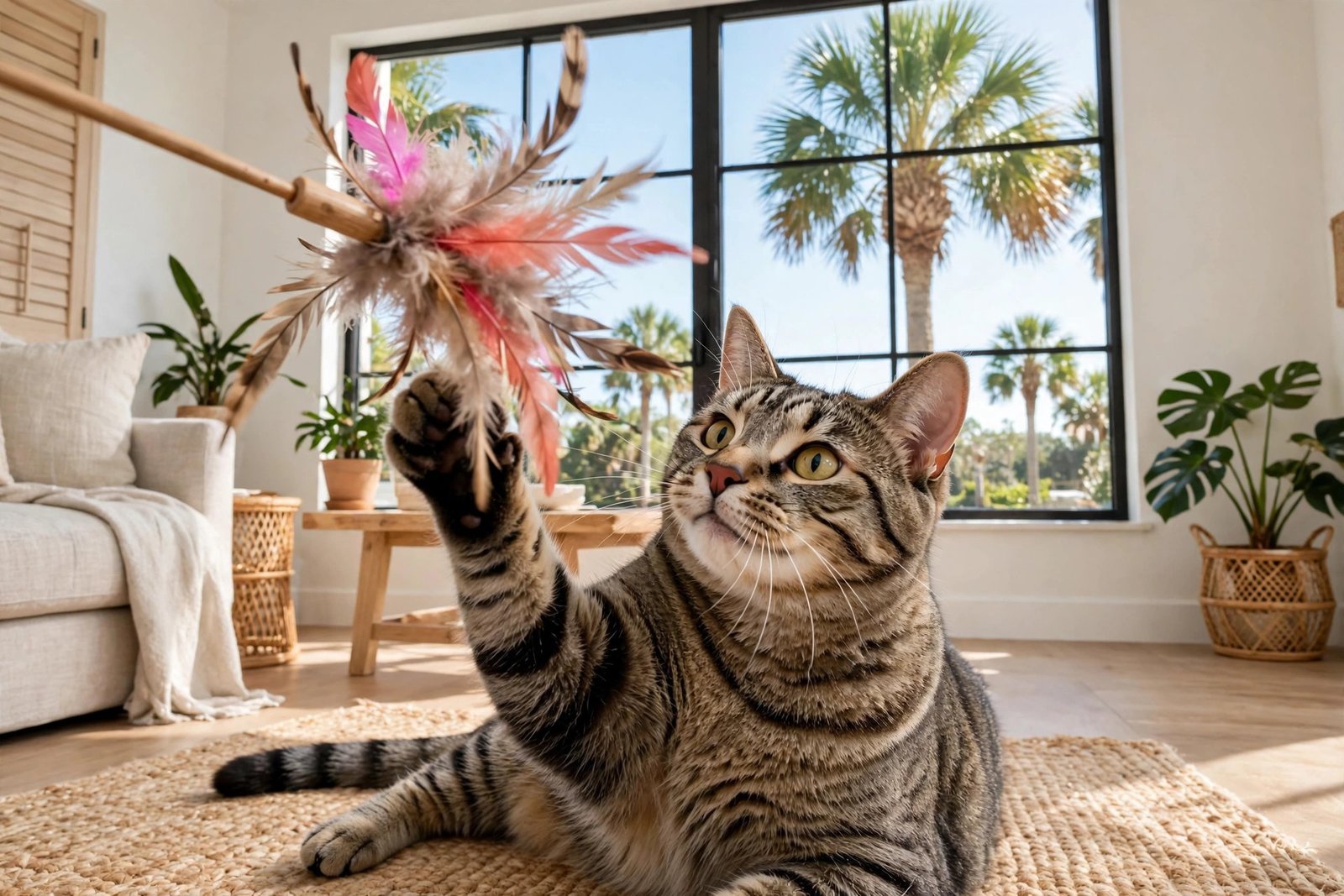
Your cat has been staring at the same wall for twenty minutes, and you’re starting to take it personally. Indoor cats in Palm Beach live a strange life: the sun is blazing outside the hurricane shutters, iguanas are doing push-ups on the patio, and your cat is watching all of it through glass like a tiny, bored king. Palm Beach County’s wildlife laws, coyote sightings, and busy roads mean most local vets strongly recommend keeping cats indoors — but an indoor cat with nothing to do becomes a cat with problems: 3 a.m. zoomies, shredded furniture, and stress behaviors nobody wants.
The fix isn’t expensive, and it doesn’t require a cat room the size of a guest house. What works is understanding one simple idea: cats don’t get bored the way we do. They get bored because their day has no hunting cycle. In the wild, a cat hunts, catches, eats, grooms, and sleeps — several times a day. Your job as a beginner is to recreate that cycle inside a Palm Beach apartment, condo, or house. Here’s how.
Start With the Hunt: Two Play Sessions a Day
The single most effective thing you can do costs about ten dollars: a wand toy with a feather or fabric lure. Schedule two 10-to-15-minute play sessions, one before breakfast and one before dinner. Move the lure like prey — skittering away from your cat, hiding behind furniture, pausing — not waving it in her face. Let her “catch” it regularly; a cat that never catches anything gets frustrated and quits.
Palm Beach timing tip: play before meals, then feed. That sequence — hunt, catch, eat, groom, sleep — mirrors nature, and it noticeably calms evening hyperactivity. Many owners report their cats finally sleeping through the night within a week of starting this routine.
Rotate Toys Like a Museum Exhibit
Cats habituate fast. A toy left on the floor for a month becomes furniture. Buy or make eight to ten small toys — crinkle balls, felt mice, springs — and keep only three out at a time. Rotate the set every few days. Each rotation feels like Christmas morning to a cat, and it costs you nothing.
DIY options work just as well: a cardboard box with holes cut in the sides, a paper bag (handles removed so heads can’t get stuck), or a toilet-paper roll with treats sealed inside the folded ends. South Florida owners get bonus points here, since we generate endless cardboard boxes from online deliveries during hurricane season prep.
Build a Window-Watching Station
Indoor cats crave what behaviorists call “cat TV.” A sunny Palm Beach window overlooking lizards, birds, and swaying palms is premium entertainment. Set up a sturdy window perch — suction-cup perches work on most glass, or place a cat tree next to a sliding door. Add a bird feeder outside the window (suction-cup feeders attach to glass) and your cat gets a nature documentary on demand.
One caution for Florida homes: make sure window screens are secure. Cats push against screens, and a screen that gives way on a third-floor condo is a tragedy. Check latches monthly, especially before storm season when you may be opening and closing impact windows.
If you’re choosing low-maintenance pets for apartment living, a cat with a good window station is honestly hard to beat — the enrichment is built into the view.
Feed the Brain: Puzzle Feeders and Foraging
Cats that inhale dry food from a bowl in thirty seconds have brains that never engage. Puzzle feeders — toys your cat must bat, roll, or paw to release kibble — stretch mealtime into a 15-minute mental workout. Start easy (beginner-level feeders with big openings) and graduate to harder ones over a few weeks.
Foraging games are the free version: hide small portions of kibble around the apartment — behind chair legs, in shoe boxes, on a low shelf. Your cat’s nose does the rest. This single habit turns mealtime into the morning’s main event, and it’s especially good for food-motivated cats that tend toward pudginess in air-conditioned Florida homes where nobody’s burning calories.
Climbing Space: Think Vertical
Cats feel safe up high. A single tall cat tree near a window gives a small apartment a whole second floor. If a full tree is too much, wall-mounted shelves create a climbing highway that takes zero floor space — ideal for Palm Beach condos where square footage is precious. Stagger shelves like stairs so your cat can climb confidently, and place at least one shelf with a view.
Scratching posts belong near sleeping spots and doorways, not hidden in a corner. Cats scratch to mark territory and stretch after naps, so placement matters more than price. A sisal post where your cat actually walks beats an expensive carpet tower gathering dust.
The Palm Beach Climate Factor
South Florida’s climate shapes indoor cat life more than beginners expect. Air conditioning keeps homes cool, which is great, but it also means cats aren’t burning energy the way they would in a varied climate. The flip side: hurricane season means occasional days when everyone’s stuck inside together. Keep a few “rainy day” enrichment toys in reserve — a battery-operated flopping fish, a catnip-filled kicker — so confinement days feel special instead of stir-crazy.
Also note the humidity. It can make cat trees’ carpeting musty over time, so air them out or vacuum them regularly. And if your home has lanai or porch access, a secured “catio” enclosure lets your cat experience Florida breezes safely — many Palm Beach handymen build simple screened frames for a few hundred dollars.
Choosing the best flooring for homes with pets matters here too, since indoor cats spend their entire lives on your floors — scratch-resistant surfaces survive claws far better than soft carpet.
Social Enrichment: You’re Part of the Plan
Toys and trees are supports, not substitutes. Ten minutes of your undivided attention — chin scratches, gentle brushing, a lap session — is enrichment no product can replace. Learn your cat’s signals: slow blinks mean contentment, a twitching tail tip means “enough.” Respecting those signals builds trust, and a trusting cat plays more, explores more, and stress-grooms less.
Some cats genuinely enjoy company. If your schedule keeps you out long hours and your cat is social, a second cat (properly introduced over weeks, not hours) can transform both animals’ lives. The ASPCA’s guidance on cat care basics emphasizes that social needs vary by individual — watch your cat, not the internet’s opinion.
A Sample Day That Actually Works
Put it together and a well-entertained indoor cat’s day looks like this: morning play session, breakfast in a puzzle feeder, window-watching while you work, an afternoon foraging game, evening play session, dinner, grooming, and a full night’s sleep. Total active effort from you: about thirty minutes. The Cornell Feline Health Center notes that indoor cats live significantly longer than outdoor cats — enrichment is what makes those extra years good ones.
Conclusion
Keeping an indoor cat entertained all day in Palm Beach isn’t about buying the most expensive gear — it’s about rebuilding the hunt-catch-eat-sleep rhythm that your cat’s instincts expect. Two daily play sessions, rotating toys, a window with a view, puzzle feeding, vertical space, and a few minutes of your genuine attention will turn a bored, destructive cat into a calm, confident one. Start with the wand toy and the play-before-meals routine this week; everything else can follow. Your walls, your furniture, and your 3 a.m. self will thank you.
Frequently Asked Questions
How much playtime does an indoor cat need daily?
Most behaviorists recommend two structured play sessions of 10–15 minutes each, plus passive enrichment (window perches, toys, foraging) throughout the day. Kittens and young adults may need more; seniors are usually happy with one gentle session.
Is it cruel to keep a cat indoors in Florida?
No — indoor cats live longer, avoid traffic, predators, and disease, and most adapt happily with proper enrichment. Many Florida vets recommend indoor-only living because of coyotes, alligators near waterways, and extreme heat.
What are the best toys for bored indoor cats?
Wand toys for interactive play, puzzle feeders for meals, crinkle balls and felt mice for solo play, and cardboard boxes for everything. Rotate them every few days to keep novelty high.
Why does my indoor cat meow constantly?
Excessive meowing often signals boredom, hunger, or a disrupted routine. Try adding a play session before meals and foraging games. If meowing is sudden or persistent, see a vet to rule out medical causes like thyroid issues or pain.