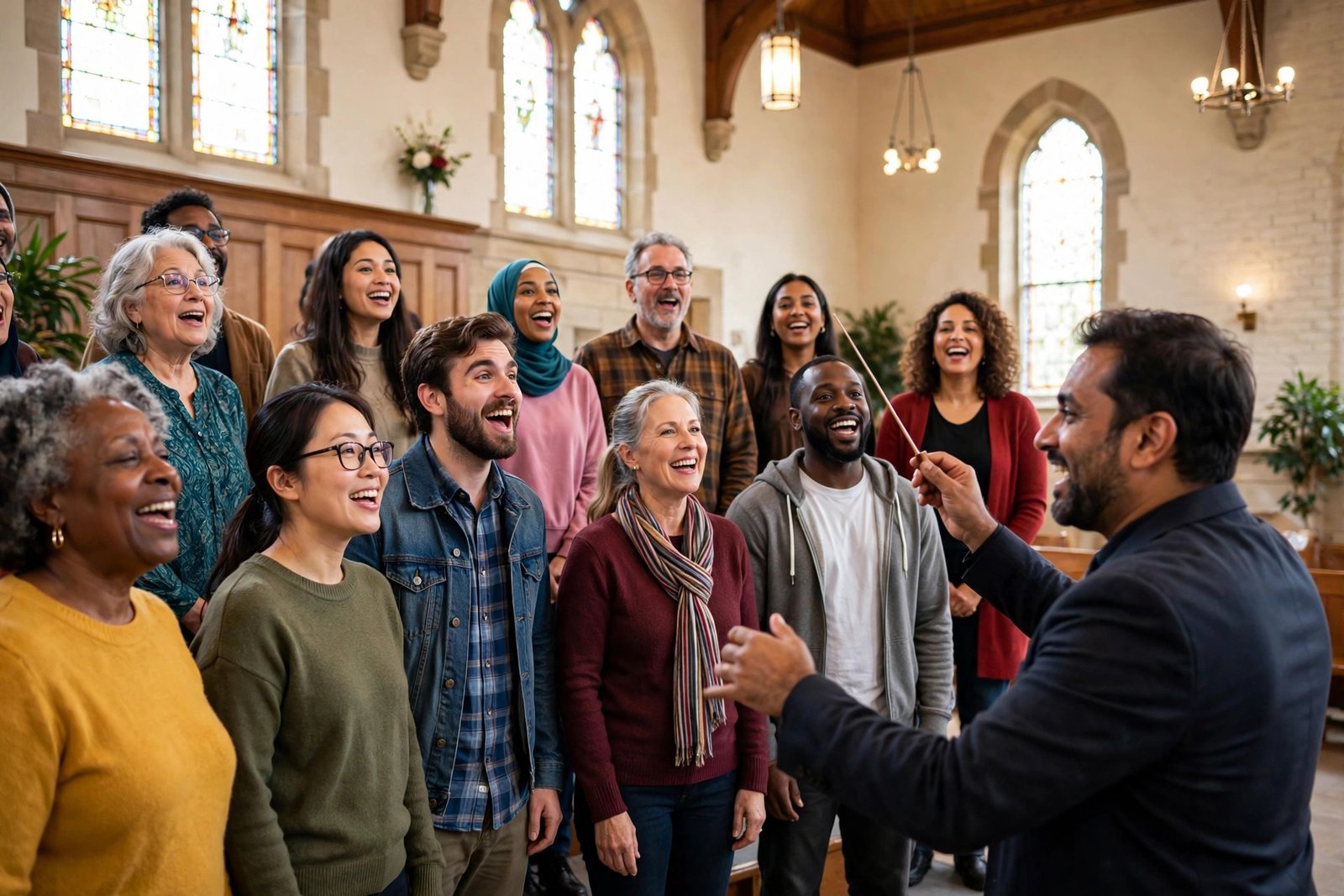
You’ve sung in the shower, in the car, maybe in a church pew years ago — and lately you’ve been thinking about starting a choir in your community. Not joining one. Starting one. It’s one of those ideas that feels both thrilling and presumptuous: who are you to gather singers? Here’s the secret every choir founder learns: you don’t need to be a professional musician. You need enthusiasm, basic organization, and the willingness to go first. Community choirs are started by beginners constantly, and many become beloved local institutions.
This guide walks through the safest, lowest-risk way to launch a community choir — the version where you test the idea before committing, spend almost nothing, and build something people actually want to join.
Start With the “Why” and the “Who”
Before booking a room, define two things. First, your choir’s identity: a casual neighborhood sing-along? A faith-based choir? A genre choir (gospel, barbershop, pop, classical)? A seniors’ choir? The identity determines everything — repertoire, rehearsal style, and who shows up. “A choir for everyone” sounds welcoming but markets to no one; “a relaxed pop choir for busy adults in our neighborhood” gives people a reason to say yes.
Second, your minimum viable choir: you need about 8–12 committed singers to sound like a choir rather than a gathering. Fewer than that and absences gut your rehearsals. You don’t need them on day one — you need a credible path to them.
Test Demand Before You Commit
The safest way to start is to validate interest with zero cost. Post in neighborhood Facebook groups, Nextdoor, community bulletin boards, and local subreddits: “Thinking of starting a casual community choir — who’d be interested in a free trial sing-along?” Gauge responses. If twenty people express interest, you have a choir. If two do, you have information — try a different identity or neighborhood.
Host a single free “taster session” before committing to a season. Pick an easy, joyful song everyone roughly knows, teach it by ear in an hour, and watch the room. Taster sessions convert the curious into members better than any flyer, and they cost you nothing but an hour and a borrowed room.
Finding Singers: The Real Work
Recruitment is the actual job of a choir founder. Channels that work:
- Community hubs: libraries, churches, community centers, and senior centers often let you post flyers or make announcements — and their members are your demographic.
- Social media: neighborhood groups outperform paid ads for local choirs. A short video of you explaining the idea beats a text post.
- Word of mouth: ask every interested person to bring one friend to the taster. Choirs grow through personal invitation more than any other channel.
- Existing music communities: open mic nights, church musicians, school music teachers — supporting local artists and musicians builds the relationships that fill choirs.
Emphasize “no audition, no experience needed, all welcome” if that’s your model — it removes the number-one barrier. Most adults assume they can’t sing well enough; your job is to make joining feel safe.
The Practical Setup: Venue, Time, Money
Venue: you need a room with decent acoustics that’s free or cheap. Churches, libraries, community centers, and schools often donate space for community groups, especially on off-nights. A living room works for the first few rehearsals. Prioritize: a piano or keyboard (borrowed is fine), chairs in an arc, and a room where you can be heard without shouting.
Schedule: weekday evenings (7–8:30 PM) work for working adults; weekend mornings suit seniors and families. Weekly rehearsals build momentum; biweekly lets enthusiasm fade. Pick one and protect it — consistency matters more than the specific day.
Money: keep it near zero at first. Optional member dues ($5–$10/month) can cover sheet music and venue costs once you’re established, but don’t charge before delivering value. Many community choirs run for years on free venues and public-domain music.
Leading Rehearsals as a Non-Expert
You don’t need conducting training to lead a beginner choir — you need structure. A reliable rehearsal template: 10 minutes of warm-ups (breathing, humming scales, silly tongue-twisters that make people laugh and relax), 20 minutes reviewing last week’s song, 30 minutes learning something new in small sections, 10 minutes singing through everything for fun. End on a high note, literally and emotionally.
Teaching tips that work without formal training: teach by ear using call-and-response (you sing a line, they echo it), use free YouTube tutorials for warm-ups, keep arrangements simple (melody plus a simple harmony part), and record rehearsals on a phone so members can practice at home. Enthusiasm and preparation beat credentials at this level — every time.
If the group grows and you want to level up, attending local live music events exposes you to how experienced directors run ensembles — free education.
Repertoire: Start Simple, Stay Joyful
Song choice makes or breaks a beginner choir. Start with songs people already know — familiar melodies teach themselves. Rounds (like “Row, Row, Row Your Boat” grown up) sound impressively choral with zero harmony skills. As confidence builds, add simple two-part arrangements of pop songs, folk songs, or gospel numbers.
Free resources: public-domain sheet music sites, YouTube choir tutorials, and apps that isolate vocal parts. Avoid: complex classical pieces, songs with wide vocal ranges, and anything requiring reading advanced notation. Your choir’s first performance — even an informal one for friends — should feel like a triumph, not an exam.
Growing and Sustaining It
The choirs that survive their first year share traits: a welcoming culture where newcomers are greeted personally, a balance of challenge and fun (too easy gets boring, too hard gets stressful), social time (the post-rehearsal coffee matters as much as the singing), and a yearly rhythm with breaks so nobody burns out.
Plan a low-stakes first performance around month three or four — a community event, a senior center visit, a holiday sing-along. Performing gives rehearsals purpose and members something to invite friends to, which is how choirs grow. Organizations like Chorus America offer resources for community choir leaders, and the American Choral Directors Association provides educational materials for directors at every level. Record it, share it, and watch recruitment get easier.
Conclusion
Starting a choir in your community as a beginner is one of the safest creative risks you can take: the cost is near zero, the demand test is a single free session, and the upside is a singing community that enriches your neighborhood for years. Define your choir’s identity, validate interest with a taster session, recruit through community channels, keep rehearsals structured and joyful, and perform early. You don’t need permission or credentials — you just need to send the first message and pick the first song.
Frequently Asked Questions
Do I need musical training to start a choir?
No. Many successful community choirs were founded by enthusiastic non-professionals. Basic organization, a welcoming attitude, and willingness to learn alongside members matter far more than formal training at the community level.
How many people do you need to start a choir?
Aim for 8–12 committed singers minimum. That size survives normal absences and produces a real choral sound. Start recruiting with a free taster session to find them.
How much does it cost to start a community choir?
Almost nothing initially — free venues (churches, libraries, homes), public-domain music, and volunteer leadership. Modest dues ($5–$10/month) can cover costs once established.
What if I can’t read sheet music?
Teach by ear using call-and-response, use YouTube tutorials, and choose familiar songs. Many thriving community choirs operate entirely by ear, especially in pop, gospel, and folk traditions.
How do I keep members coming back?
Consistent scheduling, a welcoming culture, the right difficulty balance, social time together, and regular low-stakes performances. People stay for the community as much as the music.