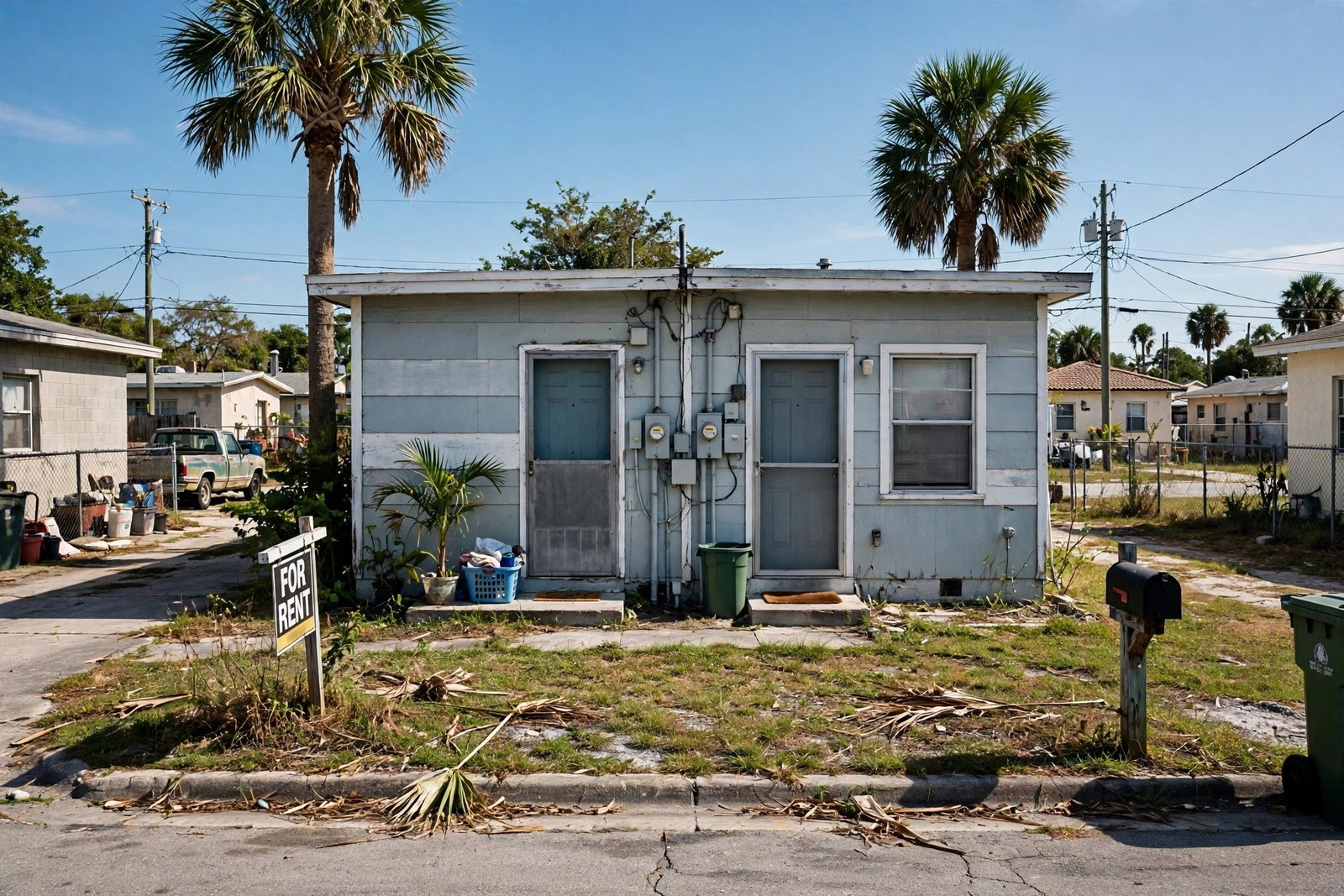
“You need money to make money” is the most discouraging — and most wrong — thing beginners hear about rental property. Jacksonville, with its relatively affordable prices, strong rental demand from military and healthcare workers, and landlord-friendly Florida laws, is one of the better US markets for starting small. Here’s how to invest in rental property with little money: the strategies that actually work, the math that keeps you safe, and the traps that eat beginners.
Redefine “Little Money” Honestly
Let’s be real: you can’t buy property with zero dollars — anyone promising that is selling a course. But “little” can mean $10,000–$25,000, not $100,000. In Jacksonville, where condos and small single-family homes in emerging neighborhoods still trade in the $120,000–$180,000 range, 3–5% down on an owner-occupied multi-unit property is genuinely within reach. The first step is an honest personal budget that shows exactly what you can save and sustain — every strategy below depends on knowing your real numbers.
Strategy 1: House Hacking (The Beginner’s Superpower)
Buy a duplex, triplex, or four-plex with an FHA loan (3.5% down) or conventional owner-occupied loan, live in one unit, rent the others. On a $200,000 Jacksonville duplex at 3.5% down, you’re in for roughly $7,000 plus closing costs — and tenant rent covers most or all of your mortgage. FHA house hacking is the single most accessible path to rental ownership in America, and Jacksonville’s stock of small multi-unit buildings in neighborhoods like Riverside, Springfield, and the Northside makes it practical.
The catch: you must genuinely live there at least a year (FHA requirement), and being a landlord to your neighbors demands professionalism. Screen tenants rigorously, keep reserves for repairs, and learn Florida landlord-tenant law before your first lease — HUD’s housing resources are a solid starting point.
Strategy 2: Partner Up
Money partnerships split the capital burden: you bring hustle (finding deals, managing renovations, handling tenants), a partner brings cash. Structure it formally — operating agreements, defined profit splits, exit clauses — because handshake deals between friends have destroyed more relationships than bad tenants ever will. Jacksonville’s active real estate investor meetups (BiggerPockets forums list several) are where these partnerships form; show up consistently with market knowledge and work ethic, and capital finds you.
Strategy 3: The BRRRR Method, Jacksonville Edition
Buy, Rehab, Rent, Refinance, Repeat. Buy a distressed property below market (Jacksonville has steady inventory in revitalizing areas), renovate strategically, rent it, then refinance based on the new appraised value to pull your capital back out. Done right, you recycle the same $20,000–$30,000 through multiple properties. Done wrong — underestimating rehab costs is the classic beginner error — you’re stuck. Rule: get contractor bids BEFORE buying, add 20% contingency, and only proceed if the numbers work at the pessimistic end. For deeper strategy background, Investopedia’s real estate investing hub covers these methods in detail.
Strategy 4: Start Even Smaller
Not ready for a whole building? Rent out a room in your current home (Jacksonville’s room-rental market is strong near NAS Jacksonville and the hospitals). Or consider real estate-adjacent starts: wholesaling (contracting distressed properties and assigning contracts — legal in Florida with proper contracts, but learn the regulations), or starting small in general to build the capital and skills for property later. Every investor started somewhere; starting small and learning is better than waiting a decade for “enough” money.
The Beginner Traps
Underestimating reserves. The roof, the HVAC, the eviction — budget 6 months of expenses in reserve before buying, not after. Ignoring insurance reality. Florida’s insurance market is brutal; get actual quotes during due diligence, not estimates. Jacksonville’s flood zones add another layer — check FEMA maps for every candidate. Self-managing to “save” 10%. Your time has value, and bad self-management costs more than a property manager. Buying for appreciation, not cash flow. With little money, you can’t survive negative cash flow hoping values rise. The property must pay for itself from day one.
Jacksonville Neighborhoods for First-Time Investors
Where you buy in Jacksonville matters as much as what you buy. Springfield and Eastside: historic neighborhoods in active revitalization — the lowest entry prices, the highest cash-flow potential, but also the most management-intensive (older housing stock, variable blocks). Best for hands-on investors comfortable with renovations. Riverside/Avondale: established, desirable, expensive — appreciation plays with thinner cash flow; better for experienced investors than first-timers.
Northside and Oceanway: affordable single-family homes with strong rental demand from logistics and port workers — solid first-investor territory with manageable prices. Southside/Baymeadows: condo and townhome territory near employment centers — watch HOA fees and flood zones carefully, but the tenant pool is deep. Westside: working-class neighborhoods with some of the market’s best price-to-rent ratios — do your block-by-block diligence, as conditions vary street to street.
Universal Jacksonville investor rules: verify flood zone status on EVERY candidate (FEMA maps, free), get real insurance quotes before offering (Florida’s market punishes assumptions), drive the block at night before buying, and talk to a local property manager about actual rents — not listing-site fantasies. The neighborhood picks the tenant pool; the tenant pool determines your landlord life.
Tenant Screening: The Skill That Protects Everything
With little money invested, one bad tenant can wipe you out — screening is your highest-leverage activity. The non-negotiables: credit check (look for patterns, not perfection — medical debt differs from maxed-out cards), income verification (3x rent is the standard for a reason), rental history (call previous landlords — not the current one, who may be trying to offload a problem tenant), and criminal/eviction background checks (Florida eviction records are public).
The process: standardized application for everyone (fair housing law demands consistency — never improvise criteria per applicant), in-person or video meeting before approval (character judgment matters), and documented criteria applied uniformly. The mindset: vacant is better than bad — every experienced landlord has a story about the tenant they accepted from desperation who cost ten times the lost rent. With thin reserves, you can’t afford a single eviction ($3,000–$5,000+ all-in). Screen like your investment depends on it — because with little money in the deal, it does.
Conclusion
Investing in Jacksonville rental property with little money is realistic through house hacking with FHA financing, smart partnerships, disciplined BRRRR execution, or starting with room rentals. The common thread: know your exact numbers, keep cash reserves, get real insurance quotes, and buy for cash flow — not hope. “Little money” works when the strategy is sound and the math is honest; it fails when beginners skip the unglamorous parts. Start with the budget, learn one strategy deeply, and take the first small step.
Frequently Asked Questions
How to invest in rental property with little money in Jacksonville?
The most accessible paths: FHA house hacking (3.5% down on a duplex/triplex you live in), partnering with a capital investor, the BRRRR method on distressed properties, or starting with room rentals. All require honest budgeting and cash reserves.
How much money do I need to start investing in rentals?
Realistically $10,000–$25,000 for a Jacksonville house hack (down payment plus closing costs plus reserves). Anyone promising zero-money entry is selling something — every strategy needs some capital and substantial reserves.
What is house hacking?
Buying a multi-unit property (duplex, triplex, four-plex) with an owner-occupied loan, living in one unit, and renting the others so tenant income covers most or all of your mortgage. FHA loans allow this at 3.5% down.
Is Jacksonville a good market for rental investment?
It has strong fundamentals: affordable entry prices, steady rental demand from military, healthcare, and logistics workers, population growth, and landlord-friendly state laws. Watch insurance costs and flood zones carefully.
What is the biggest mistake new rental investors make?
Underestimating reserves and ongoing costs — buying with every dollar and having nothing left for the inevitable roof repair, vacancy, or insurance spike. Keep six months of expenses reserved before purchasing.