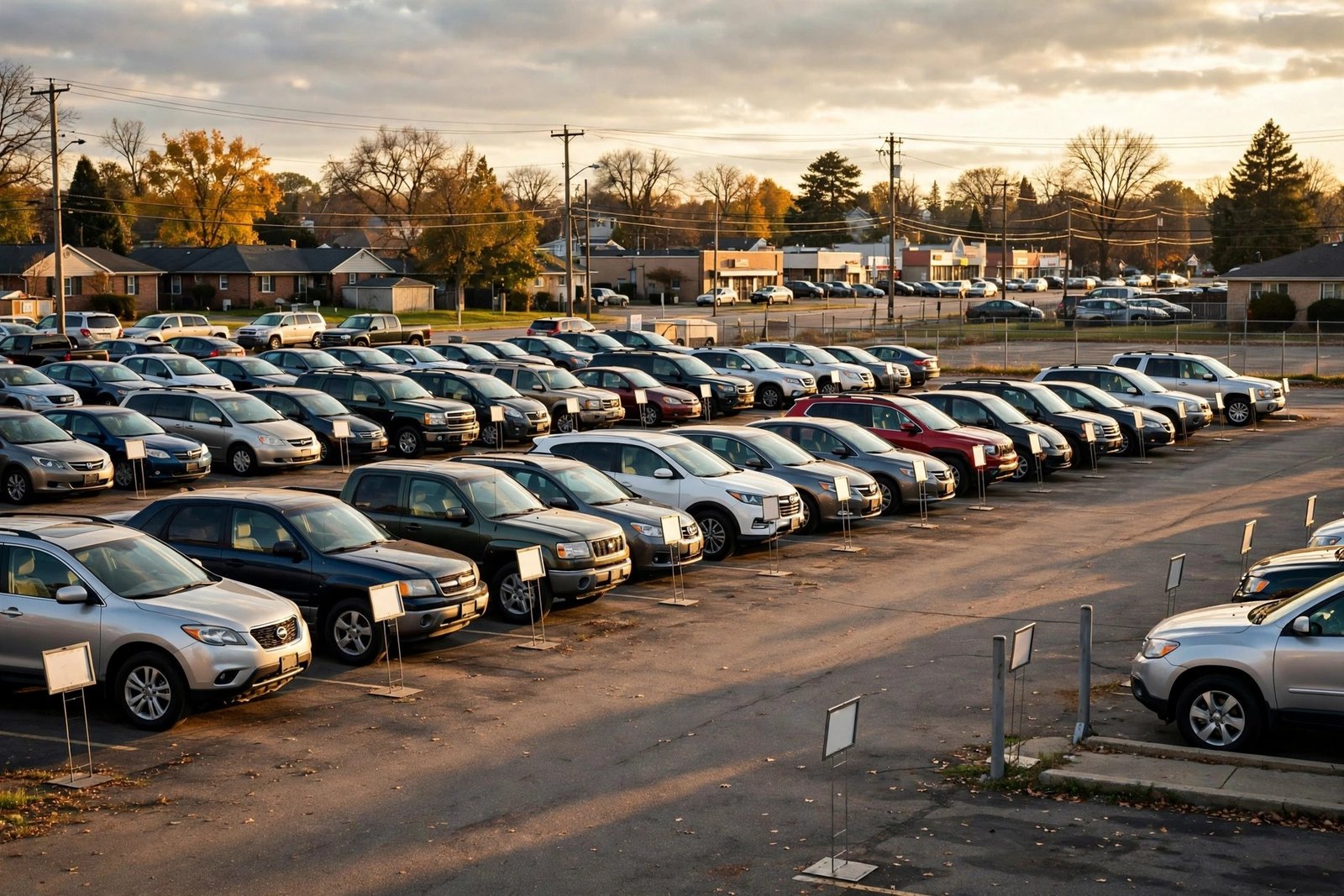
A new car loses roughly 20% of its value the moment you drive it off the lot — and another 15% per year for the next few years. Everyone’s heard some version of this. Almost nobody understands what it actually means for their money, which cars defy the curve, and how to use depreciation as a buying strategy instead of suffering it as a tax on newness. Here’s car depreciation in the first three years, properly understood.
The Curve: What Actually Happens to Value
The depreciation curve is steepest at the start: ~20% in year one (including the immediate “drive-off” drop), ~15% in year two, ~10–15% in year three — leaving a typical car worth roughly 55–60% of its original price after three years. Then the curve flattens: years 4–7 lose ~10% annually, and beyond that, value declines slowly toward a floor determined by utility (a running car is always worth something).
Why so front-loaded? New-car pricing includes dealer margin, destination fees, and the “newness premium” — none of which transfer to the second owner. The used market prices the car as transportation; the new market prices it as transportation plus novelty, warranty, and choice. You’re paying for intangibles that evaporate on transfer.
What Bends the Curve (Up or Down)
Brand and model dominate. Toyotas, Hondas, and Porsches famously hold value; luxury flagships (BMW 7-Series, Mercedes S-Class) and EVs from struggling brands can lose 40–50%+ in three years. Edmunds and Consumer Reports publish depreciation data by model — check before buying, because the spread between best and worst is enormous.
Mileage, condition, and history. Low miles, clean titles, and documented maintenance flatten the curve; accidents, high miles, and spotty records steepen it. Market forces: fuel prices (gas spikes lift efficient cars’ values, crush trucks’), interest rates (high rates depress used prices as financing costs rise), and supply shocks (the pandemic’s used-car surge was historic — and its unwinding punished late buyers).
Color and options matter at the margins: neutral colors resell better; weird option combinations (manual transmission in a luxury sedan, unusual interiors) narrow the buyer pool and the price.
Depreciation as Buying Strategy
Here’s the flip side: depreciation is a tax on new-car buyers and a discount for used-car buyers. The optimal value zone is the 2–3-year-old car: someone else absorbed the steepest depreciation, you get a modern car with remaining warranty (or certified pre-owned coverage), and the curve flattens under your ownership. A 3-year-old Camry at 60% of new price with 80% of its useful life remaining is the rationalist’s sports car.
Leasing is depreciation arbitrage: you pay for the steep-curve years only, then walk away. It “wastes” money versus long-term ownership, but it’s the cheapest way to always drive a new car — understand which game you’re playing. And when evaluating any vehicle’s worth, apply rigorous used-value verification habits: the market price is knowable, and overpaying is optional.
Minimizing Depreciation on Cars You Own
Buy models with strong resale reputations (the data exists — use it). Keep mileage reasonable (12,000–15,000/year is the expectation; far above accelerates loss). Maintain obsessively with records — documented dealer maintenance measurably lifts resale. Keep it stock: modifications almost never add value and often subtract. Garage it in Florida’s sun — UV destroys paint and interiors, and condition is money. And time your sale: sell before major model redesigns (old body style = instant discount) and before big maintenance milestones (the 100k-mile psychological barrier is real).
For the financing dimension — because depreciation and loans interact dangerously — understand that long loan terms plus steep early depreciation equals years underwater. Keeping payments aligned with a sustainable budget and choosing reasonable terms is depreciation defense, not just financial prudence.
Depreciation and Insurance: The Hidden Link
Here’s the connection buyers miss: depreciation and insurance costs move together, and smart buyers exploit it. As your car depreciates, the rational insurance coverage shrinks — full coverage on a $25,000 car is prudent; full coverage on the same car worth $7,000 is often wasteful. The inflection point: when annual comprehensive + collision premiums exceed ~10% of the car’s value, it’s time to price liability-only.
Run this calculation yearly after year three. A typical pattern: years 1–3, full coverage (lender requires it anyway); years 4–6, evaluate annually; year 7+, liability-only for most cars worth under $8,000–$10,000 — redirect the $800–$1,500/year savings into your next car’s fund. This is depreciation working FOR you: the same value loss that hurt as an owner becomes premium savings as a strategist. The mistake is set-and-forget insurance — the policy you bought for a $30,000 car shouldn’t still be covering a $9,000 car. Review coverage against current value every renewal; the five-minute call saves hundreds yearly.
When Depreciation Stops Mattering: The Beater Equilibrium
There’s a beautiful point in every car’s life where depreciation effectively stops: the beater equilibrium, roughly years 8–12, when the car is worth $3,000–$6,000 and declines only slowly. At this stage, the financial logic inverts completely — comprehensive insurance becomes irrational (drop it), minor cosmetic damage becomes irrelevant (it’s a beater; that’s the point), and every additional year of service is nearly pure profit versus replacement.
The beater strategy: buy at the equilibrium ($4,000–$6,000 for something reliable with 100k–130k miles), maintain mechanically (safety and reliability only — ignore cosmetics), drive for 3–5 years, and sell or scrap for $1,500–$2,500. Total depreciation cost: ~$1,000/year — versus $4,000+/year for new cars. Who it suits: second cars, teen drivers, commuters who park in dings-prone lots, and anyone prioritizing financial efficiency over image. The beater equilibrium is depreciation’s final gift: after a decade of taking your money, the curve flattens and hands the advantage to the patient.
Conclusion
Car depreciation in the first three years takes roughly 40–45% of a typical car’s value — front-loaded, model-dependent, and entirely predictable. Use that predictability: buy in the 2–3-year sweet spot where others’ depreciation becomes your discount, choose models with proven resale strength, maintain with records, and never pair steep-curve cars with long loans. Depreciation isn’t a mystery tax; it’s the most documented price pattern in consumer markets. The buyers who understand it don’t beat it — they surf it.
Frequently Asked Questions
What is the best way to understand car depreciation in the first 3 years?
Expect ~20% loss in year one, ~15% in year two, ~10–15% in year three — leaving ~55–60% of original value. The curve is steepest early (newness premium evaporates on transfer), varies hugely by model, and flattens after year three.
How much does a new car depreciate when you drive it off the lot?
Roughly 10–20% immediately — the “drive-off” drop reflects dealer margin, fees, and newness premium that don’t transfer to second owners. It’s the single steepest moment in the depreciation curve.
Which cars hold their value best?
Toyotas, Hondas, and Porsches consistently top resale rankings; luxury flagships and some EVs depreciate fastest. Check Edmunds or Consumer Reports depreciation data for specific models before buying.
Is buying a 2–3 year old car the best value?
Usually yes — the first owner absorbed the steepest depreciation, you get modern features with remaining warranty coverage, and the curve flattens during your ownership. It’s the rational value optimum for most buyers.
How can I minimize my car’s depreciation?
Buy strong-resale models, keep mileage near 12,000–15,000/year, maintain with documented records, avoid modifications, garage it (especially in Florida sun), and sell before major redesigns or the 100k-mile mark.