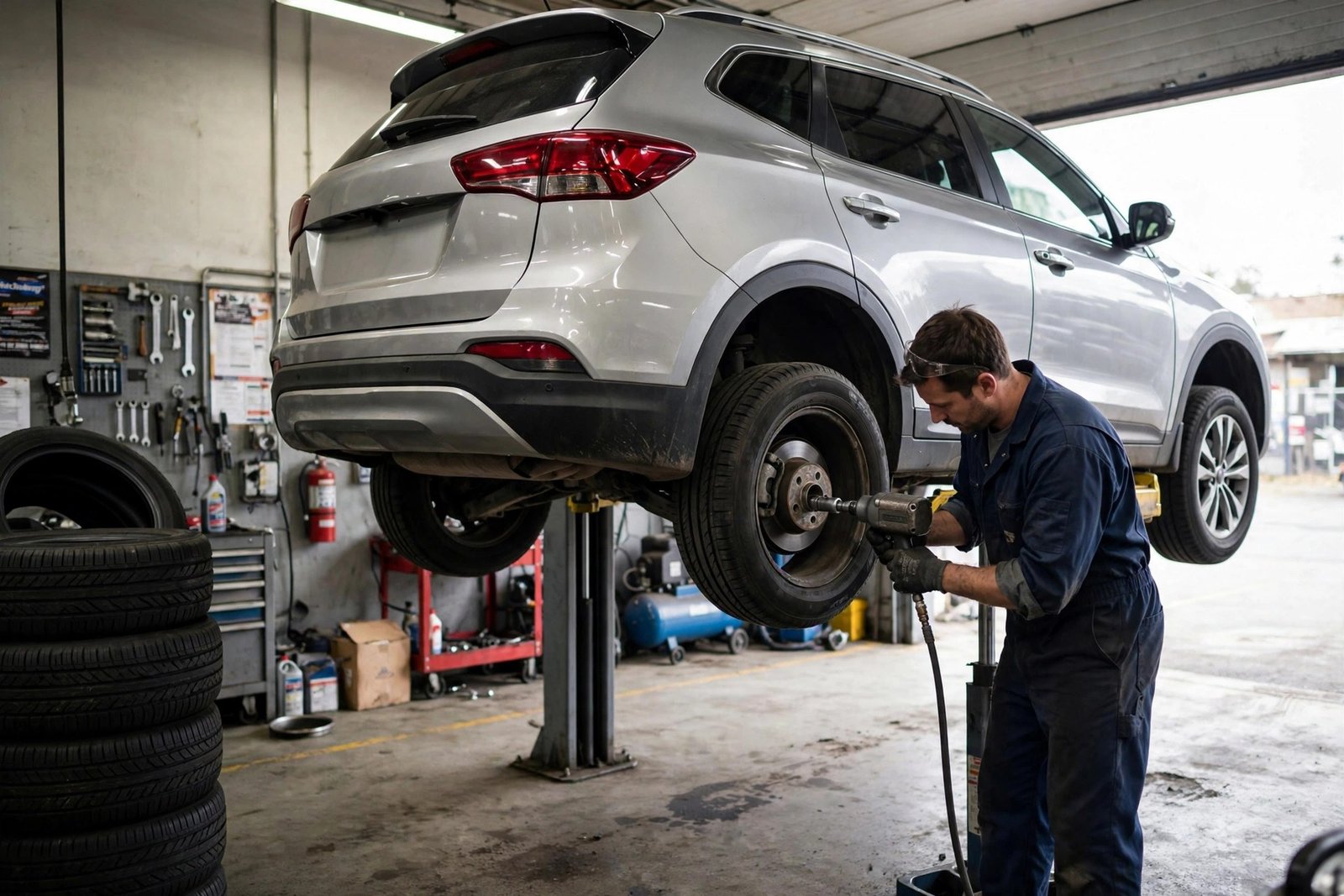
Tire rotation is the most skipped maintenance in car ownership — and the cheapest way to add 10,000–20,000 miles to a set of tires. Most drivers vaguely know they “should” rotate tires but have no idea how often, why it matters, or what happens when they don’t. Here’s the complete answer: the schedule, the science, and the money math that makes rotation the highest-ROI maintenance you can do.
How Often: The Standard Answer (and the Nuances)
Every 5,000–7,500 miles — or roughly every other oil change for conventional schedules. That’s the industry standard from NHTSA, AAA, and every major tire manufacturer. Your owner’s manual has the exact figure for your car — follow it over generic advice, since some performance vehicles and AWD systems have specific requirements.
Nuances: rotate more often if you drive aggressively, carry heavy loads, or notice uneven wear; front-wheel-drive cars wear front tires dramatically faster (they handle steering, braking, AND power), making rotation especially critical; and if your tires are directional or staggered sizes (different front/rear), rotation patterns are restricted — the shop must know your setup.
Why It Matters: The Wear Science
Each wheel position wears tires differently. Front tires on FWD cars shoulder acceleration, most braking force, and all steering — they wear 2–3x faster than rears. Without rotation, fronts hit replacement tread depth while rears still have half their life — so you buy four tires when rotation would have let all four wear evenly to the same endpoint. Rotation is simply wear redistribution: moving tires through positions so the set ages as a unit.
The consequences of skipping: premature replacement ($600–$1,200 for a set you buy a year early), degraded handling (uneven tread = uneven grip, especially in rain — and Florida rain is the real traction test), and failed inspections in states that check tread depth. It’s the maintenance equivalent of skipping regular health checkups — small scheduled attention preventing large unscheduled bills.
The Rotation Patterns (What the Shop Does)
You don’t need to memorize these — but knowing them prevents shops from doing it wrong: FWD: fronts go straight back, rears cross to front (rear-right → front-left). RWD/AWD: rears go straight forward, fronts cross to rear. Directional tires: front-to-back same side only. Staggered sizes: side-to-side only (if non-directional). A competent shop knows this; a rushed one might not — mentioning your drivetrain type when dropping off is cheap insurance.
The Money Math: Rotation ROI
Rotation costs $30–$60 (often free with tire purchase packages or bundled with oil changes). A set of tires costs $600–$1,200+. If rotation extends tire life from 40,000 to 55,000 miles — typical — you’re deferring a $900 expense by 1–2 years, repeatedly, for $40 a pop. Annualized, that’s among the best returns in car ownership. Skipping rotation to “save” $40 while buying tires a year early is the false economy that keeps tire shops profitable.
Bundle smartly: schedule rotation with oil changes (same visit, minimal extra time), ask about free rotation packages when buying tires (Discount Tire, Costco, and others include lifetime rotation — factor this into purchase decisions), and always request a tread-depth report — it tells you whether the schedule is working. Keeping maintenance affordable is part of sticking to a vehicle budget without deferring what matters.
Signs You Need Rotation NOW (Not at the Next Interval)
Visible uneven wear (one edge balder than the other — run your hand across the tread), vibration at highway speeds (often balance + rotation together), the car pulling slightly, or front tires visibly more worn than rears. Also: if you can’t remember your last rotation, you’re overdue — check your maintenance records and start fresh with a dated baseline.
Rotation, Balance, and Alignment: The Trio Explained
Rotation gets all the attention, but it’s one of three wheel services that work together — confusing them costs money. Rotation moves tires between positions to even out wear (every 5,000–7,500 miles). Balancing corrects weight imbalances in the wheel-tire assembly that cause vibration — needed when you feel shaking at highway speeds, when new tires are mounted, or when a wheel weight falls off (those little clipped-on weights do fall off). Alignment adjusts the angles at which tires meet the road — needed after hitting major potholes or curbs, when the car pulls to one side, or when you see uneven wear patterns (feathering on one edge).
The practical schedule: rotate every 5,000–7,500 miles; balance when vibration appears or with new tires; align yearly or after impacts. Shops love selling all three as a package — and honestly, bundling rotation + balance at each interval is reasonable and cheap. But alignment without symptoms is often upsell; the $90–$150 alignment pays for itself only when something’s actually off. Learn the trio’s distinct jobs and you’ll never pay for the wrong service again: rotation prevents uneven wear, balance kills vibration, alignment fixes geometry. Different problems, different fixes, different schedules.
Tire Pressure Monitoring: Trust but Verify
Your car’s TPMS (Tire Pressure Monitoring System) is useful but not sufficient — understanding its limits prevents trouble. Direct vs. indirect: direct systems (sensors in each wheel) report actual pressures; indirect systems (using ABS wheel-speed data) only detect relative differences — they won’t warn you if ALL tires are equally low, which is exactly what Florida temperature swings cause. The warning threshold: most systems trigger at 25% below recommended pressure — by which point handling, wear, and fuel economy have already suffered significantly.
The monthly manual check remains mandatory: a $10 gauge, cold tires, door-jamb specs — two minutes per tire, once a month. TPMS is a backup alarm, not a maintenance plan; it tells you about emergencies, not optimization. After rotation: direct-TPMS sensors sometimes need relearning (the car must know which sensor is where) — most shops handle this automatically, but if your dash shows dashes instead of pressures after service, that’s why. And when TPMS sensors’ batteries die (7–10 years), replacement runs $50–$100 per wheel — budget it with your second tire set, not as a surprise.
Conclusion
Rotate your tires every 5,000–7,500 miles — every other oil change, per your manual — because each wheel position wears differently and rotation evens the wear across the set. It costs $30–$60 (often free), extends tire life 10,000–20,000+ miles, preserves wet-weather grip, and defers $600–$1,200 replacement bills. It’s the simplest high-return maintenance in car ownership: schedule it, bundle it with oil changes, and never think about it again until the odometer says so.
Frequently Asked Questions
How often should you rotate your tires to extend their life?
Every 5,000–7,500 miles (roughly every other oil change), or per your owner’s manual. Front-wheel-drive vehicles benefit most since front tires wear 2–3x faster handling steering, braking, and power.
What happens if you never rotate your tires?
Front tires wear out far faster than rears, forcing premature full-set replacement ($600–$1,200 a year early), degrading wet-weather handling through uneven tread, and potentially failing tread-depth inspections.
How much does tire rotation cost?
$30–$60 standalone; often free with tire purchase packages (lifetime rotation included) or bundled with oil changes. It’s among the highest-ROI maintenance available.
Can I rotate my tires myself?
Yes with a jack, jack stands, lug wrench, and knowledge of your car’s pattern — but shops do it in 20 minutes for $30–$60, including balance checks. DIY saves little unless you’re already equipped.
Do directional or staggered tires rotate differently?
Yes — directional tires rotate front-to-back on the same side only; staggered sizes (different front/rear widths) rotate side-to-side only. Tell the shop your tire type to ensure the correct pattern.