Frank Sinatra Net Worth, Age, Family, Career and Life Story
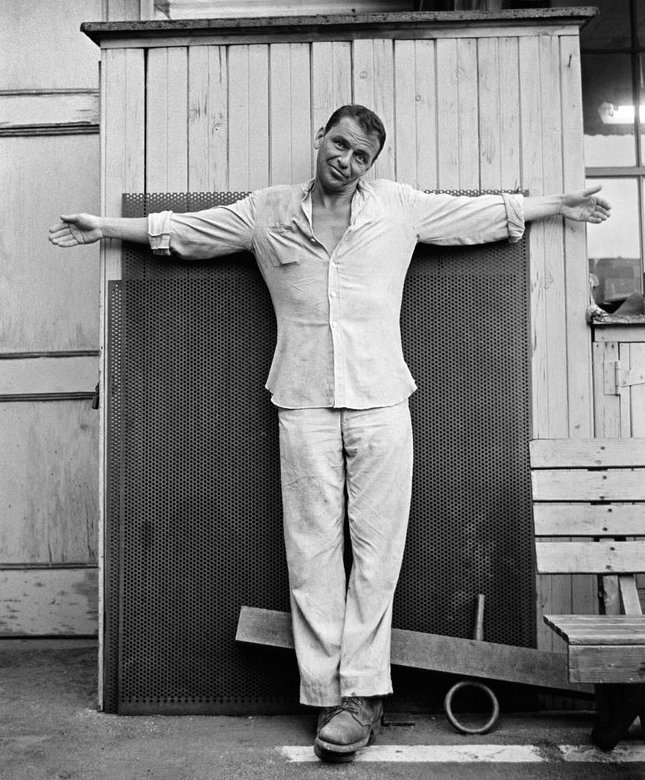
Frank Sinatra remains the voice against which every popular singer since has been measured — the Hoboken kid who turned phrasing into an art form and sold more than 150 million records worldwide. Celebrity Net Worth puts his net worth at $200 million at the time of his death, with contemporary estimates of the estate running higher still, as set out below. He died on May 14, 1998, aged 82, and this profile is written posthumously: the story of a life that began in a Hoboken tenement in 1915 and ended with a fortune, a catalogue and a legend that have never stopped growing.
Early Life
Frank Sinatra was born Francis Albert Sinatra on December 12, 1915, in an upstairs tenement at 415 Monroe Street in Hoboken, New Jersey. His biography begins with two Italian immigrants: his mother, Natalina “Dolly” Garaventa, a forceful, ambitious woman from Genoa who worked as a midwife and became a powerful figure in local Hoboken politics, and his father, Antonino Martino “Marty” Sinatra, a Sicilian who had boxed professionally as a bantamweight under the name Marty O’Brien before joining the Hoboken fire service, where he rose to captain. Frank was their only child, and the birth itself nearly killed both mother and baby: he arrived weighing thirteen and a half pounds, delivered with forceps that scarred his left cheek, neck and ear and damaged his eardrum for life.
He grew up skinny, sharp-dressed and singing. Inspired by Bing Crosby, he was performing with local groups as a teenager, working day jobs — delivery boy for a newspaper, riveter at a shipyard — while chasing singing work at night. He briefly enrolled at a business school to please his mother, but left, and by the mid-1930s he was winning talent contests and touring with the Hoboken Four. The ambition was total and entirely focused: he wanted to be the biggest singer in America, and everyone in Hoboken heard about it long before America did.
Career
1939–1942: Harry James, Tommy Dorsey and the first frenzy
Sinatra’s break came in 1939, when bandleader Harry James heard him on a New York radio broadcast and signed him; that year produced his first commercial recordings, including “All or Nothing at All,” which would become a million-seller when reissued in 1943. In 1940 he joined Tommy Dorsey’s orchestra, the finishing school of the swing era, and with Dorsey he recorded a run of hits — “I’ll Never Smile Again” chief among them — that made him the most imitated young singer in the country. When he left Dorsey in 1942 to go solo, the move was considered reckless. Within a year, his appearances at New York’s Paramount Theatre were drawing crowds of screaming teenage fans — the bobby-soxers — and Sinatra was a phenomenon unlike anything popular music had produced.
1943–1952: Columbia years, a voice in trouble and the great slump
At Columbia Records through the 1940s, Sinatra recorded a body of ballads that defined romantic singing for a generation, and his first album, The Voice of Frank Sinatra (1946), topped the charts. But the early 1950s brought a collapse on every front at once: his marriage ended, his public image suffered, his voice itself faltered, and both his record label and his agency dropped him. By 1952 the biggest singer in America could not get arrested professionally. It remains the most dramatic fall in entertainment history — and it set up the most dramatic comeback.
1953–1960: Capitol, Nelson Riddle and the concept album masterpieces
Signed by Capitol Records in 1953, Sinatra teamed with arranger Nelson Riddle and reinvented himself completely. The records of these years are now considered the summit of popular singing: In the Wee Small Hours (1955), a brooding, late-night song cycle often cited among the first true concept albums; Songs for Swingin’ Lovers! (1956), all lift and swagger; Come Fly with Me (1958); Only the Lonely (1958), perhaps his greatest ballad album; No One Cares (1959); and Nice ‘n’ Easy (1960). The voice had darkened and deepened, the phrasing had become conversational genius, and the saloon singer of the Capitol years — worldly, wounded, unmistakable — is the Sinatra the world still means when it says the name.
The comeback years also made him a Las Vegas institution, headlining the Sands with the informal Rat Pack company of Dean Martin and Sammy Davis Jr., whose stage shows became the stuff of legend — loose, funny and musically superb. Success on that scale brings its own paperwork, and Sinatra, who ran his career increasingly as his own boss, understood leverage in business as instinctively as he understood a lyric; it is the same instinct, in a far more ordinary register, that protects everyday buyers who learn the most common leasing-versus-buying mistakes before signing anything. In 1960 he put that control formally in place by founding his own label, Reprise Records.
1960–1971: Reprise, “Strangers in the Night,” “My Way” and a first retirement
At Reprise, Sinatra recorded prolifically and expansively: collaborations with Count Basie, the bossa nova sessions with Antônio Carlos Jobim, the live landmark Sinatra at the Sands (1966), and a run of signature songs that closed the decade — “Strangers in the Night” (1966), a number one hit and Grammy winner; “That’s Life” (1966); “Somethin’ Stupid” (1967), a number one duet with his daughter Nancy; and “My Way” (1969), the Paul Anka song tailored for him that became his anthem whether he wanted it or not. In June 1971, at a farewell concert in Los Angeles, he announced his retirement. It lasted about two years.
1973–1998: Ol’ Blue Eyes Is Back, “New York, New York” and the long farewell
The comeback album Ol’ Blue Eyes Is Back (1973) returned him to the charts, and the decade that followed turned him into a global elder statesman of song, touring relentlessly on several continents. “Theme from New York, New York” (1980) gave him one final signature standard, adopted by the city itself. His final studio recordings included L.A. Is My Lady (1984) and the two Duets albums of 1993 and 1994, which paired his voice with a new generation of admirers and topped charts worldwide. He gave his last public performance in February 1995, and died three years later, his catalogue already beyond argument.
Personal Life & Family
Sinatra married four times. His first wife was Nancy Barbato, his Hoboken sweetheart, whom he married on February 4, 1939; they divorced in 1951. All three of his children came from this marriage: Nancy Sinatra, born June 8, 1940, who became a star singer herself with “These Boots Are Made for Walkin’”; Frank Sinatra Jr., born January 10, 1944, a singer and conductor who worked alongside his father for decades and died in 2016; and Christina “Tina” Sinatra, born June 20, 1948, who became a producer and the family’s business guardian. His second marriage, to Ava Gardner (1951–1957), was famously tempestuous. His third, to Mia Farrow (1966–1968), joined a fifty-year-old superstar to a twenty-one-year-old rising name and ended within two years.
His fourth and final marriage was the lasting one. He married Barbara Marx — born Barbara Blakeley, a former model and showgirl previously married to Zeppo Marx — on July 11, 1976, and they remained married until his death, nearly twenty-two years, the longest marriage of his life. Barbara Sinatra, his widow, founded the Barbara Sinatra Children’s Center for abused children in Rancho Mirage in 1986, wrote the memoir Lady Blue Eyes about their life together, and died on July 25, 2017, aged 90. Family, in the Sinatra story, starts in that Hoboken tenement with Dolly and Marty and runs straight through to the children and grandchildren who still steward his name and catalogue today.
Net Worth & Assets
Celebrity Net Worth puts Sinatra’s net worth at $200 million at the time of his death in 1998, and that is the anchor figure used here. Published estimates genuinely disagree, and the disagreement is printed rather than hidden: contemporary estimates of the overall fortune at his death ranged from $200 million to $600 million, and the exact total was never publicly established because much of his wealth sat in a living trust outside the public probate process. An earlier data point sometimes quoted — a financial statement putting his net worth at just over $14 million in 1981, filed while he sought renewal of a Nevada gaming licence — describes his position seventeen years before his death, not his estate in 1998, and should never be presented as his final fortune. His will guaranteed Barbara Sinatra at least $3.5 million in cash alongside substantial property, left each of his three children $200,000 directly, and placed far more valuable assets and rights in trusts and other entities. In 2007, Warner Music Group paid $50 million for a 50 per cent interest in Frank Sinatra Enterprises, a posthumous measure of what the name alone was worth.
The houses were part of the legend. In 1947 he commissioned Twin Palms in Palm Springs, designed by E. Stewart Williams, the modernist estate with the piano-shaped pool that became a byword for desert glamour. Later years centred on a Beverly Hills home, an oceanfront property in Malibu built with Barbara, and a compound in Rancho Mirage near Palm Springs where the couple based their desert life and their charitable work.
His height is listed at around 5 feet 8 inches (1.73 m) in many published listings, with others giving 5 feet 7½ inches (1.71 m); no official measurement exists. His weight appears in published listings at around 143 pounds (65 kg), again a listing figure only — the famously slim young crooner filled out somewhat in later life, and any single number is an approximation.
Fact File
| Fact File | Details |
|---|---|
| Net Worth | Estimated $200 million at the time of his death, according to Celebrity Net Worth; contemporary estimates of the estate ranged from $200 million to $600 million |
| Age | 82 years old at the time of his death (died May 14, 1998) |
| Height | Around 5 feet 8 inches (1.73 m) in many published listings, others 5 feet 7½ inches (1.71 m); no official figure |
| Weight | Around 143 lb (65 kg) in published listings; no official figure |
| Biography | American singer from Hoboken, New Jersey, born Francis Albert Sinatra to Italian immigrant parents, who became the defining popular vocalist of the 20th century with more than 150 million records sold |
| Born | December 12, 1915, in Hoboken, New Jersey, United States |
| Wife | Barbara Sinatra (married July 11, 1976, until his death in 1998; his widow, died July 25, 2017, aged 90); previously married to Nancy Barbato (1939–1951), Ava Gardner (1951–1957) and Mia Farrow (1966–1968) |
| Children | Nancy Sinatra (born June 8, 1940), Frank Sinatra Jr. (born January 10, 1944; died 2016) and Christina “Tina” Sinatra (born June 20, 1948), all with Nancy Barbato |
| Parents | Antonino Martino “Marty” Sinatra (father) and Natalina “Dolly” Garaventa (mother), Italian immigrants in Hoboken |
| Family | Wife Barbara and children Nancy, Frank Jr. and Tina; his parents’ only child, raised in Hoboken, New Jersey |
| Songs | “I’ll Never Smile Again,” “I’ve Got You Under My Skin,” “Fly Me to the Moon,” “Strangers in the Night,” “That’s Life,” “My Way” and “Theme from New York, New York” |
| Albums | The Voice of Frank Sinatra (1946), In the Wee Small Hours (1955), Songs for Swingin’ Lovers! (1956), Come Fly with Me (1958), Only the Lonely (1958), Sinatra at the Sands (1966) and Duets (1993) |
| House | Twin Palms, Palm Springs (commissioned 1947, designed by E. Stewart Williams); later homes in Beverly Hills, an oceanfront property in Malibu and a compound in Rancho Mirage |
He did it his way — the song became a cliché precisely because the life backed it up. Nearly three decades after his death, the records still sell, the voice still stops rooms, and the tenement kid from Hoboken remains, simply, the Chairman of the Board.