Gary Barlow Net Worth, Age, Family, Career and Life Story
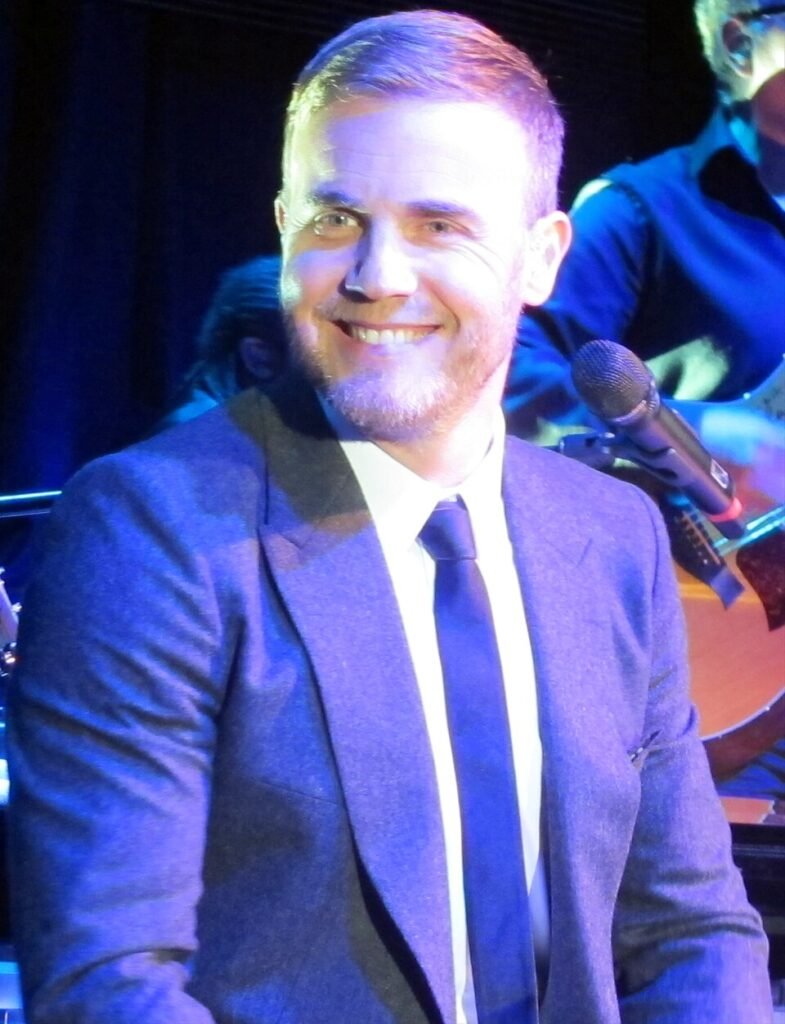
Gary Barlow is the quiet engine of British pop: the songwriter who built Take That, lost almost everything when the band split, and then rebuilt the whole thing bigger than before. Celebrity Net Worth estimates his net worth at $125 million, while the Sunday Times Rich List has put his fortune at £90 million, and both figures rest on the same foundation — four decades of songs that Britain simply refuses to stop singing. At 55, he remains the hardest-working man in any rehearsal room he walks into, and this is the full story of the Frodsham piano kid who became pop royalty.
Early Life
Gary Barlow was born on January 20, 1971, in Frodsham, Cheshire, England, the second son of Colin and Marjorie Barlow. His biography starts in an ordinary northern town where music was not a hobby but an obsession: by his early teens he was teaching himself piano, studying the songwriting of the acts he admired on the radio, and entering talent contests with a seriousness that set him apart from every other hopeful in the room. He won a BBC Pebble Mill at One Christmas song competition as a teenager with a self-penned festive number, an early sign that the melodies in his head were worth money as well as applause.
School mattered less to him than the keyboard did. Barlow left formal education at 16 and spent his late teens playing clubs and working men’s venues across the North West, learning the trade the unglamorous way — one half-listening crowd at a time. He recorded demos, hustled for a publishing deal, and by 1989 had been spotted by manager Nigel Martin-Smith, who was assembling a new Manchester vocal group. Barlow was hired not just as a singer but as the group’s songwriter, the one member expected to supply the material. It was the job he had been rehearsing for since childhood, and he knew it.
Career
1990–1996: Take That and the first wave of fame
Take That — Barlow alongside Robbie Williams, Mark Owen, Howard Donald and Jason Orange — were launched in 1990 and, after a slow start, detonated. Barlow wrote the bulk of the material that carried them: Pray, Back for Good, Never Forget and Relight My Fire among them, songs that turned the group into the biggest British pop act of their generation. Their run of number one singles and albums through the mid-1990s made Barlow, still in his early twenties, one of the most successful young songwriters in the country. When Williams left in 1995 and the group split in 1996, the assumption everywhere was that Barlow’s solo career would be the one that soared.
1997–2005: The solo wilderness and the writing years
It did not work out that way, and Barlow has never pretended otherwise. His debut solo album Open Road (1997) produced the number one singles Forever Love and Love Won’t Wait, but the follow-up, Twelve Months, Eleven Days (1999), stalled, his record deal ended, and Williams — the bandmate once considered the risk — became a superstar while Barlow became a punchline. He retreated to the piano and rebuilt himself as a songwriter and producer for other artists, writing for acts including Delta Goodrem and Charlotte Church, and quietly re-learned his craft away from the spotlight. Those wilderness years, humiliating as they were, are the ones Barlow credits with making him a professional rather than merely a famous one.
2006–2013: The reunion, Progress and national treasure status
Take That’s four-man reunion in 2006 produced Beautiful World, an album of grown-up pop anchored by Barlow’s Patience and Shine, and it outsold every expectation. The Circus followed in 2008, and in 2010 Williams returned for Progress, which became one of the fastest-selling British albums of the century, with its stadium tour breaking records of its own. Barlow’s second act extended beyond the band: he organised charity concerts, received an OBE in 2012 for services to entertainment and charity, and spent three series from 2011 to 2013 as head judge on The X Factor, the format that made his dry, exacting assessments a weekly fixture of British Saturday nights. He marked the Queen’s Diamond Jubilee in 2012 by co-writing Sing, the commemorative anthem performed by a choir drawn from across the Commonwealth.
Home life for Barlow, for anyone wondering how a songwriter of his schedule decompresses, runs on the same domestic rhythms as anyone else’s — school runs, muddy walks, and the particular diplomacy required when you introduce a new puppy to an older dog who believed the sofa was already spoken for. It is a long way from stadium pyrotechnics, and by every account it is the part of the week he protects most fiercely.
2014–2026: Musicals, more albums and the Circus returns
Running underneath the group work, Barlow also built a reputation as British pop’s songwriter-for-hire of last resort and first choice alike, contributing material to artists across several generations and mentoring younger writers with the air of a man repaying a debt. His 2018 memoir, A Better Me, was candid about the depression, weight struggles and professional humiliation of the wilderness years, and it reframed his public image permanently: the comeback stopped looking like luck and started looking like labour. He has toured his own story, too, in A Different Stage, a spoken-and-sung one-man show that played theatres from 2022 onward and let audiences hear the catalogue stripped back to one voice and one piano — the format in which every one of those songs began.
The later Barlow is as much a man of the theatre as of the charts. He composed the score for Finding Neverland on Broadway, co-created The Girls — later renamed Calendar Girls The Musical — with Tim Firth, and turned Take That’s catalogue into the stage production The Band, which toured widely. Solo albums kept coming too: Since I Saw You Last (2013) and Music Played by Humans (2020), the latter a big-band-flavoured record built around an orchestra. With Take That reduced to a trio of Barlow, Owen and Donald, the group released Wonderland (2017) and This Life (2023), which returned them to number one. In the summer of 2026 the trio revived their spectacular Circus Live production for a stadium run that Barlow, at 55, declared a final farewell to that show, and in November 2026 they released Dreamers, their tenth studio album, with a major European tour to follow — the workload of a man half his age, delivered without fuss.
Personal Life & Family
Barlow married Dawn Andrews in 2000. She had been a dancer on Take That’s 1995 Nobody Else tour, and the couple had been together for five years before the wedding — a partnership that has now lasted more than three decades and outlasted every phase of his career. They have three children: Daniel, born in 2000, Emily, born in 2002, and Daisy, born in 2009. The two older children have steered away from show business toward medicine and physiology, a fact Barlow mentions with obvious pride, while Daisy remains the family’s student-in-residence.
The family’s story carries a grief that Barlow has spoken about with care and restraint. In August 2012 he announced that the couple’s fourth child, a daughter named Poppy, had been delivered stillborn. He performed at the London Olympics closing ceremony days later, a commitment he kept while privately shattered, and he has since described that period as the hardest of his life. The family marked Poppy’s memory quietly, and Barlow has used his platform since to support other parents through the same loss. His father Colin died in October 2009, weeks before the Circus tour reached its peak, and Barlow dedicated performances to him. Family, in the Barlow telling, is not the backdrop to the career. It is the reason the career is organised the way it is.
Net Worth & Assets
Celebrity Net Worth estimates Barlow’s net worth at $125 million in its current listing. The Sunday Times Rich List, the other allowed source checked, has put his fortune at £90 million — a materially lower figure, and the disagreement is printed here plainly: the two most-cited estimators do not agree, and Barlow has never published his own accounts for public inspection. What is not in dispute is where the money comes from. As Take That’s principal songwriter, Barlow earns publishing royalties on a catalogue that includes some of the most-played British pop songs of the last thirty-five years, income that arrives whether or not he ever steps on a stage again. Touring at stadium scale, his solo records, his theatre scores and his production work sit on top of that foundation. In February 2026 he signed an exclusive global publishing agreement with BMG covering his entire songwriting catalogue, a deal whose value was not disclosed — and a catalogue deal valuation, like a tour gross, is a transaction figure, not a net worth figure, and is flagged as such here.
His height is listed at 5 feet 7 inches (1.70 m) in some published listings and 5 feet 9 inches (1.75 m) in others, a conflict the listings themselves never resolve, and no official figure has been released. His weight appears in published listings at around 154 pounds (70 kg), again a listings figure rather than an official one. His Instagram presence is official and active: he posts as @officialgarybarlow, where tour announcements, studio photographs and family-approved glimpses reach an audience in the hundreds of thousands. For a man whose twenties were consumed by fame’s worst behaviour, the Barlow fortune looks deliberately boring from the outside — royalties, property in Cheshire and London, and a diary booked years ahead. That is rather the point of it.
Fact File
| Fact File | Details |
|---|---|
| Net Worth | Estimated $125 million, according to Celebrity Net Worth; the Sunday Times Rich List has put his fortune at £90 million |
| Age | 55 years old |
| Height | Listed at 5 feet 7 inches (1.70 m) in some listings and 5 feet 9 inches (1.75 m) in others; no official figure |
| Weight | Around 154 lb (70 kg) in published listings; no official figure |
| Biography | English singer-songwriter from Frodsham, Cheshire, who built Take That as its principal writer, rebuilt his career after the split, and led the group’s record-breaking reunion |
| Born | January 20, 1971, in Frodsham, Cheshire, England |
| Wife | Dawn Andrews (married 2000) |
| Children | Daniel (born 2000), Emily (born 2002) and Daisy (born 2009); a fourth child, Poppy, was delivered stillborn in 2012 |
| Parents | Colin Barlow (died 2009) and Marjorie Barlow (née Cowan) |
| Family | Wife Dawn and children Daniel, Emily and Daisy; based in Cheshire |
| Songs | Back for Good, Pray, Never Forget, Relight My Fire, Patience, Rule the World, Greatest Day, Shine, Said It All and the solo hits Forever Love and Let Me Go |
| Albums | With Take That: Everything Changes, Nobody Else, Beautiful World, The Circus, Progress, This Life and Dreamers; solo: Open Road, Since I Saw You Last and Music Played by Humans |
| @officialgarybarlow |
At 55, Barlow has outlasted the boy-band years, the wilderness years and the comeback years, and he is still writing the songs. British pop has produced flashier stars, but very few who did the work quite this thoroughly, or for quite this long.