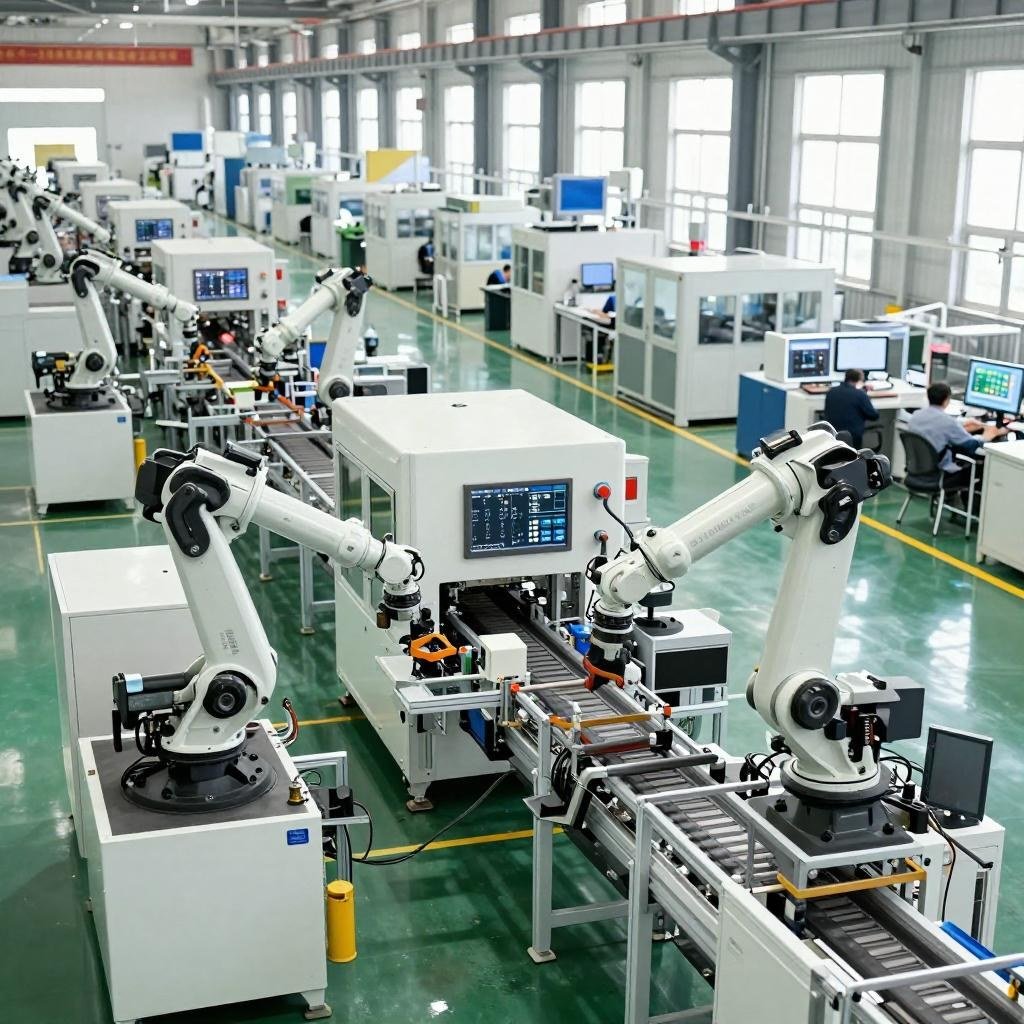
It is the question humming in the back of millions of minds: is my job at risk of being automated by AI? The honest answer is that almost every job will be affected, but “affected” and “eliminated” are very different things. Understanding where your specific role sits on the automation spectrum is the difference between productive preparation and useless anxiety.
I am not going to give you false comfort or doom. Instead, here is a practical framework for assessing your own situation, the patterns emerging across industries, and the moves that actually protect careers. Because the people navigating this well are not the ones who ignored it or panicked. They are the ones who looked clearly and adapted early.
Is My Job at Risk of Being Automated by AI?
The framework: what AI automates versus what it cannot
AI excels at tasks that are routine, rule-based, data-heavy, and digital. It struggles with tasks requiring physical dexterity in unpredictable environments, genuine human connection, complex judgment under ambiguity, and true originality. Evaluate your job task by task, not as a whole:
Higher automation risk (the routine parts):
- Data entry, processing, and basic analysis
- Answering repetitive questions (customer support, basic IT help)
- Drafting routine documents, reports, and correspondence
- Scheduling, coordination, and administrative workflows
- Basic coding, testing, and code review
- Transcription, translation of standard content
- Initial screening (resumes, applications, basic triage)
Lower automation risk (the human parts):
- Complex problem-solving in ambiguous situations
- Building and maintaining relationships
- Physical work in unpredictable environments (skilled trades, hands-on healthcare)
- Creative direction and original thinking
- Leadership, mentoring, and team building
- Ethical judgment and accountability
- Skilled negotiation and persuasion
Most jobs are bundles of both. The question is not whether your job disappears but which tasks get automated and whether the remaining human tasks are enough to sustain the role, or whether the role transforms into something new.
Industry patterns emerging now
- Customer service: High-volume routine support is automating fast; complex and emotional support is becoming more human. Our deep dive on AI and customer service jobs covers this in detail.
- Creative fields: Commodity production is shrinking; direction, taste, and originality are appreciating. See our article on AI and creative jobs.
- Software development: AI writes routine code remarkably well, pushing developers toward architecture, complex problem-solving, and product thinking. Junior routine-coding roles face the most pressure.
- Finance and accounting: Data processing and basic analysis are automating; advisory, relationship, and judgment-heavy roles are growing.
- Healthcare: Diagnostic assistance is advancing rapidly, but hands-on care, complex decision-making, and patient relationships remain deeply human. Our piece on AI in medical diagnosis shows the augmentation pattern.
- Skilled trades: Among the most insulated. AI cannot fix your plumbing. The physical world remains stubbornly human.
Assess your own situation honestly
Ask yourself these questions:
- What percentage of my week is routine, repeatable work? Above 70% is a warning sign. Below 30% is relatively safe.
- Could a smart system with my data do my core tasks? If yes, assume it eventually will.
- Am I the person who exercises judgment, or the person who follows procedures? Judgment roles survive; procedure roles transform.
- Do I work with people or with data? People-facing roles have natural insulation; pure data roles face more pressure.
- Is my industry investing in AI for my function? Follow the money. Heavy investment means fast change.
The Bureau of Labor Statistics Occupational Outlook Handbook provides data-driven projections by occupation, worth checking for your specific field.
Moves that actually protect your career
Become AI-fluent in your domain. The single most protective move. Learn to use AI tools for your specific work. The person who wields AI effectively is far more valuable than the person who ignores it or the AI alone. Our guides to AI-assisted writing and AI productivity apps are starting points.
Move toward judgment and relationships. Deliberately grow the parts of your role AI cannot do: client relationships, complex decisions, creative direction, mentoring. Volunteer for the ambiguous projects, not just the well-defined ones.
Develop T-shaped expertise. Deep skill in your domain plus working knowledge of adjacent areas (data literacy, AI tools, business context). Versatility is insulation.
Build a reputation, not just a skillset. Trusted professionals with strong networks and track records are the last to be displaced. Our guide to networking effectively applies to career defense too.
Keep learning visibly. Take courses, earn certifications, stay current. Adaptability is the meta-skill, and demonstrating it matters.
And be honest about the risks of leaning too hard on the tools themselves: our article on the risks of over-relying on AI at work covers the skill-atrophy trap.
The 90-day career resilience plan
Clarity without action is just anxiety, so here is a concrete plan. Days 1-30: audit. List your weekly tasks, mark which are routine versus judgment-based, and identify the two skills most worth developing. Start using AI tools for your actual work daily; fluency begins with familiarity. Days 31-60: build. Take one course or certification in your domain’s AI applications, volunteer for one ambiguous project that requires judgment, and have five conversations with people in roles adjacent to yours.
Days 61-90: position. Update your resume and LinkedIn to reflect AI-fluent capabilities, share something you learned publicly (a post, a talk, a mentored colleague), and assess: are you meaningfully harder to automate than 90 days ago? Repeat quarterly. Career resilience is not a destination but a cadence, and ninety days of deliberate action beats years of vague worry every time.
Quick wins for this week
- Audit your week: what percentage is routine versus judgment work? Write the honest number down.
- Use one AI tool for your actual job tasks daily this week; fluency starts with familiarity.
- Have one conversation with someone in an adjacent role about how AI is changing their work.
The takeaway
Almost every job will be affected by AI, but few will vanish entirely. Assess your role task by task: the routine parts face automation, the judgment and relationship parts do not. Protect yourself by becoming AI-fluent, moving toward work requiring human judgment, building real expertise and relationships, and learning continuously. The future belongs not to those who compete with AI, but to those who direct it.