Jewelry is personal — but have you ever noticed how gold makes some people glow while silver makes others look washed out, and vice versa? It’s not imagination. Metals interact with skin undertones, and wearing your most flattering metal is one of those subtle upgrades people notice without knowing why. You look healthier, more radiant, more “put together.” Here’s how to find yours.
So how do I choose jewelry that suits my skin tone? Determine your undertone (warm, cool, or neutral), match metals accordingly, and consider contrast and personal style. Here’s the complete guide.
Step 1: Find your undertone
Your undertone (warm, cool, neutral) is different from your surface skin tone (fair, medium, deep) — it’s the subtle hue beneath. Tests:
- The vein test: look at your wrist veins in natural light. Green-ish veins suggest warm undertones; blue/purple suggest cool; a mix suggests neutral.
- The jewelry test: hold gold and silver against your face (or try on both). Which makes your skin look brighter and healthier? That’s your metal.
- The white vs. cream test: stark white flatters cool undertones; cream/ivory flatters warm. Which looks better near your face?
- The sun test: do you tan easily and rarely burn (often warm), or burn first and tan slowly (often cool)? It’s a clue, not a rule.
- Ask a friend: sometimes others see it more clearly than we do.
Most people land clearly warm or cool; true neutrals can wear both metals well (lucky).
How do I choose jewelry that suits my skin tone? Match the metals
Warm undertones: gold is your glow
Yellow gold, rose gold, copper, and brass harmonize with warm skin — they echo the golden hues in your complexion. Rose gold is particularly flattering on warm fair skin; rich yellow gold glows on warm deep skin. Gemstones: warm tones sing — coral, amber, turquoise, emerald, warm pearls (cream/ivory).
Cool undertones: silver is your shine
White gold, platinum, silver, and cool-toned metals brighten cool skin. The contrast makes both the metal and your skin look more luminous. Gemstones: cool and vivid — sapphire, amethyst, ruby, cool white pearls, diamonds.
Neutral undertones: wear everything
Both metals work — choose by outfit, mood, or the outfit colors you’re wearing. Mixed-metal pieces were made for you.
Beyond metal: the other choices
- Scale and proportion: petite frames can be overwhelmed by chunky statement pieces; larger frames can carry bolder jewelry. Match the jewelry’s visual weight to yours — delicate pieces on delicate frames, substantial pieces on substantial frames.
- Neckline pairing: the jewelry should converse with the neckline — pendants with V-necks, studs with high necklines, statement earrings with off-shoulder. neckline for the detailed pairings.
- Contrast with outfit: gold pops against navy and black; silver shines against pastels and jewel tones. Consider the whole picture, not just the skin.
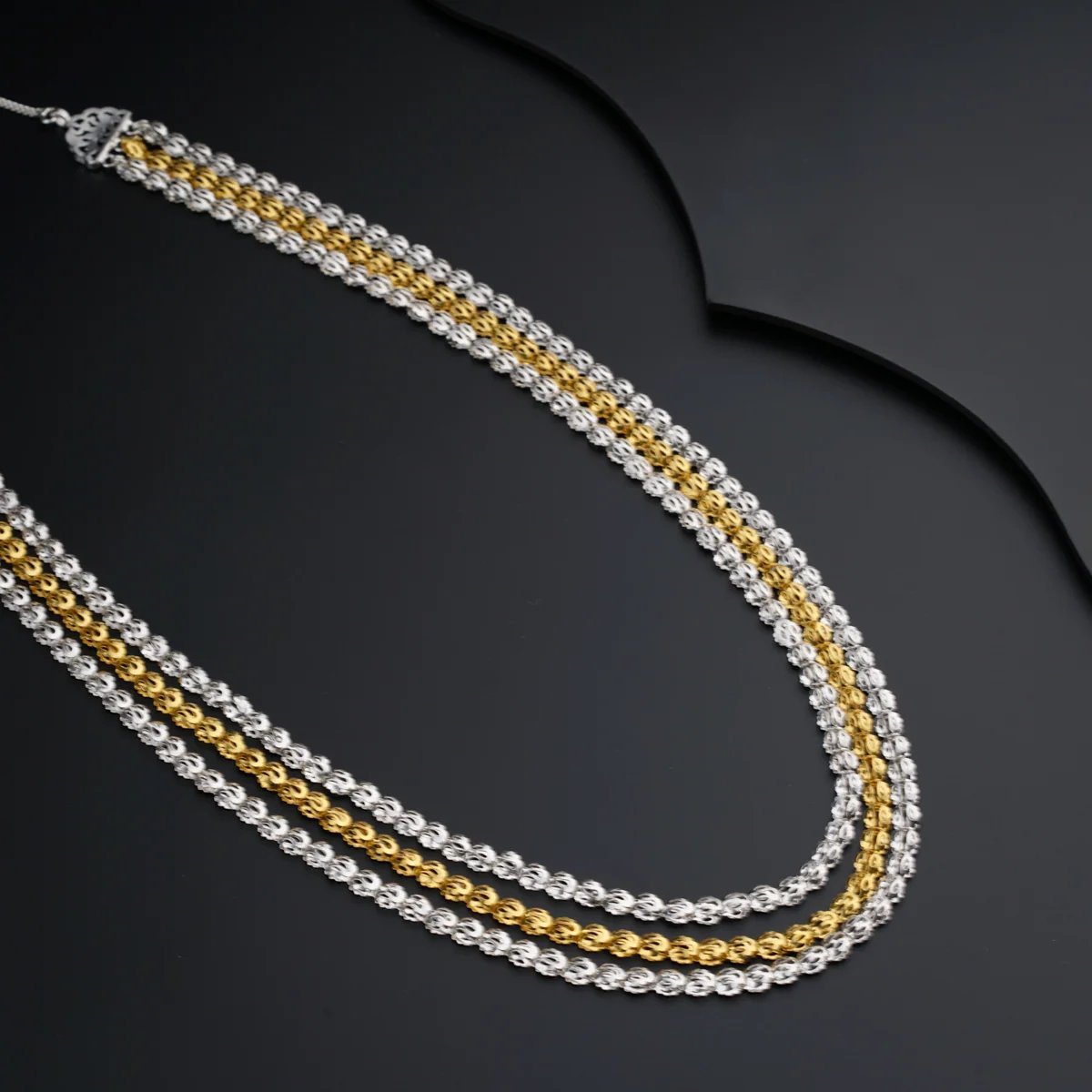
- Mixing metals: the old “never mix” rule is dead — mixed metals look modern and intentional if done deliberately (a mixed-metal piece, or clearly separated zones like silver earrings + gold bracelets). Accidental mixing looks messy; intentional mixing looks styled.
- Skin sensitivity: nickel allergies are common — look for nickel-free, sterling silver, or solid gold if you react. No metal flatters irritated skin.
Building your jewelry wardrobe
Start with everyday signatures in your best metal: studs or small hoops, a delicate necklace, a watch, maybe a simple bracelet. These are worn daily — invest a bit more here. Add 2–3 statement pieces for evenings and events (they don’t need to be expensive — statement jewelry can be affordable). Include one mixed-metal or versatile piece for flexibility. And maintain: polish silver regularly (it tarnishes), store pieces separately (scratching dulls finishes), and clean gemstones gently. Quality jewelry — even affordable quality — outshines expensive pieces that are neglected.
Jewellery through history
The history of jewellery is as old as civilization — humans have adorned themselves with metal and stone for millennia, and the instinct to choose pieces that harmonize with the wearer is just as ancient. Your undertone test is the modern, scientific version of a very old intuition.
The takeaway
Choosing jewelry for your skin tone means: find your undertone (vein test, jewelry test, white-vs-cream), wear gold-family metals if warm and silver-family if cool (neutrals wear both), match scale to your frame, pair with necklines intentionally, and feel free to mix metals deliberately. The right metal doesn’t just decorate — it illuminates. Find yours, and every piece you own works harder.
Jewelry storage and travel: keeping pieces safe and untangled
The right jewelry deserves the right storage — tangled chains and scratched pieces are preventable. At home: store necklaces separately (individual pouches or a hanging organizer — chains tangle if they can touch), keep silver in anti-tarnish bags or cloths (tarnish is oxidation; limiting air exposure slows it), separate soft stones (pearls, opals) from hard ones (diamonds scratch everything), and use a lined jewelry box with compartments — the $30 ones work as well as the $300 ones. Travel: the straw-through-the-chain trick (thread necklaces through straws to prevent tangling — genuinely genius), pill organizers for earrings and rings (each compartment holds a pair), and a small roll-up jewelry case for longer trips.
Cleaning: warm water + mild dish soap + soft toothbrush handles most pieces; silver polish cloths for tarnish (not dips — they’re harsh); pearls get only a damp cloth (never soak — it weakens the silk thread). Maintenance schedule: check clasps and settings yearly (a jeweler does this free or cheap — losing a stone costs far more), restring pearls every few years if worn often, and re-plate white gold every 1–2 years (the rhodium wears, revealing yellowish tones — normal, fixable). Insurance: valuable pieces (over $500–1000) belong on your homeowner’s/renter’s policy or a jewelry-specific rider — photograph everything and keep receipts. Good jewelry lasts generations with basic care; neglected jewelry dies in drawers. The storage takes minutes; the pieces last lifetimes.
The heirloom question (buying jewelry that lasts generations)
Some jewelry is decoration; some is legacy. If you’re buying pieces to keep (or pass down), prioritize: solid over plated (solid gold/silver lasts forever; plating wears through in years), classic over trendy (the designs that looked good in 1950 look good now — that’s the test), craftsmanship over brand (hand-finishing, secure settings, quality clasps), and documentation (keep receipts, appraisals, and care instructions with the piece). The undertone guidance from this article matters even more for heirlooms — the “wrong” metal won’t be worn, and unworn jewelry isn’t an heirloom, it’s clutter. Buy the right metal, in solid form, in a timeless design, and your great-granddaughter will wear it.