Daniel Day-Lewis Net Worth, Age, Family, Career and Life Story
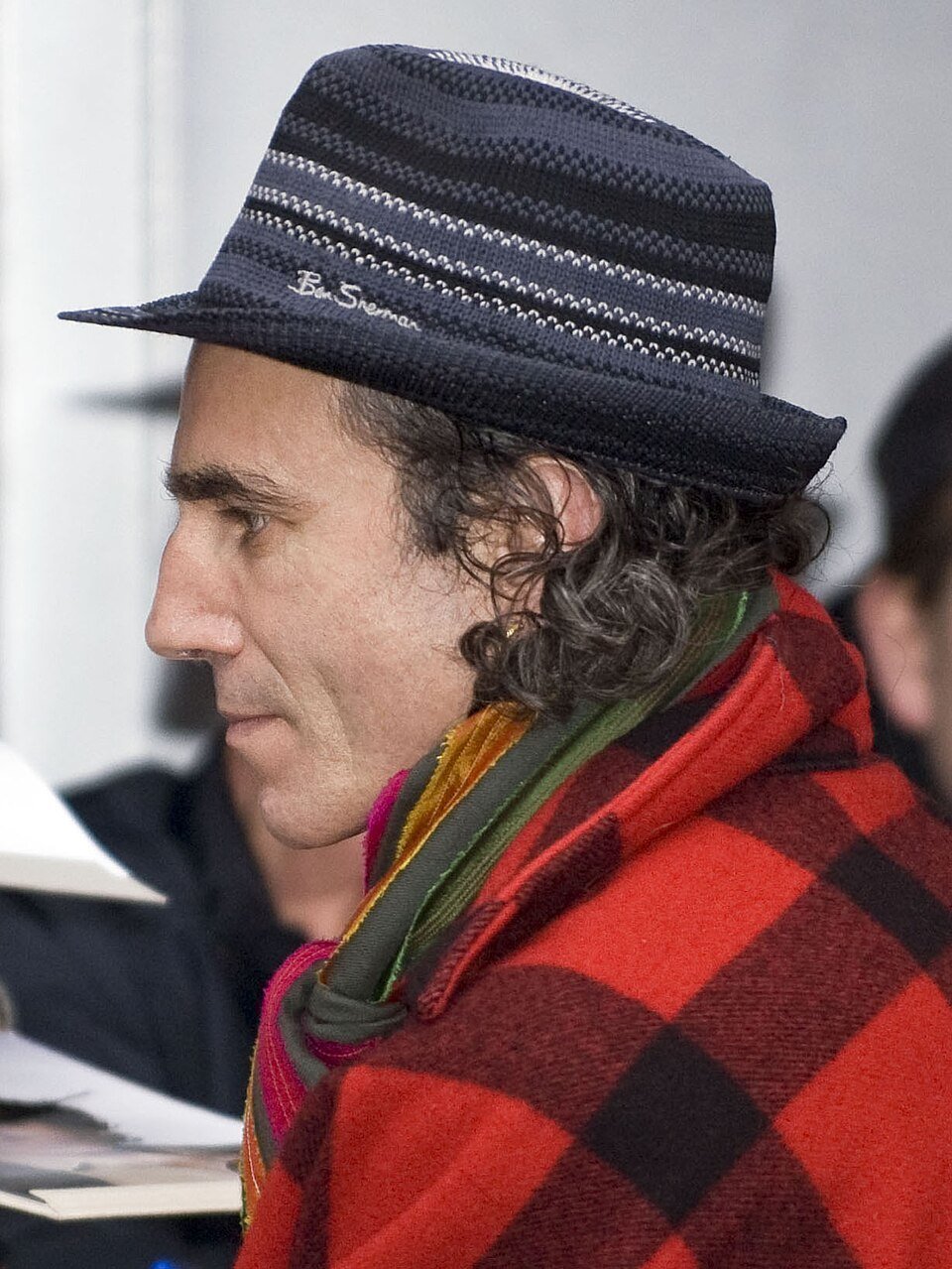
Daniel Day-Lewis does not make many movies. He makes the ones other actors measure themselves against. The only performer in history to win the Academy Award for Best Actor three times, he built a legend out of total immersion, long silences between roles and a private life guarded almost as fiercely as his craft. Celebrity Net Worth estimates his net worth at $40 million in its current listing — modest by superstar standards, and entirely consistent with a man who turned down far more work than he accepted. At 69, after retiring twice, he returned to the screen in 2025 in a picture directed by his own son, and this is the story of how a poet’s son from London became, for many, the greatest screen actor of his age.
Early Life
Daniel Michael Blake Day-Lewis was born on April 29, 1957, in Kensington, London, England. His biography begins inside one of Britain’s most literary families. His parents are Cecil Day-Lewis, the Anglo-Irish poet who served as Poet Laureate of the United Kingdom from 1968 and also wrote detective fiction under the name Nicholas Blake, and Jill Balcon, a stage and screen actress whose own father, Michael Balcon, had run Ealing Studios. Daniel was the couple’s second offspring, raised between London and the family’s literary circle, in a home where writers and actors were ordinary visitors and language was the family trade.
School was less comfortable than home. Day-Lewis was educated in London, including at Sevenoaks School in Kent, where he was unhappy, and he has described himself as a restless, occasionally wayward teenager who found his footing through making things with his hands and, eventually, through performance. He appeared on screen as a teenager in an uncredited role in Sunday Bloody Sunday (1971), but the serious training came later: after a period in which he seriously considered a cabinet-making apprenticeship, he won a place at the Bristol Old Vic Theatre School. The woodworking was never wasted — the patience, precision and respect for craft it taught him became the template for how he would approach every role, learning the trade of each character from the inside out. He graduated in 1979 and joined the Royal Shakespeare Company, beginning a stage career that included a celebrated, abruptly ended run as Hamlet at the National Theatre in 1989.
Career
1982–1989: Gandhi, My Beautiful Laundrette and a first Oscar
Day-Lewis’s early screen work showed a range that casting directors found almost suspicious: in 1985 he appeared in the same season as the streetwise Johnny in My Beautiful Laundrette and as the snobbish Cecil in A Room with a View, two performances so different that reviewers checked the credits twice. Gandhi (1982) and The Bounty (1984) had already put him in major productions, and The Unbearable Lightness of Being (1988) gave him a brooding European lead. Then My Left Foot (1989) changed everything. Playing Christy Brown, the Irish writer and painter with cerebral palsy, Day-Lewis stayed in character through the shoot, was carried on set and learned to paint and write with his left foot. The performance won him the Academy Award for Best Actor and announced a method of working — total, physical, uncompromising — that would define his reputation.
1992–1997: Mohicans, a second Oscar and the shoemaking sabbatical
The Last of the Mohicans (1992) turned the method toward action, Day-Lewis training for months to run, fight and shoot as a frontiersman, and the picture became a major hit. In the Name of the Father (1993), playing the wrongly convicted Gerry Conlon, brought a second Academy Award nomination in a searing true story, and The Age of Innocence (1993) for Martin Scorsese showed the quieter register. The Crucible (1996) adapted Arthur Miller’s play, and The Boxer (1997), for which he trained for years as a fighter, seemed to exhaust something in him. In 1997 he walked away from acting entirely, moving to Italy and apprenticing himself to a master shoemaker in Florence — not a publicity stunt, but a genuine change of trade that lasted until 2000, when Scorsese coaxed him back.
2002–2012: Gangs of New York, There Will Be Blood and Lincoln
The return produced one of the century’s great performances. As Bill “the Butcher” Cutting in Gangs of New York (2002), Day-Lewis was terrifying and magnetic in equal measure, earning another Academy Award nomination. The Ballad of Jack and Rose (2005) was a smaller, personal picture written and directed by his wife. Then There Will Be Blood (2007) arrived: as the oilman Daniel Plainview, he built a character out of a voice, a stoop and a bottomless appetite, and won his second Academy Award for Best Actor in a performance that regularly tops critics’ polls of the greatest ever given. Nine (2009) was a rare misstep, but Lincoln (2012) restored the pattern completely. His Abraham Lincoln — gentle, funny, politically ruthless — won him a third Best Actor Academy Award, a feat no male performer had achieved before, and made his position in acting history unarguable.
2013–2026: Phantom Thread, retirement and Anemone
After Lincoln the silences grew longer. Phantom Thread (2017), in which he played the fastidious dressmaker Reynolds Woodcock for director Paul Thomas Anderson, was received as another masterclass, and in June 2017, before its release, his spokesperson announced that he would retire from acting. For seven years the retirement held: he lived quietly, made things, rode motorcycles and gave almost no interviews. Then, on October 1, 2024, it was announced that he would return — not for a studio epic, but for Anemone, the first feature directed by his son Ronan Day-Lewis, which father and son co-wrote together. Anemone premiered at the New York Film Festival in 2025, with Day-Lewis starring alongside Sean Bean and Samantha Morton, and he told Rolling Stone that a residual sadness about leaving the work just as Ronan entered it had drawn him back. Whether it marks a full return or a single family collaboration, he has characteristically declined to say.
That reflective quality runs through his off-screen life as well. A man who prepares for roles by learning entire trades tends to approach self-improvement the same way, and readers who enjoy structured listening will recognise the appeal of round-ups of the best podcasts for personal growth — long-form conversation being one of the few modern formats that still rewards the patience Day-Lewis has always brought to his own education. He remains an actor who treats attention as a craft rather than a commodity, which is precisely why each return makes headlines.
Personal Life & Family
Day-Lewis’s personal life has been conducted almost entirely out of view, by design. From 1989 to 1995 he was in a relationship with the French actress Isabelle Adjani, and their son, Gabriel-Kane Day-Lewis, was born in 1995. While working on The Crucible he visited the home of its author, Arthur Miller, and met Miller’s daughter, the writer and director Rebecca Miller. They married on November 13, 1996, and have two sons together: Ronan Cal Day-Lewis, born in 1998, a painter and now a director in his own right, and Cashel Blake Day-Lewis, born in 2002. In November 2026 the couple marked thirty years of marriage, a milestone People magazine noted with a rare set of family photographs spanning the decades.
The family divides its time between Manhattan in New York City and Annamoe, in County Wicklow, Ireland, where Day-Lewis has lived since the early nineties and where neighbours are famously protective of his privacy. His father died in 1972, when Daniel was fifteen, a loss he has rarely discussed publicly; his mother lived until 2009. Family, in his telling, is the point of everything else: the long gaps between pictures were partly chosen so that his sons grew up with a father who was present rather than permanently on location, and his eventual return to acting happened, fittingly, because one of those sons asked him to collaborate. He was knighted in 2014 for services to drama, accepting the honour with characteristic brevity. Consistent with the whole pattern, he has no official Instagram account and no public social media presence of any kind; accounts using his name are not his.
Net Worth & Assets
Celebrity Net Worth estimates Day-Lewis’s net worth at $40 million in its current listing. Published estimates do not all agree: other trackers place the figure between $50 million and $60 million, and some go higher still, so the honest summary is a fortune in the $40–60 million range with the Celebrity Net Worth figure as the conservative anchor. No Forbes or Sunday Times Rich List solo total was found in the sources checked. Notably, Celebrity Net Worth’s page for Rebecca Miller describes the couple as having a combined net worth of $40 million with her husband, a reminder that published figures for private couples are estimates layered on estimates and should be read as such.
The economics of his career explain why the number is not larger. Day-Lewis worked at roughly one picture every few years, took no endorsement deals, and twice retired at what would have been peak earning age for a star of his standing. Reported salaries were substantial by the standards of serious drama — coverage of The Crucible put his fee at around $8 million in 1996 — but salary is earnings, not wealth, and a selective filmography simply accumulates less than a prolific one. What the fortune does include is property on two sides of the Atlantic, in Manhattan and in County Wicklow, bought during his working years and held quietly ever since; no purchase prices are reliably published, and this profile does not invent any.
His height is one of the few personal statistics where listings genuinely conflict: IMDb lists him at 6 feet 1½ inches (1.87 m), while other published listings give 6 feet 2 inches (1.88 m), and still others put him lower; there is no official figure. His weight appears in published listings at around 170 to 180 pounds (77 to 82 kg), again a listing range rather than an official number, and one that visibly changed across roles — the gaunt frame of My Left Foot and the bulked-up menace of Gangs of New York were both built deliberately for the part. His nationality, a point readers often ask about, is dual: he holds both British and Irish citizenship, the latter since 1993, reflecting a London birth, an Irish-born father and a chosen home in County Wicklow of more than thirty years.
Fact File
| Fact File | Details |
|---|---|
| Net Worth | Estimated $40 million, according to Celebrity Net Worth (current listing); other published trackers estimate $50–60 million |
| Age | 69 years old |
| Height | 6 feet 1½ inches (1.87 m) in the IMDb listing; other listings give up to 6 feet 2 inches; no official figure |
| Weight | Around 170–180 lb (77–82 kg) in published listings; no official figure |
| Biography | English actor born in Kensington, London, the only performer to win three Academy Awards for Best Actor, famed for total-immersion method performances |
| Born | April 29, 1957, in Kensington, London, England |
| Wife | Rebecca Miller (married November 13, 1996) |
| Children | Gabriel-Kane Day-Lewis (born 1995), with Isabelle Adjani; Ronan Cal Day-Lewis (born 1998) and Cashel Blake Day-Lewis (born 2002), with Rebecca Miller |
| Parents | Cecil Day-Lewis (father), poet and Poet Laureate, and Jill Balcon (mother), actress |
| Family | Wife Rebecca Miller and sons Gabriel-Kane, Ronan and Cashel; based between Manhattan and Annamoe, County Wicklow |
| Movies and TV Shows | My Left Foot, The Last of the Mohicans, In the Name of the Father, The Age of Innocence, The Crucible, The Boxer, Gangs of New York, There Will Be Blood, Lincoln, Phantom Thread and Anemone |
| Nationality | British and Irish — dual citizenship; Irish citizenship held since 1993 |
| No official account — Daniel Day-Lewis has no public social media presence; accounts under his name are not his |
At 69, Day-Lewis’s story is the rarest kind in modern celebrity: a legend built on absence as much as achievement. Three Academy Awards, a knighthood, two retirements and one return for his son’s sake — the record is complete whether or not he ever steps in front of a camera again.