Creativity is widely misunderstood as a gift — something you either have or you don’t, dispensed at birth to artists and withheld from accountants. The research tells a different story: creativity is a skill, built from trainable cognitive habits, and daily practice develops it the way daily running develops fitness. You do not find your creativity. You build it, rep by rep.
The keyword asks “how often” — and the honest answer is daily, but in small doses that fit real life. This guide explains what creativity actually is (it’s not what you think), the daily practices with the best evidence, how Miami’s environment can fuel the process, and how to measure progress when the results are not as visible as a bigger bicep.
What Creativity Actually Is
Psychologists define creativity as producing ideas that are both novel and useful. Novelty alone is just weirdness; usefulness alone is just competence. The intersection is the target — and hitting it involves two distinct thinking modes:
Divergent thinking generates many possible ideas (brainstorming, freewriting, sketching variations). Convergent thinking evaluates and refines them into the best one. Most people are stuck in convergent mode all day — judging, optimizing, deciding — and wonder why no fresh ideas arrive. Creativity practice is largely about deliberately exercising the divergent muscle: generating quantity without judgment, then converging later.
Crucially, creativity is domain-general but practice-specific: the habit of divergent thinking transfers across fields, but you still must apply it to your actual work. A daily creativity practice builds the muscle; pointing it at your projects builds the results.
The Core Daily Practice: 15 Minutes of Divergence
The foundation is stupidly simple: 15 minutes daily of judgment-free idea generation. Pick one prompt and produce as many responses as possible without evaluating any of them. Examples:
Alternative uses: list 30 uses for a brick, a paperclip, a cardboard box. (This is literally the Torrance Test of Creative Thinking, the gold-standard creativity measure — you are training on the actual test.)
Morning pages: three pages of stream-of-consciousness writing, per Julia Cameron’s The Artist’s Way. Not for reading, not for quality — for clearing the mental cache so fresh ideas have room. Millions of creatives swear by this; the mechanism is offloading: anxieties and to-do loops parked on paper stop occupying working memory.
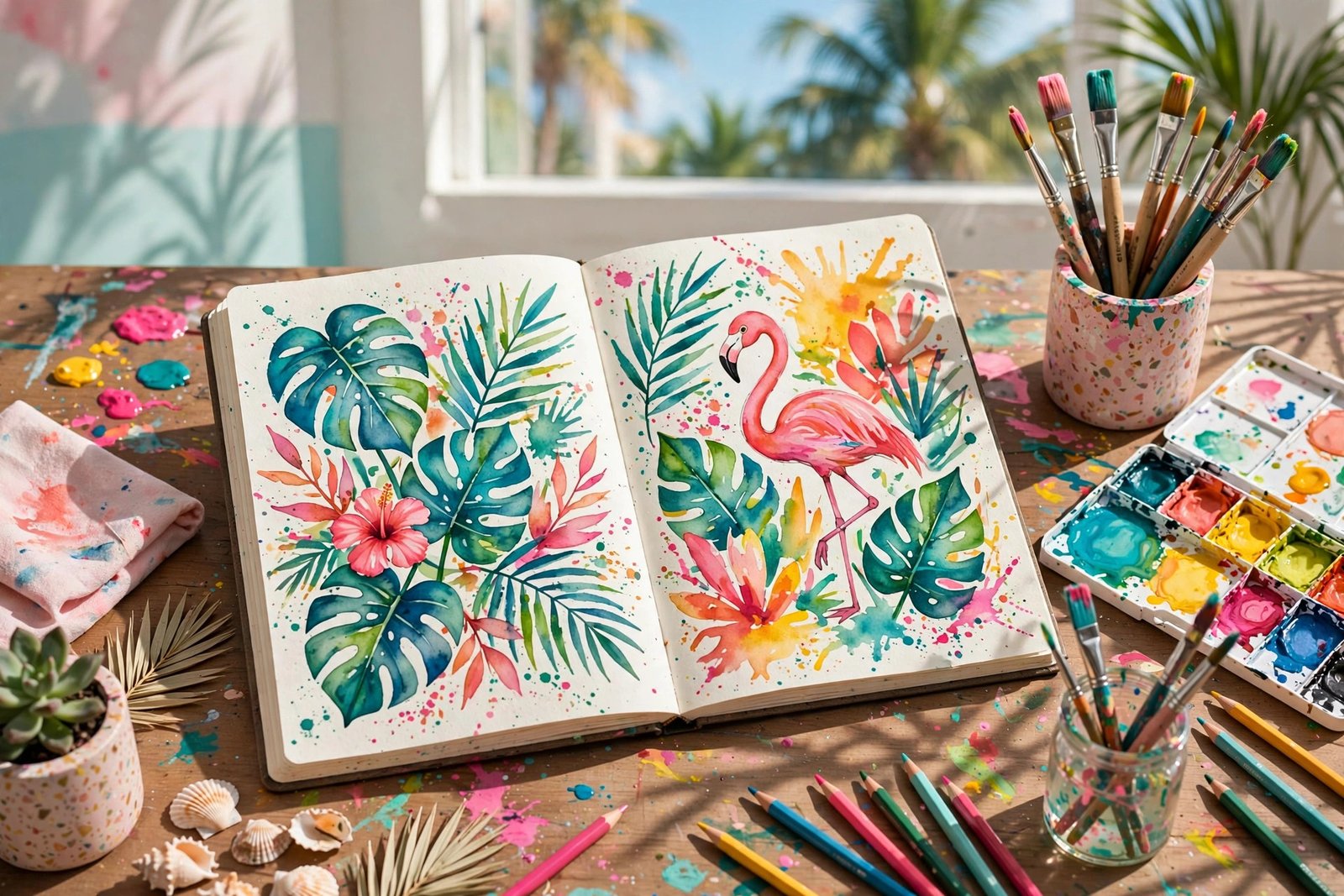
Sketch-every-day: one small sketch daily — a coffee cup, a hand, a building. Not art; observation training. Drawing forces you to actually see instead of symbol-drawing from memory, and seeing freshly is the raw material of creative thought.
The “bad ideas” list: deliberately generate ten terrible solutions to a real problem you face. Removing the pressure to be good liberates the divergent pump — and bad ideas often contain the seed of a good one once the inner critic is gagged.
Do it at the same time daily — morning works best, before convergent demands hijack your brain. Fifteen minutes is the minimum effective dose; the consistency matters more than the duration.
Feed the Machine: Input Habits
Creativity is combinatorial — new ideas are old ideas combined in new ways. That means input quality determines output quality. The most creative people are not the most “original”; they are the most widely exposed. Daily input practices:
Cross-pollinate deliberately. Read outside your field. A marketer who reads biology, a programmer who studies cooking, a teacher who follows architecture — the intersections are where novel ideas live. One book a month outside your domain compounds astonishingly.
Keep an idea capture system. Creativity research is unanimous: ideas arrive at inconvenient times (showers, walks, 3am) and evaporate within minutes. A pocket notebook or phone note titled “ideas” — reviewed weekly — converts fleeting sparks into a personal idea bank. Reviewing old notes often triggers combinations you missed the first time.
Consume actively, not passively. When you encounter something excellent, ask why it works and how you would steal the technique for your domain. This “creative theft” — practiced openly by everyone from Picasso (“good artists copy, great artists steal”) to Steve Jobs — is how influence becomes originality.
Miami helps here enormously: the city’s collision of Latin American, Caribbean, and American cultures is a natural cross-pollination engine. TED’s creativity talks make excellent divergent-thinking fuel during commutes.
Use Miami: Place as Creative Practice
Environment shapes cognition, and Miami offers specific creative advantages worth exploiting:
Walk for ideas. Stanford research (Oppezzo & Schwartz, 2014) found walking boosts creative output by an average of 60% — and the effect lingers after you sit down. A daily walk — the Beachwalk, Bayfront Park, your own neighborhood — doubles as divergent-thinking time. Leave the podcasts off sometimes; let the mind wander. Mind-wandering is not distraction; it is the brain’s background creativity process running.
Change your scenery. Novel environments trigger novel thinking — the brain in “new place” mode makes broader associations. Work from a different café weekly, take a different route, visit a museum (PAMM, the Wynwood Walls) monthly. Routine is convergent-thinking territory; novelty feeds divergence.
Engage with the art scene. Miami’s art ecosystem — Art Basel season, Wynwood galleries, Little Haiti’s cultural spaces, live music across the city — is input of the highest quality. Monthly gallery visits are not leisure; they are professional development for your creative muscle. And learning a new hobby as an adult — salsa dancing, pottery, improv — cross-trains creativity directly.
Protect the Practice: What Kills Daily Creativity
Judging during generation. The cardinal sin. Divergent and convergent thinking are neurologically opposed — evaluating while generating strangles both. Enforce a strict separation: generate first (quantity, no judgment), evaluate later (quality, ruthless judgment). Different sessions, different mindsets.
Waiting for inspiration. Professionals do not wait for the muse; they schedule the work and the muse learns the schedule. The daily practice exists precisely for uninspired days — showing up anyway is what separates developing creatives from dreaming ones.
Busyness as identity. Creativity needs fallow time — the shower, the commute, the stare-out-the-window moments when the subconscious connects dots. A schedule packed to the minute with “productive” activity starves the background process. Protect at least some unstructured time daily; it is not laziness, it is incubation.
Perfectionism in the practice itself. Morning pages are not literature; daily sketches are not portfolio pieces. The practice works through volume and consistency, not quality.
Psychology Today’s creativity research coverage consistently reinforces these points: creative achievement correlates with daily creative habits, not with inspiration or innate talent.
How to Know It’s Working
Creativity progress is subtler than fitness progress, but it is measurable:
Fluency: count your ideas per session. Rising counts mean the divergent muscle is strengthening — aim for quantity growth over months.
Flexibility: notice whether your ideas span more categories. Ten uses for a brick all involving construction = low flexibility; uses spanning construction, art, cooking, and music = growing flexibility.
Real-world application: the ultimate metric — are you generating more novel, useful solutions at work and in life? Keep a monthly log of “creative wins”: problems solved unusually, ideas implemented, compliments on original thinking. This log becomes both evidence and motivation.
And tend the foundation: small daily habits for mental health — sleep, movement, daylight — underpin creative cognition. A depleted brain does not diverge; it survives.
Conclusion
Developing creativity through daily practice is not mysterious: fifteen minutes of judgment-free divergent thinking every morning, rich and varied inputs, a capture system for fleeting ideas, Miami’s walks and art scene as fuel, and ruthless protection of the practice from judgment, busyness, and perfectionism. How often? Daily — because creativity is a muscle, and muscles grow from regular reps, not occasional heroics.
Start tomorrow morning: one prompt, fifteen minutes, no judgment. In three months, count your ideas per session and compare. You were creative all along — you just needed the reps.
Frequently Asked Questions
How often should I practice creativity to see results?
Daily, in 15-minute sessions. Consistency beats duration — fifteen focused minutes every morning builds the divergent-thinking habit far better than a monthly three-hour burst. Most practitioners notice increased idea fluency within 4–6 weeks.
Can adults become more creative, or is it fixed?
Creativity is trainable at any age. Research shows divergent thinking improves with deliberate practice regardless of age, and creative achievement correlates more strongly with daily creative habits than with innate talent. What feels like “not being creative” is usually just an atrophied divergent-thinking habit.
What is the best daily exercise for creativity?
The alternative-uses exercise (list 30 uses for a common object) directly trains the divergent thinking measured by creativity tests. Morning pages (stream-of-consciousness writing) clear mental clutter. Daily sketching trains fresh observation. Rotate among them — variety in practice builds flexibility in thinking.
Does walking really boost creativity?
Yes — Stanford research found walking increases creative output by about 60% on divergent-thinking tasks, with effects lingering after sitting back down. The mechanism involves reduced cognitive inhibition and increased mind-wandering. Outdoor walks work slightly better than treadmill walks, but both beat sitting.