Curb appeal is the only home improvement project that pays you back every single time you pull into the driveway. It also happens to be one of the cheapest — you can transform how your house looks from the street for less than the cost of a nice dinner out. Whether you’re selling or just tired of your house looking sad, these are the highest-impact, lowest-cost moves.
How to Improve Your Home’s Curb Appeal Cheaply
Start with the brutal cleanup (free)
Before spending a dollar, do the free stuff — it accounts for half the transformation. Mow and edge the lawn. Pull weeds from beds and driveway cracks. Trim overgrown bushes (overgrown shrubs make even nice houses look abandoned). Sweep the walkway and porch. Wash the windows — inside and out. Clean the gutters’ visible faces. This costs nothing but a Saturday and makes everything else you do look twice as good.
The front door: your $50 transformation
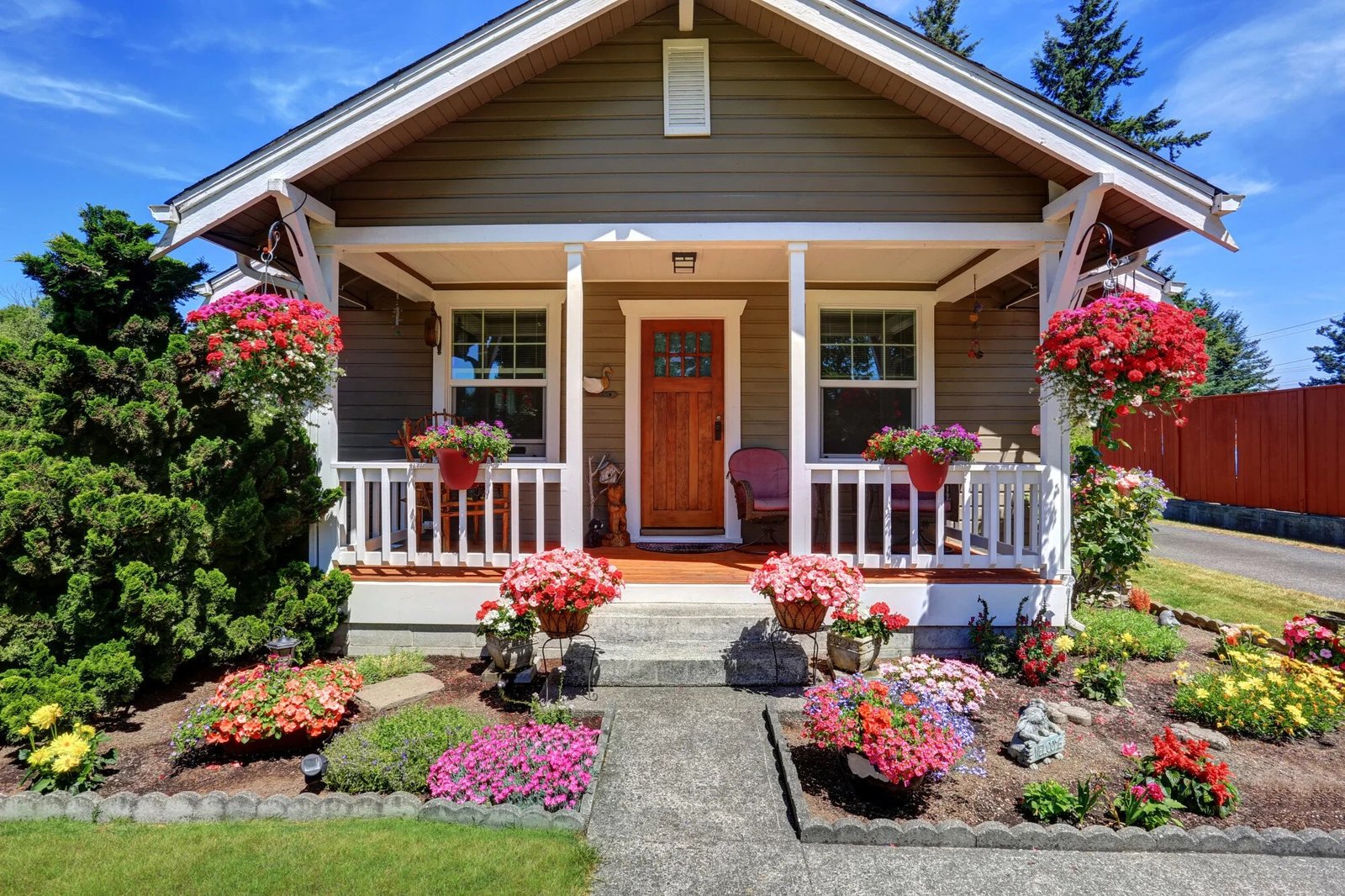
Your front door is the focal point of your home’s exterior — it’s what every visitor and buyer looks at. A fresh coat of paint in a bold, confident color (navy, deep red, black, forest green) costs $30-$50 in paint and transforms the entire facade. Add a new $15-$25 handle or knocker if the old one is dated, and you’ve done the highest-ROI exterior project in existence for under $75.
If your door is structurally fine but cosmetically tired, making an old front door look new again covers refinishing in detail — sometimes paint isn’t even needed.
Landscaping that costs almost nothing
- Mulch everything. A $40 load of mulch in the beds makes landscaping look intentional and maintained instantly. It’s the fastest visual upgrade in yard work.
- Add symmetry. Two matching planters flanking the front door ($30-$60 total with plants) create a polished, designed look. Symmetry reads as “expensive” to the human eye.
- Edge the beds. A clean edge between lawn and beds — cut with a $15 half-moon edger — makes the whole yard look professionally maintained.
- Plant for your zone. Native plants cost less, need less water, and actually survive. Your local extension office gives free advice on what thrives in your area.
For ongoing yard health without the chemical bill, maintaining a lawn without chemicals keeps things green and safe.
Lighting: the evening transformation
Most people only see your house’s exterior in daylight — but evening curb appeal matters enormously, and it’s cheap to create. Solar path lights have gotten genuinely good: a 6-pack runs $25-$40, installs in minutes (push into ground, done), and needs no wiring. Place them along the walkway and around key landscape features. For the porch, a $30-$50 statement light fixture by the front door adds character that buyers photograph.
More ambitious options are covered in outdoor lighting for the backyard — many of the same principles apply up front.
Numbers, mailbox, and the details
New house numbers ($15-$30 for modern styles), a straightened or replaced mailbox ($25-$50), and a fresh welcome mat ($20) — these tiny details signal “this house is cared for.” Buyers and appraisers notice them subconsciously. It’s the exterior equivalent of ironing your shirt for an interview.
The $200 Weekend Makeover Plan
If I had exactly $200 and one weekend, here’s the order: Saturday morning — full cleanup and yard work (free). Saturday afternoon — mulch the beds ($40) and edge everything. Sunday morning — paint the front door ($40) and install new house numbers ($20). Sunday afternoon — solar path lights ($35) and two planters with seasonal color ($50). Total: ~$185. The house looks like a different property by Sunday evening.
Curb Appeal Mistakes That Actually Hurt Value
Good intentions create bad curb appeal surprisingly often. The biggest offender: over-landscaping. Cramming beds with dozens of plant varieties looks busy, not lush — and it signals high maintenance to buyers. Three to five plant varieties repeated in drifts looks designed; twenty varieties looks like a nursery exploded. Restraint reads as expensive.
Second: neglecting the “boring” infrastructure. Peeling paint on trim, a cracked walkway, gutters hanging at angles — buyers’ eyes go straight to deferred maintenance, and it colors their perception of everything else. A $200 walkway repair influences the offer more than $200 in flowers, because it answers the buyer’s real question: “was this house maintained?”
Third: too-personal touches. The 6-foot metal rooster sculpture, the political flags, the 14 garden gnomes — they don’t just fail to add appeal, they actively prevent buyers from picturing themselves in the house. When selling, depersonalize the exterior as ruthlessly as the interior. Your taste is valid; it’s just not universal.
Fourth: ignoring the night view. Buyers drive by in the evening. A dark house with no landscape lighting looks abandoned compared to the neighbor’s warmly lit entry. The solar lights from the makeover plan pay for themselves in first impressions alone. And keep the porch light on a timer or smart bulb — a lit entry at dusk is the cheapest staging there is. The National Association of Realtors consistently finds first-impression exterior projects among the highest-value improvements in their remodeling reports.
Curb Appeal: Quick Answers
How fast can I improve curb appeal before listing? The $200 weekend plan in this article is designed for exactly that — cleanup Saturday, door/lights/planters Sunday. Most of it shows immediately.
Do I need to hire a landscaper? No — mulch, edging, and symmetry are DIY-friendly. Hire out only for tree work, drainage issues, or designs beyond your confidence.
What color should I paint my front door? Navy, black, deep red, and forest green are safe bets that suit most homes. Match the boldness to your house — neutral house, bold door; colorful house, restrained door.
The Bottom Line
Improving curb appeal cheaply is about prioritization, not budget: free cleanup first, then the front door, then mulch and symmetry in the landscaping, then lighting and details. For $150-$300 and a weekend of work, you can add thousands in perceived value — real estate agents consistently rank curb appeal among the highest-ROI improvements because first impressions are formed in seconds. Make those seconds count.