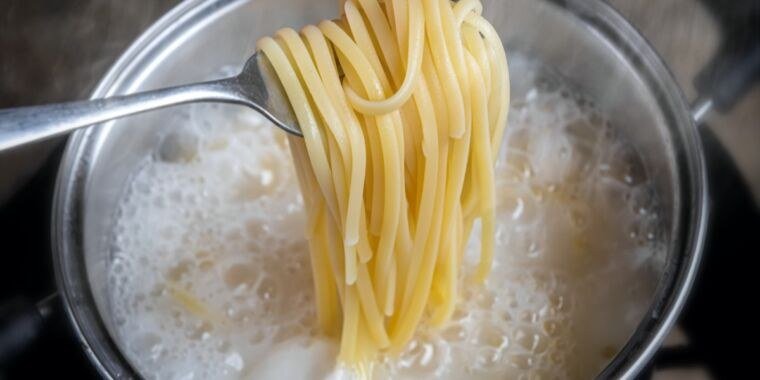
Mushy pasta is a quiet tragedy — and it’s almost always a timing issue, not a skill issue. Perfectly cooked pasta (al dente, with that slight resistance when you bite) comes down to knowing what to look for in the final two minutes. Chefs don’t set timers and walk away; they taste. Here’s how to know exactly when your pasta is done, every time, for every shape.
How to Know When Pasta Is Perfectly Cooked
The only reliable test: taste it
Forget the timer as your primary guide — package times are starting points, not gospel. They vary by brand, altitude, and how vigorously your water boils. Start tasting 2 minutes before the package time. You’re looking for al dente: tender on the outside with a slight firmness (a tiny white dot) at the very center when you bite through. It should offer gentle resistance — not crunch, not mush. That resistance is the difference between pasta with texture and pasta that’s just a sauce delivery vehicle.
The wall-throwing test? It’s theater. Pasta sticks to the wall when the starch is over-released — which means it’s overcooked. A fun party trick that selects for bad pasta. Taste instead.
The visual cues (before you taste)
- It grows: Pasta roughly doubles in size when cooked. If it still looks skinny and pale, it’s not ready.
- It floats and swells: Fresh pasta floats when done; dried pasta plumps and turns from chalky-white to creamy.
- The color evens out: Break a piece open — a thin white core means almost done (pull it now if you’re finishing in sauce); no white at all means fully cooked; a thick white center means give it another minute.
Timing guidelines by type (starting points)
- Thin shapes (angel hair, thin spaghetti): 3-5 minutes. These go from perfect to mush in 60 seconds — stay close.
- Standard dried (spaghetti, penne, fusilli): 8-12 minutes. Start tasting at 8.
- Thick shapes (rigatoni, pappardelle): 12-15 minutes. The density needs time.
- Fresh pasta: 1-3 minutes. It’s barely cooking — blink and it’s overdone.
- Whole wheat / legume pastas: Follow package times closely; they behave differently from semolina and go mushy faster past their window.
The rules that matter
- Salt the water generously. It should taste like the sea — about 1 tablespoon per 4 quarts. This is your only chance to season the pasta itself. Unsalted pasta water produces bland pasta no sauce can fully fix.
- Use plenty of water. Four to six quarts per pound. Crowded pasta sticks and cooks unevenly.
- Don’t add oil to the water. It does nothing to prevent sticking (oil floats) and makes sauce slide off the pasta. Stirring in the first minute prevents sticking far better.
- Pull it a minute early if finishing in sauce — the pasta absorbs sauce and continues cooking in the pan. This is how restaurants do it, and it’s the secret to pasta that tastes integrated rather than “noodles with stuff on top.”
- Save a cup of pasta water before draining. The starchy water is liquid gold — it emulsifies sauces, making them cling to pasta instead of pooling at the bottom. This single habit improves every pasta dish you make.
- Never rinse (unless making cold pasta salad). Rinsing washes off the starch that helps sauce adhere.
Doneness for specific dishes
- For baked pasta (lasagna, baked ziti): Cook to very al dente — quite firm — since it cooks further in the oven. Mushy baked pasta comes from fully-cooked noodles going in.
- For pasta salad: Cook just past al dente (it firms up when cold), rinse here (the exception — stops cooking and cools it), and dress while warm so it absorbs flavor.
- For soup noodles: Cook separately and add at serving, or they’ll dissolve into starch by day two of leftovers.
Perfect pasta is the foundation of one-pot pasta dishes too — and if you’re building Italian nights at home, homemade pizza dough is the natural next project.
Pasta Shapes and Sauce Pairing: The Real Rules
Shape isn’t arbitrary — it’s engineering. Long thin strands (spaghetti, linguine, angel hair): pair with smooth, clinging sauces — olive oil-based, light tomato, carbonara. The sauce coats each strand; chunky sauces slide off and pool at the bottom.
Tubes (penne, rigatoni, ziti): built for hearty, chunky sauces — the sauce gets inside the tubes, delivering flavor in every bite. Rigatoni’s ridges grip sauce even better. This is why baked pasta uses tubes: structure that holds up.
Twists and spirals (fusilli, rotini): maximum surface area for sauce adhesion — ideal for pesto and thick sauces that need nooks to cling to. Kids’ favorite for a reason: every bite is saucy.
Flat wide noodles (pappardelle, fettuccine): stand up to rich, heavy sauces — mushroom cream, ragù, Alfredo. Delicate sauces get lost on wide noodles; bold sauces need the real estate.
Small shapes (orzo, ditalini, farfalle): soups, pasta salads, and light vegetable sauces. Their size matches the other ingredients — harmony in the bowl.
The underlying principle: match the sauce’s weight to the pasta’s substance. Delicate pasta + heavy sauce = overwhelmed; sturdy pasta + light sauce = boring. When in doubt, the Italian tradition is instructive — each region’s pasta shape evolved with its local sauce. The Barilla pasta guides include an extensive shape-to-sauce pairing reference compiled from Italian culinary tradition.
Pasta: Quick Answers
How much salt goes in pasta water? About 1 tablespoon per 4 quarts — it should taste like the sea. This is your only chance to season the pasta itself.
Should I add oil to pasta water? No — it floats uselessly and makes sauce slide off. Stirring in the first minute prevents sticking far better.
Why save pasta water? The starch emulsifies sauces, making them cling to pasta instead of pooling. A cup of it transforms every pasta dish — it’s liquid gold.
The Bottom Line
Know when pasta is perfectly cooked by tasting 2 minutes before package time, looking for al dente — tender with slight resistance at the center. Salt the water like the sea, use plenty of water, pull a minute early for saucing, save the starchy water, and never rinse hot pasta. Timers start the conversation; your teeth finish it.