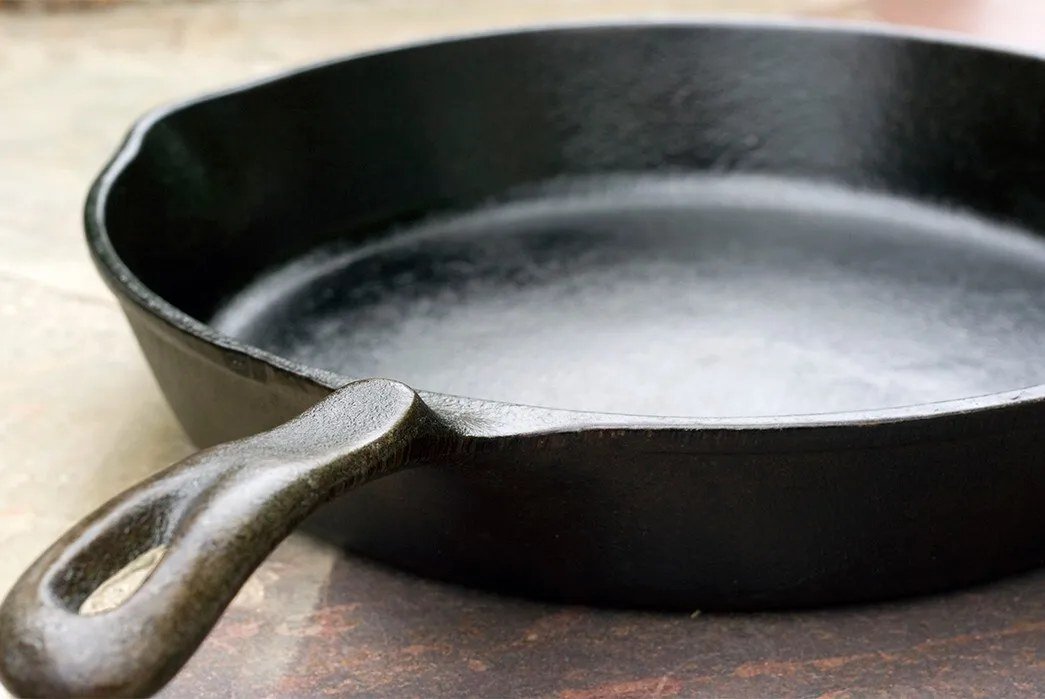
A well-seasoned cast iron skillet is a family heirloom in the making — naturally non-stick, indestructible, and better with every year. But that slick black patina doesn’t come from the factory (well, pre-seasoned ones are a start). It comes from proper seasoning: building up thin layers of polymerized oil that bond to the iron. Whether you’re seasoning a new pan or rescuing a rusty find, here’s how to do it right.
How to Properly Season a Cast Iron Skillet
What seasoning actually is
Seasoning isn’t oil sitting on the surface — it’s oil that’s been heated past its smoke point until it polymerizes: a chemical transformation that bonds the oil to the iron as a hard, dry, plastic-like coating. This is why “just rub oil on it” doesn’t work, and why the process requires real heat. Understanding this prevents the number one seasoning mistake: too much oil, not enough heat, resulting in a sticky mess instead of a hard finish.
The oven method (best for full seasoning)
- Start clean. New pans: wash with hot soapy water and dry completely (yes, soap is fine for this initial wash — the “no soap” rule applies to maintained seasoning, not bare iron). Rusty old pans: scrub rust off with steel wool or a vinegar soak (50/50 vinegar-water, 1-2 hours max — longer etches the iron), then wash and dry immediately and thoroughly. The pan must be bone dry — heat it on the stove for a few minutes to evaporate every trace of moisture. Water under seasoning causes rust spots.
- Apply oil — then wipe it almost all off. Rub a thin layer of high-smoke-point oil over every surface (inside, outside, handle). Then take a clean cloth and wipe it all off like you made a mistake. The pan should look dry. What remains in the pores is exactly enough. This is the critical step — visible oil pools become sticky patches, not seasoning.
- Bake upside down at 450-500°F for 1 hour. Place the pan upside down on the middle rack (foil on the lower rack catches drips). The temperature must exceed the oil’s smoke point — that’s what triggers polymerization. Good oils: refined canola, grapeseed, vegetable shortening (Crisco is the traditional favorite — cheap, effective, high smoke point). Flaxseed oil creates a hard finish but tends to flake over time; it’s controversial among enthusiasts.
- Cool in the oven. Let it cool completely before handling — the seasoning continues hardening as it cools.
- Repeat 2-3 times. Each layer builds the patina. Three thin layers beat one thick layer enormously — patience here pays off for years.
The stovetop method (for touch-ups)
For maintaining between oven seasonings: heat the clean, dry pan on medium-high, add a teaspoon of oil, wipe it around with a paper towel (tongs help — it’s hot), and keep wiping as it smokes lightly. When the smoking stops, you’re done. Two minutes, and the pan’s daily armor is refreshed. Do this after every few uses and you’ll rarely need full oven seasoning.
Daily care (protect the investment)
- Cook with it often. Every use with fats builds seasoning. The best-seasoned pans belong to people who cook in them daily.
- Clean while warm: Hot water and a stiff brush or chainmail scrubber ($12 — the cast iron lover’s best friend). For stuck food, simmer water in the pan for a few minutes.
- Soap: the real rule. Modern dish soap (not lye-based) won’t harm polymerized seasoning — the “no soap ever” rule is outdated. What damages seasoning: long soaks, harsh detergents left sitting, and abrasive scouring of new seasoning. A quick wash with mild soap is fine on established seasoning.
- Dry immediately and thoroughly. Towel dry, then heat on the stove 2 minutes. Then wipe the thinnest film of oil while warm. This 60-second ritual prevents 100% of rust.
- Never: soak it, put it in the dishwasher, or leave it wet. Those are the only real sins.
Rescuing a ruined pan
Rusty, sticky, or flaking? It’s salvageable unless it’s cracked or warped. Strip it (oven cleaner method or vinegar soak), scrub to bare metal, and run the full oven seasoning process. Cast iron is functionally indestructible — Lodge’s care guides confirm that even century-old neglected pans restore beautifully. That rusty skillet at the flea market for $10? It’s a treasure.
A well-seasoned skillet is the ideal tool for crispy fried chicken — and the same heat-control instincts help with diner-style eggs.
Cast Iron Cooking Tips: Getting the Most From Your Pan
A seasoned pan is just the start — cooking technique matters too. Preheat properly: cast iron heats slowly and unevenly at first. Give it 5 minutes over medium heat before adding food — the pan should be evenly hot, not scorching in the center and cold at the edges. The water-drop test: flick water in; it should sizzle and evaporate steadily, not explode violently (too hot) or sit there (too cold).
Fat is your friend: even well-seasoned pans benefit from adequate fat, especially for eggs and delicate foods. Butter, oil, bacon grease — the pan’s seasoning plus cooking fat creates the non-stick performance. As the seasoning builds over months of use, you’ll need less, but never go fat-free in cast iron.
Acidic foods: the old rule said never cook tomatoes or wine sauces in cast iron. The real rule: brief acidic cooking in well-seasoned pans is fine; long-simmered tomato sauce in new seasoning can strip it. A pan with a year’s seasoning handles chili without blinking. Know your pan’s maturity and act accordingly.
Heat management: cast iron retains heat aggressively — when food is nearly done, remove the pan from heat early; carryover cooking continues. And never plunge a hot pan into cold water (thermal shock can warp or crack it). Let it cool naturally, then clean while still warm — the sweet spot where food releases easily but the pan isn’t dangerously hot.
The Bottom Line
Season cast iron properly by: starting with clean, bone-dry iron, applying oil then wiping it nearly all off, baking upside down past the oil’s smoke point for an hour, cooling in the oven, and repeating 2-3 times. Maintain with regular cooking, prompt drying, and occasional stovetop touch-ups. Thin layers, high heat, patience — that’s the entire secret. Your grandchildren will cook on this pan.