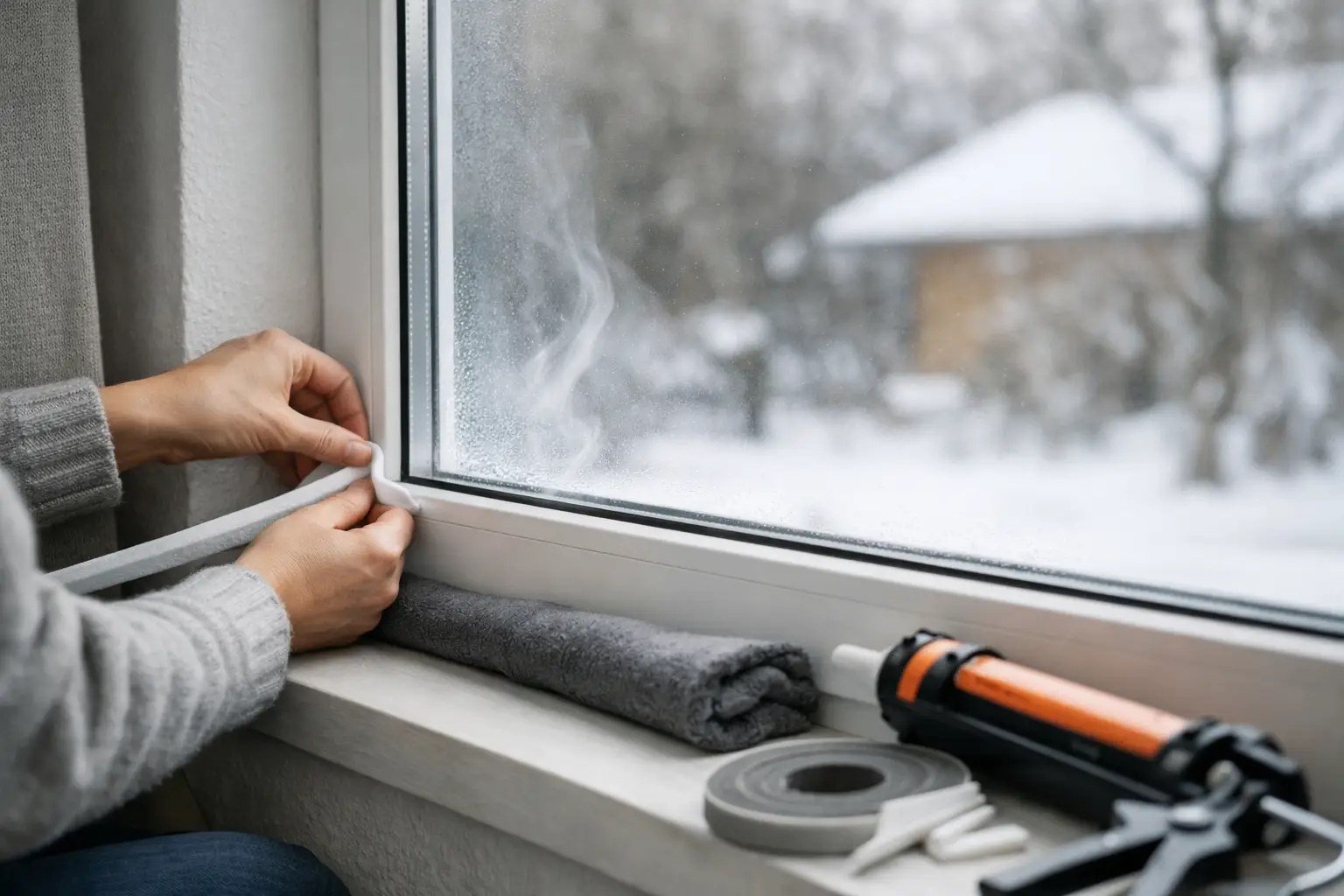
You can feel it standing near the window on a cold day — that thin, icy breath of outside air sneaking in around the frame. Drafty windows are among the biggest energy wasters in any home, and they make rooms genuinely uncomfortable no matter how high you crank the heat. The fix is usually cheap and fast. Here’s how to seal drafty windows to save on heating, from the 10-minute fixes to the permanent solutions.
How to Seal Drafty Windows to Save on Heating
Step 1: Find the actual drafts
Don’t guess — test. On a windy day, hold a lit incense stick or a thin piece of toilet paper near window edges, frames, and where the window meets the wall. Where the smoke wavers or the paper flutters, air is moving. Check all four sides of each window, plus the joint where the two sashes meet on double-hungs. You might find the draft isn’t the window at all — it’s the gap between the frame and the wall, which is even easier to fix.
Step 2: The quick wins (under $10 per window)
- Caulk the exterior and interior gaps where the window frame meets the wall or siding. Use exterior-grade silicone caulk outside, paintable latex caulk inside. One $5 tube handles several windows. Don’t caulk the moving parts — just the frame-to-wall joints.
- Apply V-strip weatherstripping ($5-$10 per window) along the sides of double-hung sashes and around casement windows. The V-shape springs open to seal gaps while still allowing the window to operate. It’s the best weatherstripping for windows that still need to open.
- Add foam tape ($3-$5 per roll) for irregular gaps — it compresses to fill uneven spaces. Best for windows you rarely open, since repeated opening compresses it permanently.
- Install a draft snake or door-style sweep at the sill for bottom-gap drafts. The weighted fabric tubes ($10-$15) work fine, though weatherstripping is more durable.
Step 3: Window insulation film (the seasonal powerhouse)
Plastic window film kits ($5-$10 per window) are ugly and incredibly effective — they add an insulating air layer that can cut heat loss through the window by 25-50%. Apply double-sided tape around the frame, press the film on, and shrink it tight with a hair dryer. The film becomes nearly invisible when properly shrunk.
Yes, you can’t open the window until spring. For windows you never open in winter anyway, that’s no sacrifice at all. This is the highest-impact temporary fix in existence for single-pane or old double-pane windows.
Step 4: Heavier solutions for bad windows
- Thermal curtains ($40-$100 per window): Floor-length, close-fitting curtains with thermal backing. They need to seal at the top (mount the rod close to the ceiling and wide) to prevent the chimney effect of warm air cycling behind them. Close them at night, open on sunny days for free solar heat.
- Interior storm windows ($50-$150 per window): Acrylic or glass panels that press into the window frame from inside, creating a dead-air space. Nearly as effective as replacement windows at a tenth the cost, and removable in spring.
- Rope caulk ($5 per pack): Pressable, removable caulk for sealing windows shut for the season. Peels off cleanly in spring. Perfect for old windows with multiple small leaks.
Step 5: Know when the window itself is done
Sealing has limits. Consider replacement when: there’s condensation between double panes (seal failure — the insulating gas is gone), the frame is rotted or warped, or single-pane windows in a cold climate are costing you hundreds yearly despite sealing. Replacement runs $300-$800 per window installed — significant, but the ENERGY STAR program estimates efficient windows save $100-$500+ yearly depending on climate and house size.
The Heating-Bill Math
Windows account for 25-30% of heating energy use in the average home, and draft sealing is the cheapest way to attack that number. A $50 investment in caulk, weatherstripping, and film across a drafty house typically saves $100-$300 per heating season — payback before spring. Combine with broader energy-saving upgrades and full winterizing, and heating bills can drop 20-30%.
The DOE’s Energy Saver guide has detailed air-sealing diagrams showing exactly where windows leak and how to seal each spot.
Window Treatments That Save Energy Year-Round
Sealing stops drafts; the right window treatments add insulation on top. Cellular (honeycomb) shades ($40-$100 per window) are the efficiency champions — the honeycomb pockets trap air, creating an insulating barrier that cuts heat loss significantly. They’re the closest thing to adding a storm window, and they look clean and modern doing it.
Layering treatments multiplies the effect: cellular shades plus curtains create two insulating air layers. The combination outperforms either alone, and the curtains add the light-blocking and style that shades lack. For bedrooms, this pairing also delivers the darkness that improves sleep — energy efficiency and comfort in one.
Exterior solutions beat interior ones in hot climates: awnings, exterior shutters, and solar screens block heat before it enters the glass. In cooling-dominated climates like Florida, exterior shading reduces solar heat gain far more effectively than any interior treatment — the heat never gets inside to be dealt with. Awnings over south and west windows are among the highest-ROI cooling investments.
Seasonal strategy: open coverings on south-facing windows during sunny winter days (free solar heating), close them at night (retain the heat). Reverse in summer: close during the day, open at night for ventilation. This daily habit costs nothing and meaningfully reduces both heating and cooling loads. Windows are energy liabilities or assets depending entirely on how you manage them.
Drafty Windows: Quick Answers
What’s the cheapest fix for drafty windows? Caulk for frame-to-wall gaps plus V-strip weatherstripping for operable sashes — about $10-$15 per window and an hour for the whole house.
Does window film really work? Yes — plastic insulation film cuts heat loss through windows by 25-50%. It’s the highest-impact temporary fix for old or single-pane windows.
When should I replace instead of seal? When there’s condensation between double panes (seal failure), rotted frames, or single-pane windows costing hundreds yearly despite sealing efforts.
The Bottom Line
Seal drafty windows by: finding leaks with the incense test, caulking frame-to-wall gaps, adding V-strip weatherstripping to operable sashes, applying window film for the season, and using thermal curtains or interior storms for the worst offenders. About $50-$100 for a whole house of materials, savings of hundreds per winter. That cold breath by the window? Gone by this weekend.