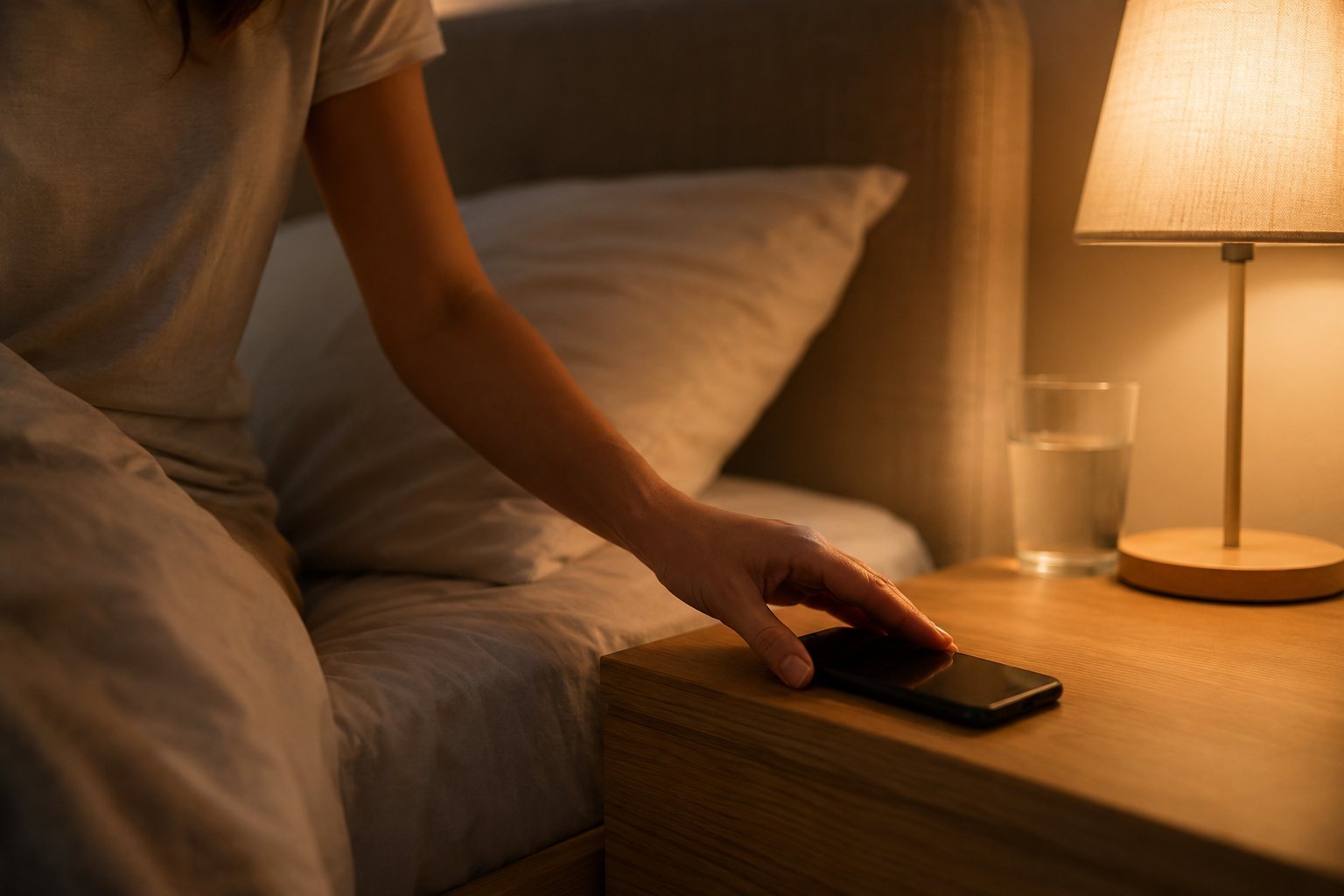
We’ve all done the math in our heads at 1 a.m.: “If I fall asleep RIGHT NOW I can still get five hours.” Meanwhile the phone glows in our hands — one more video, one more scroll. I used to tell myself I was “winding down” with my phone. In reality, I was winding myself up — and the research says I’m not special. Screens before bed mess with sleep for nearly everyone.
So how much screen time before bed is too much? The short answer: anything in the last hour counts against you, and the last 30 minutes matter most. Here’s what’s actually happening to your brain, and a realistic plan that doesn’t require becoming a digital monk.
What screens do to your sleep (it’s not just the blue light)
Blue light gets all the blame, but it’s only part of the story. Yes, screen light suppresses melatonin — the hormone that tells your body it’s nighttime — and phones held close to your face deliver a concentrated dose. But two other things matter just as much:
- Mental activation. Arguing in comments, watching intense shows, or even exciting sports keeps your brain in alert mode. Sleep needs the opposite.
- Time displacement. Every “five more minutes” of scrolling is five minutes stolen from sleep. The average person underestimates their bedtime scrolling by a lot.
The Sleep Foundation notes that evening screen use is consistently linked to taking longer to fall asleep and getting less restorative rest. It’s one of the most fixable sleep problems there is.
How much screen time before bed is too much? The practical thresholds
The gold standard: no screens for the last 60 minutes before bed. That’s what sleep researchers recommend, and people who actually do it usually report falling asleep faster within a week.
The realistic minimum: 30 screen-free minutes. If an hour feels impossible, start here. Even 30 minutes of disconnection measurably helps melatonin do its job.
The absolute floor: if you must use a device, make it passive and dim — an e-reader with warm light, or a boring podcast with the screen off. No social feeds, no news, no work email. Interactive, emotionally charged content is the worst offender, regardless of brightness settings.
And night mode? It helps a little, but it’s not a free pass. Dimming and warming the screen reduces melatonin suppression but does nothing about the mental stimulation. Don’t let the orange tint fool you into an extra hour of scrolling.
A wind-down routine that actually sticks
The trick isn’t willpower — it’s replacement. Your brain needs something to do in that last hour. Try this 60-minute sequence:
- 60 min before bed: phone goes on the charger — outside the bedroom if you can stand it. Set a real alarm clock.
- 45 min: dim the lights, take a warm shower, change into sleep clothes. The drop in body temperature afterward signals sleepiness.
- 30 min: low-stimulation activity — paper book, stretching, journaling, or calm conversation. This is a great slot for falling-asleep-faster methods techniques if your mind races.
- 15 min: lights low, breathing slows, no problem-solving. Tomorrow’s to-do list goes on paper, not in your head.
What if your job or life requires evening screens?
Some people genuinely can’t ditch screens — night-shift workers, on-call parents, students. If that’s you: use the dimmest, warmest settings, keep content as boring as possible, and protect your sleep on the other end with a consistent wake time and morning daylight. A a solid morning routine within an hour of waking anchors your body clock and makes evening wind-down easier.
The takeaway
How much screen time before bed is too much? Treat the last hour as a no-scroll zone and the last 30 minutes as sacred. Replace the habit rather than white-knuckling it, charge the phone outside the bedroom, and give it a full week — most people are surprised how fast their sleep improves. Your mornings will thank you.
Don’t stop at bedtime: reclaim your mornings too
Here’s the plot twist most sleep advice misses: the morning phone habit matters almost as much as the bedtime one. Reaching for your phone within minutes of waking floods your brain with other people’s urgencies — news, notifications, social comparison — before your own intentions for the day have formed. Cortisol naturally peaks in the morning (the cortisol awakening response, which is healthy and energizing); dousing it in stress inputs converts good morning energy into anxious energy.
The fix mirrors the bedtime rule: keep the first 30 minutes phone-free. Get daylight, move a little, drink water, decide your day’s one priority — then check the phone. People who do this consistently report the same thing: mornings feel calmer and more “theirs,” and the effect lasts all day. Combined with the bedtime wind-down, you’ve bookended your sleep with phone-free zones — protecting both the falling-asleep and the waking-up transitions where your brain is most impressionable. The phone will still be there at 8 a.m. The calm won’t, unless you protect it.
The weekend reset (a monthly digital sabbath)
Daily wind-downs handle the routine; a monthly reset handles the accumulation. Try a digital sabbath: one day a month (or even one evening a week), the phone goes in a drawer from dinner until morning. The first hour is twitchy — phantom vibrations, reflexive reaching. Then something shifts: conversations get longer, the evening feels spacious, sleep comes easier and deeper. People who practice this regularly report it as the single most restorative habit they have — more than the daily wind-down, because the depth of disconnection matters, not just the duration. Start with one evening. Notice how different morning feels. Then make it a ritual. Your sleep — and your sanity — will thank you.
What to do with the reclaimed hour
The unspoken question behind every screen-time article: what fills the hour once the phone is gone? Good answers: a paper book (the classic — keep one on the nightstand always), stretching or gentle yoga, journaling (three lines about the day), conversation with your partner or family, a warm bath or shower, planning tomorrow (the to-do dump that empties a racing mind), or simply sitting with tea and doing nothing — idleness is underrated and genuinely restorative. The hour doesn’t need optimizing; it needs protecting. Fill it with anything slow, analog, and yours.