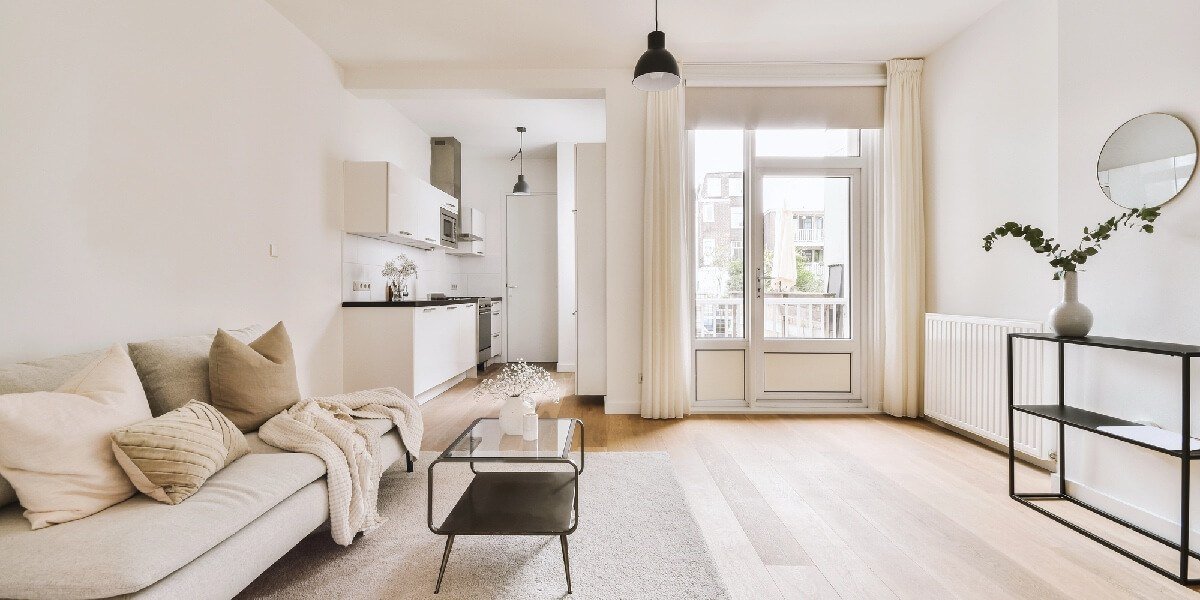
Renting doesn’t mean living with beige walls, bad lighting, and a kitchen that time forgot. Some of the most stylish apartments I’ve seen are rentals — because constraints breed creativity, and renters have gotten extremely good at high-impact, fully reversible upgrades. Here’s how to upgrade a rental apartment affordably, keep your security deposit, and actually enjoy the space while you’re there.
The Best Affordable Ways to Upgrade a Rental Apartment
Walls: color without paint (or with permission)
- Ask about painting first. Many landlords allow painting if you return it to the original color (or sometimes even welcome it). A written agreement beats assumptions. One accent wall in a modern color transforms a room for $40.
- Peel-and-stick wallpaper ($30-$80 per roll): The renter’s superpower. Modern versions look genuinely good — textured grasscloth looks, bold geometrics, subtle linen. It removes cleanly (test a hidden spot first). One wall is usually enough; full rooms can overwhelm.
- Large-scale art: One big piece (thrifted frame + printed art, $30-$60 total) has more impact than ten small frames. Lean oversized art on mantels and shelves — no holes needed.
- Woven wall hanging or fabric panels: A $25-$40 textile hung from a tension rod adds color, texture, and sound absorption. Looks intentional, removes in seconds.
Lighting: the fastest mood change
Rental lighting is universally terrible — a single harsh overhead per room. Fix it without touching wiring:
- Floor and table lamps ($25-$60 each): Two or three warm-light lamps per living area eliminate the overhead entirely. This one change makes rentals feel like homes.
- Battery puck lights ($15-$25/6-pack): Inside dark cabinets, under shelves, in closets. Stick-on, removable, transformative.
- Smart bulbs ($10-$15 each): Screw into existing fixtures, control color and dimming from your phone. Take them when you leave.
- Shade swaps: Replace ugly builder lampshades with ones you like ($15-$30). Store the originals to reinstall at move-out.
Kitchen and bathroom: maximum impact zones
- Peel-and-stick backsplash ($30-$60): Covers dated tile convincingly. Removes without residue (test first).
- New cabinet hardware: Save every original knob in a labeled bag; install what you like ($2-$4 each). The kitchen looks custom for $40.
- Shower head swap ($25-$50): Landlord shower heads are universally awful. A good rain or handheld head takes 10 minutes to install (no tools beyond your hands usually) — store the original for move-out. This improves daily life more than almost any other upgrade.
- Faucet aerators ($5 each): Better water pressure and flow for pocket change.
- Toilet seat replacement ($25-$40): Sounds odd, feels luxurious. A soft-close seat on a rental toilet is a small daily joy. Keep the original.
Floors: cover, don’t replace
- Large area rugs: Cover ugly carpet or cold tile. Proper rug sizing makes the room look designed, not covered-up.
- Peel-and-stick floor tiles ($1-$3/sq ft): For truly terrible vinyl or linoleum. Modern versions look like real tile or wood and remove cleanly. Best for kitchens and bathrooms.
- Washable rugs in kitchens and entries handle the messiest zones and go straight in the washing machine.
Storage and organization
Rentals always lack storage. Freestanding solutions that move with you: over-door organizers, tension-rod shelving inside cabinets, rolling carts ($25-$40 — the IKEA-style cart fits everywhere), and small-bathroom storage tricks. Command strips and hooks ($10-$20 total) hang everything from art to keys without holes — follow the weight ratings and removal instructions exactly.
The Security Deposit Rules
- Document everything at move-in. Photos with timestamps of every existing flaw. This is your deposit’s best protection.
- Save all originals. Every knob, shade, shower head, and switch plate you replace goes in a labeled box. Reinstall before move-out.
- Test removability in a hidden spot before committing to any adhesive product.
- Get permission in writing for anything borderline (painting, mounting TVs). A text message counts — screenshot it.
- Fill nail holes with spackle at move-out ($5, 30 minutes for the whole apartment). Patching techniques apply at any scale.
For renters in Florida specifically, know your rights — the HUD tenant resources outline deposit protections, and Florida law requires landlords to return deposits within 15 days or provide written notice of claims within 30.
Renter Upgrades Landlords Actually Appreciate
Some renter upgrades benefit the landlord too — and mentioning this when asking permission changes the answer. Caulking and grout refresh: landlords love tenants who maintain bathrooms; it prevents the water damage that costs them thousands. Shower head upgrade: you keep the original, the bathroom looks better for showings, zero downside for the owner.
Closet organization systems (freestanding, no damage): landlords showing the unit to future tenants love organized closets — it makes the space feel larger and better-maintained. Light fixture shade swaps: stored originals, better-looking unit, happier showings.
Frame permission requests around the landlord’s interests: “I’d like to re-caulk the bathroom — it prevents water damage and I’ll do it at my cost” gets yes where “I want to change things” gets no. Offer before-and-after photos. Put agreements in writing (even a text message). And for bigger asks (painting, mounting), offer to return to original condition or leave the improvement — many landlords prefer you leave good paint and keep the deposit intact.
The upgrades to avoid even with permission: anything affecting plumbing behind walls, electrical beyond fixture swaps, or structural changes. The liability isn’t worth it — if a DIY plumbing change floods the downstairs neighbor, you’re liable regardless of permission. Cosmetic, reversible, surface-level: that’s the renter’s lane, and it’s wider than most people think.
Rental Upgrades: Quick Answers
Will I lose my deposit for small upgrades? Not if they’re reversible and you restore originals — save every knob, shade, and shower head you replace, photograph move-in condition, and fill nail holes at move-out.
Can I paint a rental? Ask first — many landlords allow it with written agreement to return to the original color. Get permission in writing; a text message screenshot counts.
What’s the highest-impact renter upgrade? Lighting — two or three warm lamps per living area plus smart bulbs. It transforms the feel of the space for under $100, all reversible.
The Bottom Line
Upgrade a rental apartment affordably with: peel-and-stick wallpaper and backsplash, layered lamp lighting, cabinet hardware swaps, a better shower head, large rugs, and freestanding storage — all reversible, most under $50 each. Save every original, document move-in condition, and get permissions in writing. Renting is temporary; living well while you rent doesn’t have to be. Your apartment can feel like yours long before you own the walls.