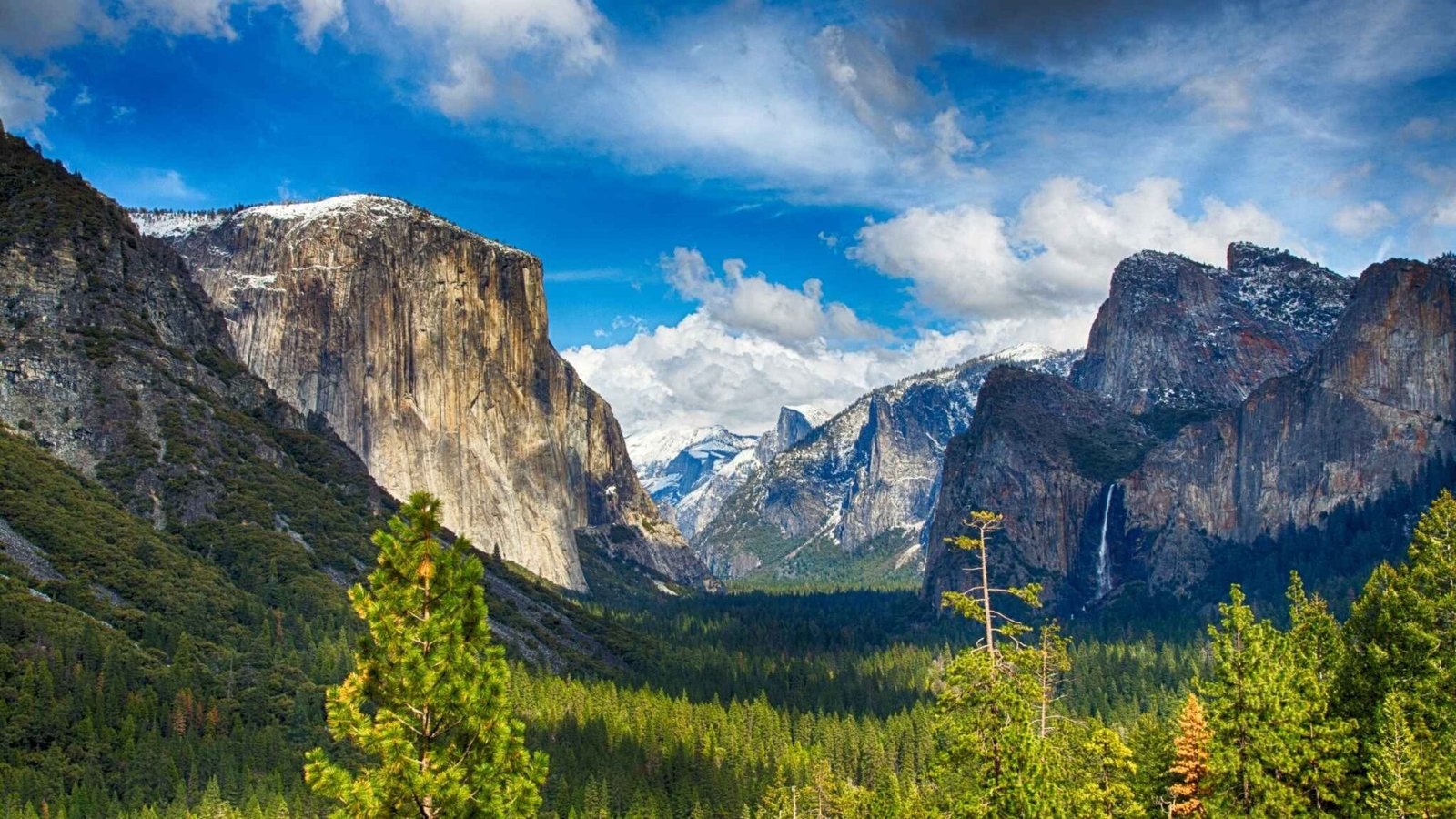
America’s national parks are the country’s crown jewels — 63 parks spanning deserts, rainforests, canyons, and volcanoes, all preserved for everyone. But with 63 to choose from, first-timers face paralysis: do you go for the icons, the hidden gems, the easy logistics? Here’s a guide to the best US national parks for a first visit, picked for wow-factor, accessibility, and the likelihood that you’ll stand there thinking “I can’t believe this is real.”
Practical note first: the $80 America the Beautiful annual pass covers entrance to all parks for a year — it pays for itself in about four visits. Buy it at the first park you enter.
The Icons (Famous for Good Reason)
Grand Canyon, Arizona
Nothing prepares you for the first look over the rim — photos flatten it, and the scale breaks your brain a little. First-timers: spend one day on the South Rim viewpoints (Desert View Drive at sunrise is transcendent), and if you’re able, hike partway into the canyon on the Bright Angel Trail — even one mile down transforms the experience. Stay in the park if you can; the lodges book out months ahead. Summer is crowded and hot; spring and fall are perfect.
Yellowstone, Wyoming/Montana/Idaho
Half the world’s geysers, plus bison traffic jams, technicolor hot springs, and a canyon with waterfalls. It’s the most “greatest hits” park in the system — geothermal features you can’t see anywhere else on Earth. Plan 3-4 days minimum; the park is enormous and driving between areas takes time. Book lodging 6-12 months ahead for summer. Wildlife is the bonus: dawn and dusk in Lamar Valley for wolves and bears (from a safe distance, always).
Yosemite, California
Granite cathedrals, waterfalls that thunder in spring, groves of giant sequoias. The Valley floor delivers the postcard views with minimal effort — Tunnel View at sunset is a religious experience for photographers. First-timers should know: summer requires day-use reservations (check current rules), and the Mist Trail to Vernal Fall is the single best short hike in the park system. Go in May for waterfalls at peak, or October for crowds at minimum.
Best US National Parks for a First Visit Beyond the Big Three
Zion, Utah
A canyon you walk through rather than look into — towering red walls on both sides, the Virgin River at your feet. The shuttle system makes it logistically easy, and hikes scale from the gentle Riverside Walk to the legendary Narrows (wading upstream through the canyon — rent the gear in Springdale). Pair with nearby Bryce Canyon for a two-park trip; they’re an hour apart and completely different.
Acadia, Maine
The East Coast’s answer — rocky coastline, Cadillac Mountain (first sunrise in the US), charming Bar Harbor next door. It’s the most accessible major park for easterners and the most manageable in size: you can see the highlights in two days. Fall foliage season is spectacular but crowded; June and September are the sweet spots.
Olympic, Washington
Three parks in one: rugged Pacific coastline, temperate rainforest (moss-draped, primeval, unlike anything else in the US), and alpine mountains. It’s the diversity pick — nowhere else gives you rainforest and glacier-capped peaks in one trip. The Hoh Rainforest’s Hall of Mosses trail is short, easy, and otherworldly.
Great Smoky Mountains, Tennessee/North Carolina
America’s most-visited park (free entry — no pass needed), and the easiest first park of all: drive-up viewpoints, gentle trails, synchronous fireflies in June, spectacular fall color. It’s less dramatic than the western parks but deeply lovely and incredibly accessible. Perfect if you want a low-pressure introduction.
How to Choose (The Decision Framework)
- How much time? One park deserves 2-4 days. Don’t try to “do” three parks in a week — you’ll spend the trip driving.
- What wows you? Canyons and desert (Grand Canyon, Zion, Bryce) vs. mountains and forests (Yosemite, Olympic, Smokies) vs. geothermal weirdness (Yellowstone) vs. coast (Acadia, Olympic).
- When are you going? Desert parks shine in spring/fall and bake in summer. Mountain parks are snowbound until June. Check each park’s seasonal sweet spot before committing.
- Crowd tolerance? The famous parks in summer are genuinely packed — arrive before 8 a.m. or after 4 p.m. for the best experience. Shoulder seasons cut crowds dramatically.
Logistics that apply everywhere: book lodging absurdly early (in-park lodges sell out 6-12 months ahead), download offline maps (no cell service in most parks), carry more water than you think, and check the NPS website for alerts — road closures, reservation requirements, and fire restrictions change seasonally.
For a first visit, you can’t go wrong with the Grand Canyon-Yellowstone-Yosemite trinity — they’re famous because they’re genuinely the most staggering landscapes in the country. Pick the one that calls to you, give it the days it deserves, and prepare for the moment at the overlook when the photos finally make sense. Then start planning the second trip — the parks are addictive like that.
Navigating the Reservation Systems
The biggest logistical change in recent years: many popular parks now require advance reservations beyond just showing up. Timed entry: parks like Arches, Rocky Mountain, and Glacier (Going-to-the-Sun Road) require timed-entry reservations booked on Recreation.gov — often released months ahead, with small batches released days before. Set calendar alerts for release dates; popular slots vanish in minutes.
What doesn’t need reservations: you can still enter most parks without timed entry before 6-8 a.m. or after 4-5 p.m. (varies by park) — the early-bird strategy doubles as crowd avoidance. Lodging and campgrounds: in-park lodging books 6-13 months out (yes, really); campgrounds on Recreation.gov book 6 months out and sell out in minutes for summer. Have backup plans: gateway towns have abundant lodging, and national forest land nearby often allows dispersed camping.
The planning timeline: 12 months out — book in-park lodging; 6 months — campgrounds and timed entry; 1 month — check for alerts, road closures, fire restrictions; 1 week — weather check and final reservations. The reservation era rewards planners and punishes spontaneity — annoying, but the parks are worth the admin. And the $80 annual pass remains the best deal in American travel.
Parks pair perfectly with road trips — our budget cross-country road trip guide is the classic way to string parks together, and weekend getaway planning works for the ones close to home.