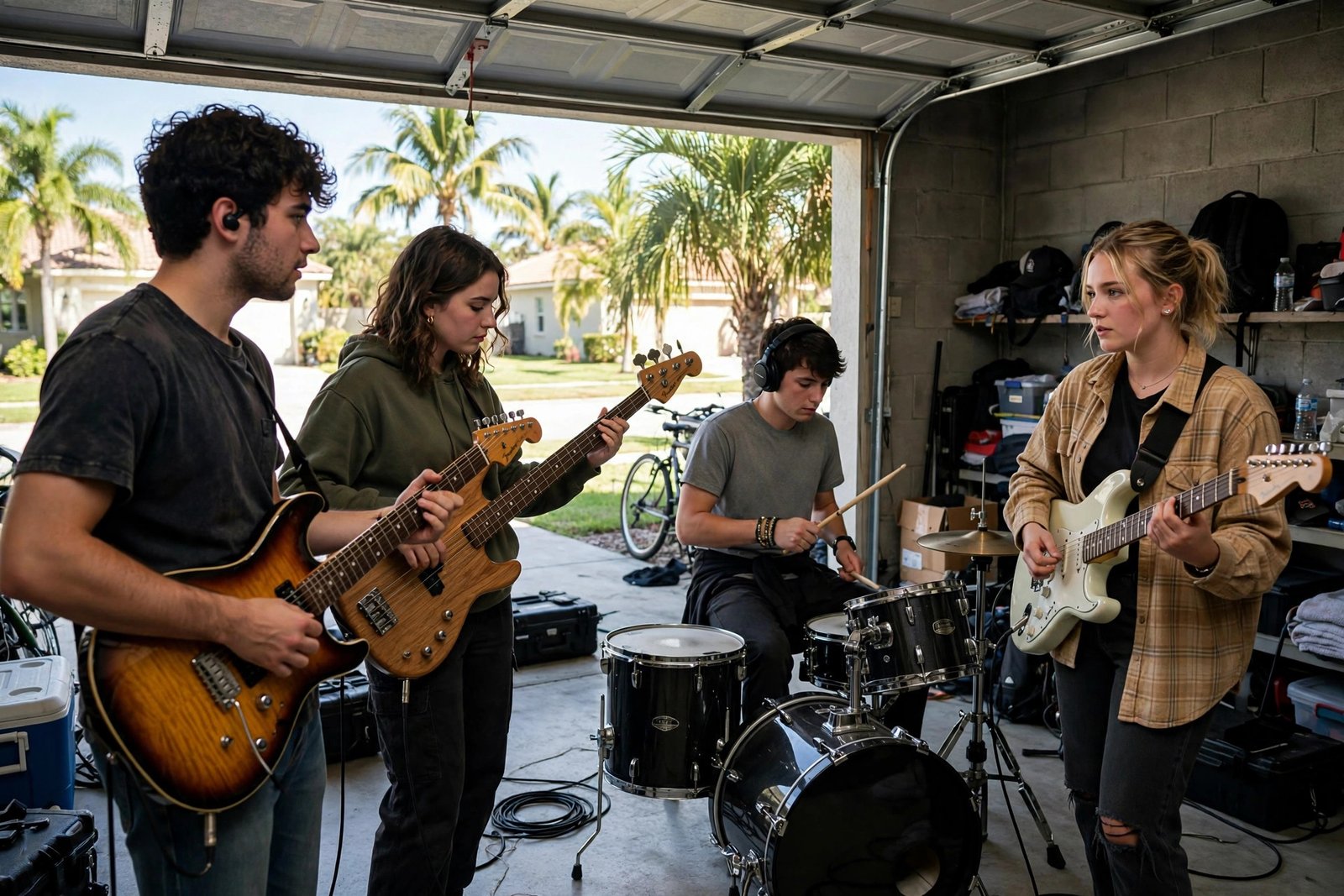
You and two friends keep saying “we should start a band.” You’ve said it for months — maybe years. The fantasy is clear: the garage sessions, the first gig, the songs that are yours. What’s unclear is how people with no experience actually begin. Do you need to be good first? Do you need expensive gear? Do you need a drummer? (You always need a drummer, and drummers are always the hardest to find.)
Here’s the liberating truth: every band started with members who weren’t ready. The bands that make it aren’t the most talented at the start — they’re the ones that started. This is the complete beginner’s guide to starting a band in the Florida Keys, where the local music scene’s laid-back, salt-air character actually makes it one of the friendliest places in Florida to begin.
Step 1: Define the Band Before Recruiting It
“Let’s start a band” fails when everyone imagines a different band. Before recruiting, answer: what will you play? (Covers, originals, or a mix — beginners should start with covers; they’re the fastest path to sounding good together.) What vibe? (The Keys support everything from Jimmy Buffett-style trop rock to indie to metal, but your genre determines who to recruit.) How serious? (Weekend hobby vs. gigging ambition — mismatch here kills bands.) How often will you rehearse?
Write it down — a half-page “band idea” you can share. It filters for the right people automatically and prevents the classic failure: four people in a room discovering they want four different bands.
Step 2: Find Members (the Real Challenge)
Finding committed beginners is the hardest part, so treat it as a campaign:
- Music stores and rehearsal spaces: bulletin boards at Keys music shops are still gold. Staff often know who’s looking.
- Open mics and jam nights: the single best recruiting ground. You hear people play, gauge their vibe, and approach them after. The Keys’ bar and restaurant scene hosts regular open mics — show up consistently.
- Online: local musician Facebook groups, BandMix, and Craigslist’s musician section. Be specific in ads: genre, commitment level, rehearsal location, influences.
- Your existing circle: that coworker who mentioned playing bass in college? Ask. Many adults harbor dormant musical pasts.
Audition casually — invite candidates to jam on two or three songs, no pressure. You’re evaluating reliability and personality as much as skill. A decent player who shows up every week beats a virtuoso who flakes. And remember the drummer problem: consider starting without one (cajon, programmed drums, or acoustic-first arrangements) rather than waiting months for the perfect drummer.
Step 3: Gear — Less Than You Think
Beginners overbuy. The minimum viable band kit: each guitarist needs a playable instrument and a practice amp; bass needs bass plus amp; singers need a PA (one powered speaker and two mics covers small rehearsals); everyone needs tuners, cables, picks, and spare strings. Buy used — the Keys and Miami used markets are full of quality gear at half price.
The Florida Keys add one gear consideration: humidity and salt air corrode instruments faster than inland. Wipe down strings and metal parts after playing, store instruments in cases (not on stands in a garage), and consider silica gel packs in cases. A $15 humidifier/dehumidifier balance in your storage space protects thousands in gear.
Step 4: The Rehearsal System
Bad rehearsals kill bands faster than bad gigs. Run them like this:
- Same time, same place, weekly. Consistency is everything. Garages, storage units, and rented rehearsal rooms all work — the Keys have fewer dedicated rehearsal studios than Miami, so get creative with spaces.
- Setlists in advance. Everyone learns the same 3–5 songs before rehearsal. Rehearsal is for playing together, not learning parts — that’s homework.
- Start simple. Three-chord songs with clear structures. Nail five songs completely before adding a sixth. A tight five-song set beats a sloppy fifteen-song list.
- Record everything. A phone in the room captures arrangement ideas and reveals timing problems you can’t hear while playing.
Expect the first month to sound rough. Bands gel around rehearsal 6–8, when everyone stops thinking about their own parts and starts listening to each other. That’s the moment it becomes real.
Step 5: Your First Gig
Don’t wait until you’re “ready” — readiness comes from gigging. The Keys offer beginner-friendly stages: open mic nights (play your three best songs), house parties for friends, community events, and charity fundraisers. These audiences forgive mistakes and reward courage.
Gig basics for beginners: arrive early, bring backups of everything breakable (strings, cables, batteries), keep stage banter short, and play your tightest songs first and last. Afterward, get contact info from anyone who compliments you — that’s your first mailing list. Finding local live music events also shows you how working bands in the area operate — free apprenticeship.
The Business Side (Yes, Even Now)
Decide money rules early, while everyone’s friendly: split gig pay equally (standard for beginner bands), create a small band fund for shared expenses (PA maintenance, rehearsal room), and agree on who owns what if someone leaves (generally: you own your gear, the band owns nothing until there’s real money). For originals, discuss songwriting splits before recording anything — and learn the basics of copyright registration at the U.S. Copyright Office plus how performing rights organizations like ASCAP collect royalties. The conversation is easy now and toxic later.
As you grow, supporting fellow local artists and musicians builds the scene relationships that lead to better gigs — scenes thrive on reciprocity.
Handling the Inevitable Friction
Every beginner band hits friction around month two or three: someone stops practicing, disagreements about song choices surface, or enthusiasm dips when progress plateaus. This is normal, not fatal. Address it directly and early — a quick honest conversation beats months of resentment. Revisit your original half-page band idea together: are you still aligned on genre, commitment, and goals? Bands that survive are rarely the most talented; they’re the ones whose members communicate like adults when things get bumpy. And if someone needs to leave, let them go graciously — the Keys music community is small, and today’s departing bassist is tomorrow’s gig connection.
Conclusion
Starting a band with no experience in the Florida Keys comes down to: define the band on paper, recruit for reliability over virtuosity, buy minimal used gear (and protect it from salt air), rehearse weekly with prepared setlists, and gig before you feel ready. The Keys’ music culture rewards showing up and having fun over perfection — which makes it the ideal place to begin. Stop saying “we should start a band.” Send the group text tonight.
Frequently Asked Questions
Do I need to be good at my instrument to start a band?
No — you need to be committed. Beginner bands learn together, and playing with others accelerates your progress dramatically. Basic competence (keeping time, playing simple songs) is enough to start.
How do I find a drummer?
They’re the scarcest members everywhere. Try open mics, music stores, and online ads — or start without one using a cajon, hand percussion, or programmed drums until you find the right person.
How much does it cost to start a band?
Beyond instruments members already own, a beginner band can start for a few hundred dollars total: a used PA speaker, mics, cables, and shared rehearsal space costs. Buy used and split shared expenses.
How often should a beginner band rehearse?
Once a week for 2–3 hours is the sweet spot. More burns out busy adults; less and you never gel. Everyone should practice individually between rehearsals.
When is a band ready for its first gig?
When you can play 5 songs start-to-finish without stopping. It doesn’t need to be perfect — open mics and house parties are designed for exactly this stage. Gigging accelerates improvement.