Winterizing a car in Orlando sounds like a joke — until the once-a-decade freeze cracks a pipe, kills a weak battery, or ices a bridge you cross daily. Orlando winterization isn’t the northern ritual of block heaters and snow tires; it’s a lighter, smarter checklist tuned to Florida’s actual cold threats: brief freezes, battery-killing temperature swings, and the occasional truly cold snap. Here’s how often to do it and exactly what it covers.
How Often: Once a Year, Every Fall
Winterize once annually, in October or November — before the first cold front, not during it. Florida’s freezes arrive suddenly (a 75°F Tuesday followed by a 32°F Thursday is normal), so “I’ll do it when it gets cold” means doing it in a panic, in the dark, in the cold. The whole checklist takes 60–90 minutes, most of it checks rather than work. Put it on the calendar alongside winterizing your home — same weekend, same mindset, done before you need it.
The Orlando Winterization Checklist
Battery: the #1 cold-snap killer
Florida heat already shortens battery life to 2–3 years; a cold snap finishes off weak ones overnight. Have the battery load-tested (free at most auto parts stores) every fall after year two. Clean corroded terminals. If the test shows weakness, replace BEFORE the freeze — a $150 proactive battery beats a $150 battery plus a missed workday. The battery-maintenance principles behind keeping any battery healthy apply here with higher stakes.
Antifreeze/coolant: the freeze protection
Check coolant level and concentration — a 50/50 antifreeze-water mix protects to about −34°F, plenty for Florida, but only if the ratio is right and the level is full. Old, diluted, or low coolant is how engines crack in freezes. If you haven’t flushed coolant in 5 years/100,000 miles (check your manual), fall is the time.
Tires: pressure and tread
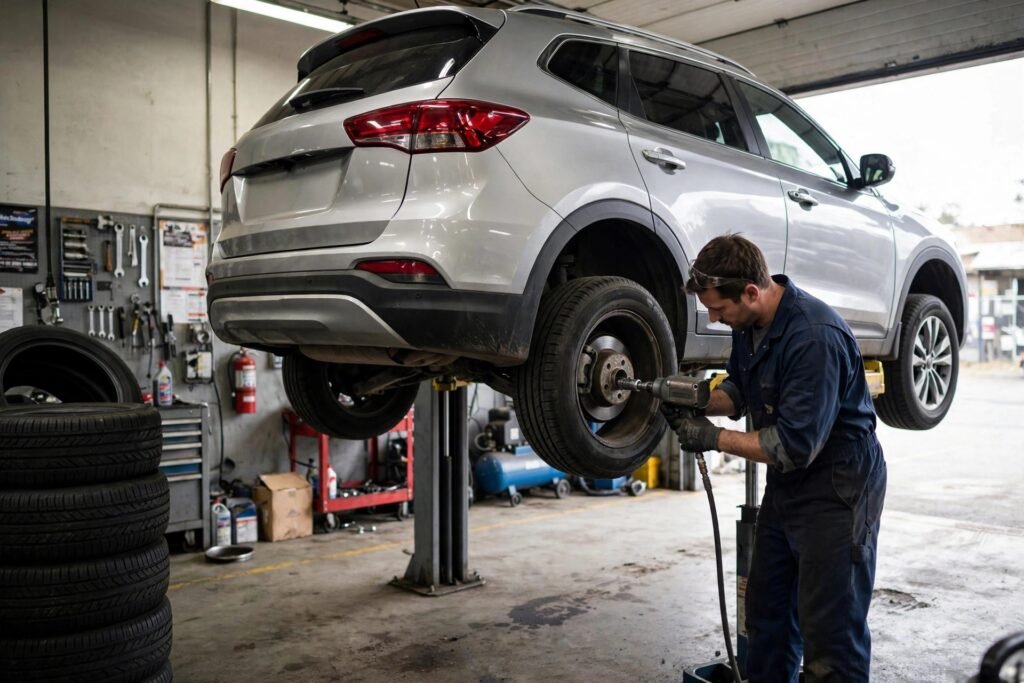
Tire pressure drops ~1 PSI per 10°F — Orlando’s 40-degree swings mean chronically underinflated tires all winter, hurting handling, wear, and fuel economy. Check pressures monthly October–March (door-jamb spec, measured cold). Inspect tread depth — worn tires on a frosty bridge are the specific Orlando winter accident scenario.
Fluids, wipers, and visibility
Top off windshield washer fluid (winter grime + low sun = dangerous glare), check wiper blades (Florida UV destroys them yearly — fall replacement is the ritual), verify all lights work (shorter days = more night driving), and check the heater/defroster actually works BEFORE you need it (a dead defroster on a frosty windshield morning is miserable).
Emergency kit: the Florida winter version
Blanket, water, phone charger, flashlight, basic tools, jumper cables — plus a warm layer you wouldn’t normally carry (“it’s Florida” is exactly why you’re unprepared). If you commute over bridges, this kit lives in the car October–March, not in the garage.
The Freeze-Night Protocol
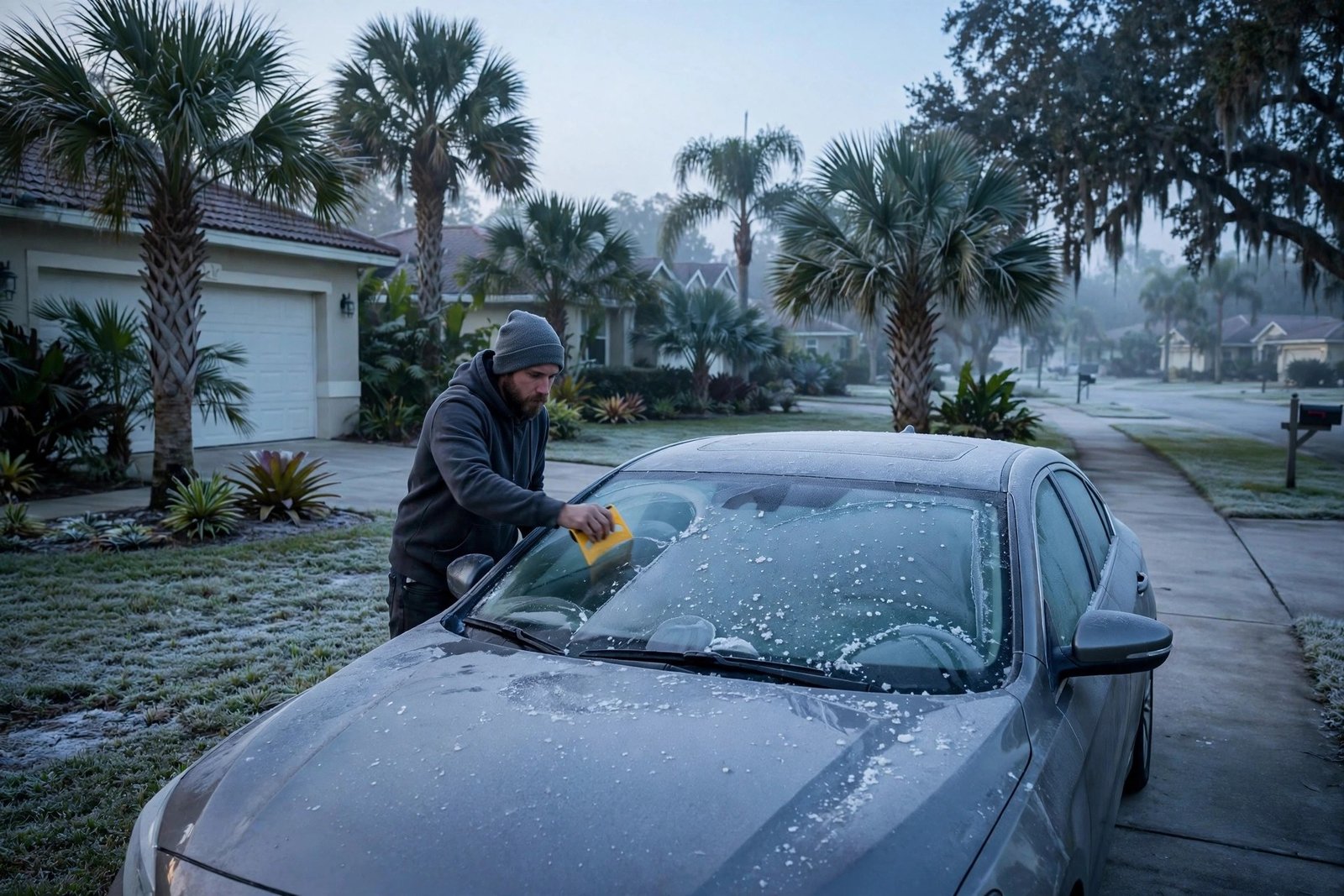
When a hard freeze is forecast: park in the garage if possible (even unheated garages stay several degrees warmer); no garage? Park facing east so the morning sun hits the windshield; cover the windshield with a blanket or cardboard to prevent frost; keep the gas tank at least half full (prevents fuel-line moisture issues and keeps you ready if you must idle for warmth); and in the morning, clear ALL frost before driving — not just a peephole (it’s illegal in spirit everywhere and dangerous everywhere).
For plants-and-pipes Floridians, remember the car is only one system — outdoor faucets, pool equipment, and tropical landscaping need the same night’s attention. The AAA notes that freeze-related roadside calls spike in Florida precisely because drivers don’t expect winter problems — expectation is the vulnerability.
What Orlando Winterization Is NOT
Don’t buy winter tires (see our full analysis — Jacksonville’s case applies equally to Orlando). Don’t install engine block heaters. Don’t switch to winter-grade oil (modern multi-viscosity oils handle Florida’s range). Don’t overthink it: Orlando winterization is a 90-minute annual checklist, not a lifestyle. The northern transplants laughing at the checklist are the same ones calling AAA at 7 AM when their heat-aged battery meets its first 35°F morning.
Cold Snaps and EVs: Orlando’s Electric Winter Notes
EV owners get a modified winterization list. Cold temporarily reduces range — even Florida’s mild cold snaps (40s) can trim 10–15% off rated range, because battery chemistry is less efficient cold and cabin heating draws significant power. Plan accordingly on frosty mornings: pre-condition the cabin while plugged in (grid power, not battery), use seat heaters instead of cabin heat when possible (far more efficient), and expect the range estimate to be pessimistic until the battery warms.
Charging in cold: DC fast charging is slower when the battery is cold — the car limits charge rates to protect the cells. If you’re fast-charging on a cold morning, navigate to the charger using the car’s nav (it pre-conditions the battery en route on most EVs). Tire pressure matters more: EVs are heavy, and underinflated tires hurt efficiency disproportionately — check monthly in winter. The 12V aux battery: yes, EVs have one, and Florida cold snaps kill weak ones just like gas cars — include it in your fall battery test. Orlando EV winterization is gentler than gas-car winterization, but “gentler” isn’t “none” — the battery you baby in summer still wants attention in January.
The Garage Question: Parking Strategy for Cold Snaps
Where you park on freeze nights matters more than most Orlando drivers realize. A garage — even unheated and uninsulated — typically stays 5–10°F warmer than outside, often the exact margin between frost and no frost. If you have a garage full of storage, freeze season is the time to reclaim it — the car protection outweighs the storage convenience for the handful of coldest nights. No garage? Park strategically: against the house wall (radiant heat helps), under tree cover (reduces radiational cooling frost, though watch for sap), facing east for morning sun.
What NOT to do: don’t idle the car for 20 minutes to “warm it up” — modern engines need 30–60 seconds, and extended idling wastes fuel and wears engines; don’t pour hot water on a frosty windshield (thermal shock can crack it — lukewarm at most, or better, a proper scraper and defroster); and don’t leave the car running unattended to warm up (theft risk, and illegal in some jurisdictions). The garage is the best winterization tool Orlando drivers own — most just use it for boxes.
Conclusion
Winterize your Orlando car once a year every fall (October/November): battery test and terminals, coolant level and concentration, tire pressure and tread, wipers/lights/heater check, and a winter emergency kit in the trunk. It’s 60–90 minutes guarding against Florida’s specific cold threats — battery-killing snaps, frosty bridges, and freeze mornings you’re not dressed for. The NHTSA’s winter driving guidance applies even in the subtropics: preparation beats reaction, every time, at every latitude.
Frequently Asked Questions
How often should you winterize your car before cold weather hits in Orlando?
Once a year, every fall (October/November) — before the first cold front. The 60–90 minute checklist covers battery, coolant, tires, wipers/lights/heater, and emergency kit. Don’t wait for the forecast; Florida freezes arrive suddenly.
Do I need winter tires in Orlando?
No — Orlando’s winters don’t justify them. Quality all-season tires with good tread handle Florida’s actual conditions; winter tires are for sustained sub-45°F weather Orlando never sees.
Why do car batteries die in Florida cold snaps?
Florida heat already degrades batteries to a 2–3 year lifespan; a cold snap’s increased starting demands finish off weakened ones overnight. Annual fall load-testing catches weak batteries before the freeze does.
What should I do the night before a freeze in Orlando?
Park in a garage if possible (or facing east), cover the windshield, keep the gas tank half full, and ensure your emergency kit is in the car. In the morning, clear all frost before driving.
How do I drive safely on Orlando’s icy bridges?
Slow down, increase following distance, avoid cruise control and sudden inputs, and treat every bridge as potentially icy on near-freezing mornings until the sun has been up about an hour.