A full bathroom remodel costs $10,000-$25,000 and turns your home into a construction zone for weeks. But here’s what contractors won’t tell you: most dated bathrooms don’t need gutting — they need about $500 and a weekend of targeted updates. The difference between a “1995 bathroom” and a “modern bathroom” is usually five or six cosmetic changes, not new plumbing. Here’s how to update your bathroom without a full remodel.
How to Update Your Bathroom Without a Full Remodel
1. Paint (the $50 transformation)
Bathroom paint does triple duty: covers dated colors, brightens the space, and (with the right product) resists moisture. Use a satin or semi-gloss paint formulated for bathrooms — it withstands humidity without mildewing. Light, clean colors (soft whites, pale grays, light blues) make small bathrooms feel larger and instantly modern. One gallon covers most bathrooms. If your walls are currently a “bold choice” from 2003, this alone changes everything.
2. Swap the mirror ($50-$150)
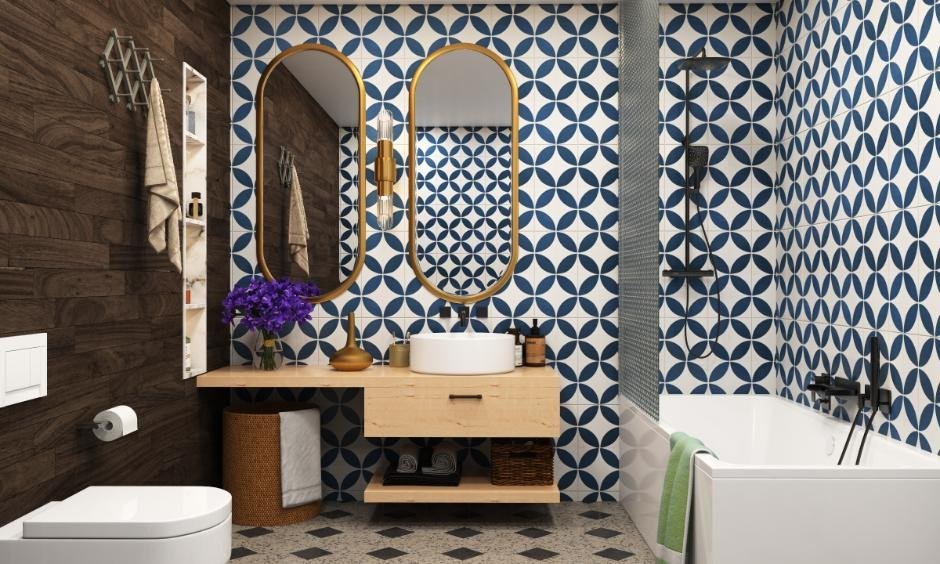
The builder-grade flat mirror is the fastest tell of a dated bathroom. Replace it with a framed mirror, a round mirror (huge right now and flattering in small spaces), or a pair of mirrors over a double vanity. This 20-minute swap has wildly disproportionate impact — mirrors are the jewelry of the bathroom.
3. Update the lighting ($80-$200)
That Hollywood-strip vanity light with exposed bulbs? Replace it with a modern fixture and the whole room updates. Bathroom lighting should be bright and flattering — look for fixtures with frosted shades that diffuse light evenly. This is beginner-friendly electrical work: turn off the breaker, match the wires, mount the new fixture. Thirty minutes per fixture.
4. Replace the faucet and hardware ($100-$250)
A modern faucet transforms the sink area instantly. Matte black, brushed nickel, or champagne bronze — pick one finish and match the towel bars, toilet paper holder, and cabinet hardware to it. Consistent finishes read as “designed”; mixed finishes read as “accumulated over decades.” A faucet swap takes under an hour with basic tools.
5. Re-caulk everything ($15)
Yellowed, cracked, or moldy caulk around the tub, toilet base, and sink makes even clean bathrooms look grimy. Remove old caulk with a $10 removal tool, clean the joint, and apply fresh silicone caulk in a smooth bead. It’s fiddly work but costs almost nothing and the before-and-after is shocking. Fresh caulk is the “detailed car” of bathroom updates.
6. Update textiles and accessories ($80-$150)
New towels (white reads as “hotel” and “clean”), a new shower curtain, a modern bath mat, and matching soap dispensers instead of plastic bottles. Textiles are the fastest, cheapest refresh — they cover large visual areas and set the color story. This is also where you add personality: the fixtures stay neutral, the textiles bring the style.
7. Deep clean the grout and tile ($20)
Before replacing anything, deep-clean your grout — dingy grout makes tile look decades older than it is. If grout is stained beyond cleaning, grout paint pens ($10-$15) recolor grout lines without re-grouting. For damaged tiles, replacing individual tiles is very doable.
8. Add storage that looks built-in ($50-$150)
Floating shelves, an over-toilet cabinet, or a slim storage tower eliminate countertop clutter — and clutter is what makes bathrooms feel small and dated. Small-bathroom storage strategies cover this in depth.
What NOT to Do (The Remodel Traps)
- Don’t retile to “update.” Tiling is expensive, messy, and unnecessary if existing tile is in good shape. Clean it, re-grout or paint grout, and move on.
- Don’t replace the tub unless it’s damaged. Tub refinishing ($300-$500 professionally) makes old tubs look new for a fraction of replacement cost.
- Don’t move plumbing. The moment you relocate a toilet or shower drain, you’ve left “weekend update” territory and entered “permit and plumber” territory.
- Don’t buy the cheapest faucet. It’s the most-touched item in the room; cheap ones feel cheap and fail fast. Mid-range ($100-$150) is the sweet spot.
If your refresh reveals plumbing issues, fixing a running toilet and fixing a leaky faucet are easy companion projects. The EPA WaterSense program also certifies water-efficient fixtures that cut your water bill while you update.
Bathroom Trends Worth Borrowing (and Ones to Skip)
A few current trends deliver real value in refresh projects. Matte black fixtures: still going strong, hides water spots better than chrome, and pairs with everything. It’s become a modern classic rather than a fad — safe to invest in. Large-format mirrors: round and arched mirrors soften the hard lines of bathrooms and photograph beautifully.
Wood accents: a teak bath mat, wooden stool, or floating wood shelf warms up sterile bathrooms instantly. Wood in bathrooms works fine with ventilation — it’s the constant soaking that kills it, not the humidity. Sealed properly, wood accents last years.
Trends to skip in a refresh (as opposed to a full remodel): vessel sinks (they require counter and plumbing changes — not a refresh project), patterned cement tile (gorgeous but a full re-tile commitment), and open shelving for everything (looks great in photos, impractical for daily toiletries — a little open shelving styled nicely plus closed storage for reality is the right balance).
The timeless refresh formula: neutral fixtures, one metal finish, light paint, natural textures (wood, stone, plants), and good lighting. It looked current in 2015, looks current now, and will look current in 2030. Trends cycle; calm, clean, and functional doesn’t.
Bathroom Refresh: Quick Answers
How much does a bathroom refresh cost? $400-$700 for the full cosmetic overhaul in this guide — paint, mirror, lighting, faucet, hardware, textiles, and storage. A weekend of work.
Can I paint over bathroom tile? Yes, with tile-specific bonding primer and enamel paint — it’s a legitimate budget technique for dated tile in good condition. Proper prep determines whether it lasts years or months.
What’s the fastest bathroom update? New mirror + new textiles + re-caulking. Under $150 and two hours for a transformation that photographs like a renovation.
The Bottom Line
Update your bathroom without a full remodel: paint it light and bright, swap the mirror and lighting, update the faucet and hardware to one consistent finish, re-caulk everything, refresh textiles, deep-clean grout, and add smart storage. Total: $400-$700 and a weekend. The result reads as a renovated bathroom to everyone who walks in — because the things people actually notice were all addressed, and the expensive hidden stuff was fine all along.