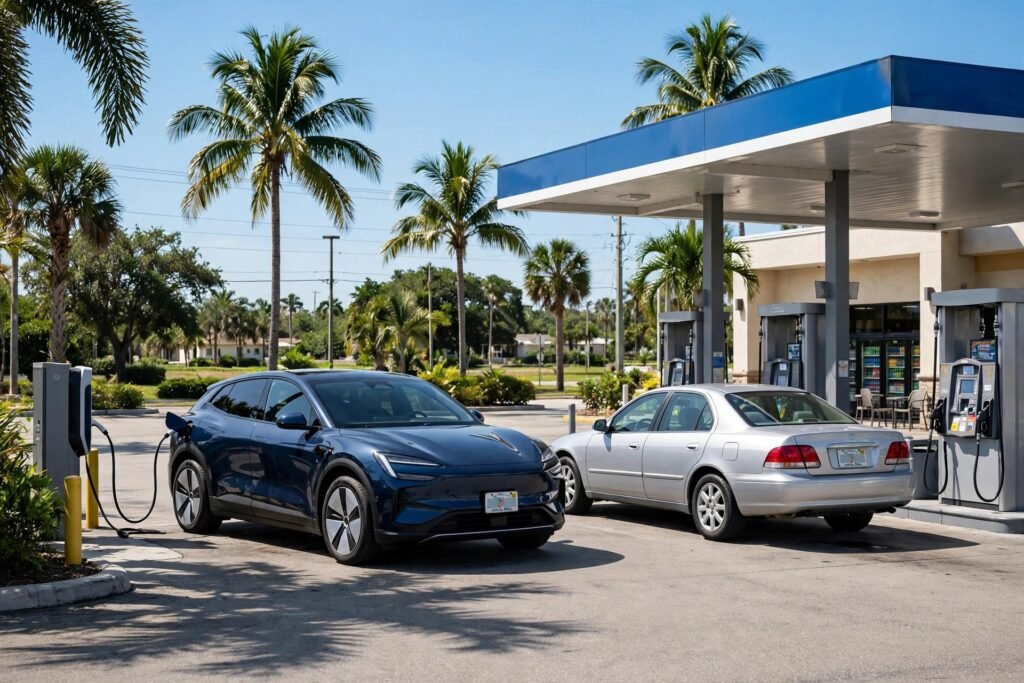
The average American car costs over $12,000 a year to own and operate — payments, insurance, gas, maintenance, depreciation. It sits parked 95% of the time. Meanwhile, buses and trains keep getting better, transit apps keep getting smarter, and remote work keeps cutting commute days. So the question is fair: can you actually switch to public transport on your own, practically, without help?
Yes — but not by leaping blindly. A successful car-free or car-lite transition is a two-week experiment, not a lifestyle vow. This guide gives you the practical system: auditing your real trips, learning your local network, handling the edge cases (groceries, late nights, emergencies), and the honest math on when transit wins and when it does not.
Step 1: Audit Your Actual Trips (Not Your Imagined Ones)
Before changing anything, track every trip for one normal week: destination, distance, time, and whether transit could serve it. Most people discover their travel is shockingly routine — the same 5–8 destinations (work, grocery, gym, a few friends’ places) account for 90% of trips. You do not need transit to serve everywhere; you need it to serve your everywhere.
Map each regular destination against your transit network using Google Maps (transit directions), the Transit app, or your local agency’s trip planner. You are looking for: a direct route or one easy transfer, total travel time under 1.5× driving time, and service at the hours you actually travel. If 70%+ of your trips pass this test, you are a strong candidate for car-lite living. If it is under 50%, transit-as-backup plus a car may be the honest answer — and that is fine.
Step 2: Learn the System Before You Need It
Transit anxiety comes from unfamiliarity, not danger. Demystify your system in one low-stakes weekend:
Get the fare system sorted. Most US agencies now use contactless payment, mobile apps, or reloadable smart cards. Set it up at home, load a day pass, and understand transfers (many systems allow free transfers within 2 hours — this effectively doubles your network).
Ride your core routes for fun. Take your work commute on a Saturday. Ride to the grocery store and back. Time it, note the stops, find the shelter locations and the well-lit waiting spots. Familiarity converts “the bus system” from an abstraction into your routes. Using public transportation in a new city confidently covers the universal skills — reading schedules, signaling stops, transit etiquette — that transfer to any system.
Learn the backup routes. For each core trip, know one alternative (a different line, or a transit + bike/scooter combo). Redundancy is what makes transit feel reliable instead of fragile.
Step 3: Run the Two-Week Experiment
Do not sell the car yet. For two weeks, take transit for every trip where it is reasonable, and log three things: money saved (gas + parking not spent), time difference vs. driving, and how each trip felt. This data beats all theorizing.
Most experimenters report surprises: commute time becomes reading/podcast time (transit riders consistently report higher commute satisfaction than drivers in study after study), parking stress vanishes, and the forced walking to stops adds meaningful daily exercise. The American Public Transportation Association’s rider data shows the average transit commuter saves thousands annually vs. driving — your log will show your personal number.
Common discoveries: the “last mile” (home to stop) is the real friction — a folding bike, e-scooter, or simply choosing housing near a stop solves it permanently. And off-peak trips (weekend errands, evenings) are where transit is weakest — plan these as your car-trip exceptions, not failures.
Handling the Edge Cases
Groceries: a granny cart / folding shopping trolley ($25) transforms bus grocery runs — it carries a full load, folds flat, and saves your back. Alternatively, schedule one weekly grocery delivery ($10–15) and let transit handle everything else. Many car-free households do exactly this.
Late nights: know your system’s last-trip times cold, and keep a rideshare app as the safety net. Budgeting 2–4 rideshares a month still costs a fraction of car ownership. The rule: transit by default, rideshare by exception.
Emergencies and odd trips: car-share services (Zipcar, Turo), borrowing, or renting cover the IKEA runs and airport trips. Price a few of these — they are almost always cheaper than a month of car ownership.
Kids and family logistics: the hardest case, honestly. School runs, activities, and strollers multiply complexity. Many families go car-lite (one car instead of two) rather than car-free — still saving roughly half the cost. There is no prize for purity; optimize for your life.
Weather: rain is the main complaint. A compact umbrella, a waterproof bag cover, and waiting in shelters solve 95% of it. Extreme weather days are legitimate car/rideshare days — again, exceptions, not failures.
The Honest Math
What transit saves: AAA’s annual Your Driving Costs puts average car ownership above $12,000/year — roughly $1,000/month. A monthly transit pass runs $60–120 in most US cities. Even adding $100/month in rideshares and $50 in delivery fees, the typical switcher saves $700–900/month — life-changing money that compounds into habits for saving money every month on autopilot.
What transit costs: time (typically 1.2–1.5× driving on good routes, worse on bad ones), spontaneity (schedules replace whims), and comfort (crowds, weather, waiting). Be honest about which of these actually bother you — many people discover the time “cost” becomes reading time they now cherish.
Environmental math: transportation is the largest source of US greenhouse gas emissions, and a bus with 20 passengers emits far less per rider than 20 cars. The EPA’s transportation emissions data confirms transit’s per-passenger advantage grows with ridership — your switch is a genuine climate action, not just a budget one.
When to keep the car: rural areas with no service, jobs requiring on-call driving across a region, disabilities poorly served by local transit, or commutes where transit takes 3× driving with multiple transfers. The goal is the right tool for your life, not a moral statement.
Conclusion
Switching to public transport on your own is entirely practical — as a two-week experiment, not a leap of faith. Audit your trips, learn your routes on a lazy Saturday, run the experiment with honest logging, solve the edge cases with trolleys and rideshares, and do the math for your life. Most urban and suburban Americans discover transit covers 70–90% of trips at a fraction of the cost, with bonus reading time and exercise.
Start this weekend: pick your most frequent trip, ride it by transit, and time it. That single data point — your route, your time, your experience — is worth more than a hundred articles. The bus is already running. You might as well be on it.
Frequently Asked Questions
How much money can I save by switching to public transport?
The average US car costs over $12,000/year to own and operate (AAA). A monthly transit pass costs $60–120, plus perhaps $100–150 in occasional rideshares and deliveries. Typical savings: $700–900/month — $8,000–10,000/year — for urban commuters who switch fully.
Is public transport safe?
Statistically, transit is far safer than driving — you are dramatically less likely to be injured as a bus or train passenger than as a car driver. For personal security, ride during busier hours when possible, wait in well-lit areas, stay aware of your surroundings, and trust your instincts about specific situations.
How do I handle groceries without a car?
A folding shopping trolley ($25) makes bus grocery runs easy, carrying a full load. Alternatively, schedule one weekly grocery delivery and use transit for everything else. Many car-free households combine both — the delivery handles bulk, transit handles top-ups.
What if public transport doesn’t cover my commute well?
Then don’t force it. Consider car-lite (one car instead of two), transit for some trips and driving for others, or a bike/e-bike for the commute with transit as backup. The goal is optimizing your real life — partial switches still save thousands and cut emissions meaningfully.