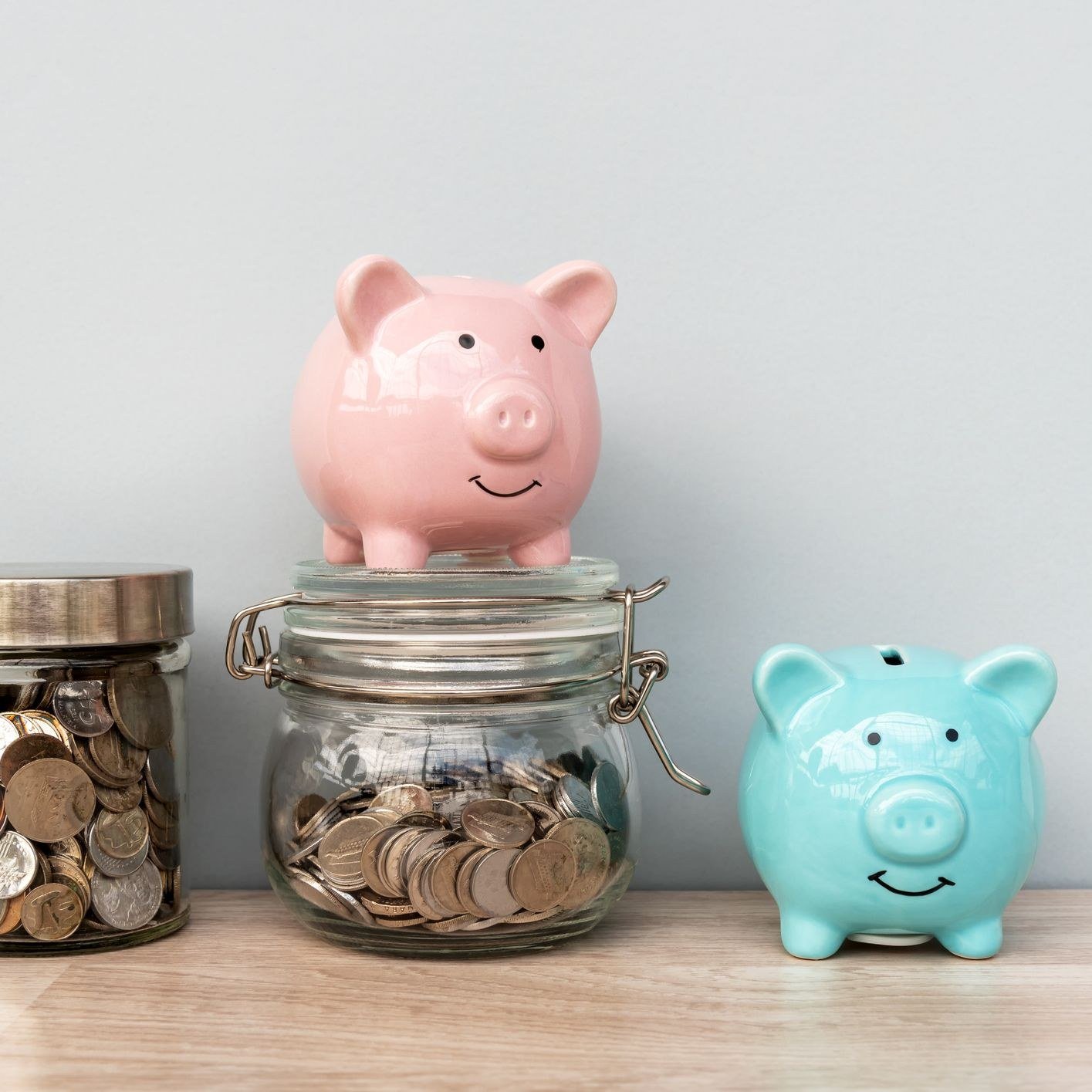
Everyone knows they should save money. Almost no one does it consistently. The gap isn’t knowledge — it’s design. People who save every month aren’t more disciplined than you; they’ve built systems where saving happens automatically and spending the savings requires effort. Here are the best habits for saving money every month, ranked by impact, not by how virtuous they sound.
A quick mindset shift first: stop trying to save “what’s left over.” There’s never anything left over — that’s the whole trap. Saving works when it’s the first bill you pay, not the last.
Pay Yourself First (The Only Habit That Really Matters)
Set up an automatic transfer that moves money to savings the day after payday. Not at month’s end — the day after the check lands. Start with whatever you won’t miss: $50, $100, 5% of income. The amount matters less than the automation. Money you never see, you never miss, and after three months you won’t even think about it.
Where should it go? A high-yield savings account, separate from your checking — ideally at a different bank so transfers take a day and impulse raids require effort. That tiny friction is a feature. Emergency fund first (aim for $1,000 starter, then 3-6 months of expenses), then other goals. The Consumer Financial Protection Bureau’s money tools offer free, unbiased guidance on building that first emergency cushion if you’re starting from zero.
Best Habits for Saving Money Every Month: The Big Wins
Track spending for 30 days
You can’t fix what you can’t see. For one month, track everything — every coffee, every subscription, every “it’s only $12.” Most people find 10-20% of their spending is pure leakage: subscriptions they forgot, convenience purchases, duplicate services. Cancel, cut, or downgrade the leaks and redirect that money to savings before lifestyle inflation reabsorbs it.
Kill the subscription creep
The average household now carries a small fleet of subscriptions — streaming, apps, boxes, memberships — many barely used. Audit quarterly: list them all with costs, cancel anything you haven’t used in 30 days, and rotate instead of stacking (one streaming service at a time, switch monthly). This alone often frees $50-100/month.
The 24-hour rule for purchases
Any non-essential purchase over a threshold you set ($30? $50?) waits 24 hours. Put it in a “wish list” note instead of a cart. Half the items will lose their urgency by morning — that’s not deprivation, that’s your brain correctly identifying impulse. For bigger purchases, stretch it to 30 days. The stuff you still want after a month is usually worth buying.
Automate the boring bills
Late fees are a tax on disorganization — $30 here, $40 there, hundreds a year. Autopay everything, then review statements monthly for errors or creeping charges. While you’re at it, call one provider a month (internet, insurance, phone) and ask for a better rate or mention a competitor’s offer. One 15-minute call often saves $20-40/month for a year. That’s a $300+/year habit.
Shrink the Big Three: Housing, Transport, Food
Budget gurus love to lecture about lattes, but the math says otherwise: housing, transportation, and food dominate most budgets. A 10% cut to a $2,000 housing cost beats eliminating every coffee forever. Refinance when rates drop, consider whether you need that second car (the average car costs $10,000+/year all-in), and get serious about food — cutting grocery waste without couponing and cooking more are the highest-ROI food moves.
None of this requires misery. It requires one decision, made once, that keeps paying: the cheaper apartment, the paid-off car, the meal plan. Small daily frugality is fine, but the big structural wins fund the savings account while you sleep.
Make Saving Visible and Specific
“Save money” is vague and forgettable. “Save $3,000 for the emergency fund by December” is a target your brain can aim at. Name your savings accounts by goal — “House Down Payment,” “Florida Trip,” “Car Fund” — because labeled money is harder to raid than a generic “savings.” Track progress visually: a chart on the fridge, a progress bar in your banking app. Watching the number climb is genuinely motivating, and motivation compounds.
Consider the “no-spend” challenge too: pick one category (dining out, clothes, Amazon) and spend zero on it for a month. It’s not about the money saved — it’s about breaking the autopilot. Most people discover they didn’t miss the category at all, which permanently resets their baseline. Pair it with strategies for actually sticking to a budget and the results stick around after the challenge ends.
The One-Percent Rule
If all of this feels like too much, do exactly one thing: increase your automatic savings by 1% of income (or $25/month) right now. Then do it again in three months. Small, scheduled increases are painless — you adjust spending around them without noticing — and they compound into serious money. Someone saving $200/month who bumps it 1% quarterly will be saving nearly double within two years, without ever feeling a pinch.
Saving money isn’t a personality trait. It’s plumbing: set up the pipes (automation), fix the leaks (tracking, subscriptions), and let the system run. Start with the automatic transfer today — it takes ten minutes — and let the habits build from there.
The Autopilot Setup: Accounts That Save for You
Let’s get concrete about the automation, because vague “automate your savings” advice helps nobody. Here’s the actual account architecture that makes saving effortless. You need three accounts: checking (bills and spending), high-yield savings (emergency fund and short-term goals), and optionally investment (retirement — 401(k) or IRA).
The setup, done once: direct deposit splits your paycheck — or you set automatic transfers for the day after payday. Transfer one: emergency fund contribution to high-yield savings. Transfer two: any specific goal (vacation, car, house) to a separate savings bucket — most online banks let you create labeled sub-accounts for free. What’s left in checking is your real budget; spend it without guilt.
Choose a high-yield savings account at a different bank from your checking — the 1-2 day transfer delay is a feature, not a bug, because it kills impulse raids. Current high-yield rates (often 4-5%) mean your emergency fund actually grows instead of eroding to inflation. Set calendar reminders to increase transfers by 1% quarterly. Total setup time: about an hour. Total ongoing effort: zero. That’s the whole secret of consistent savers — they built the plumbing once and let it run.