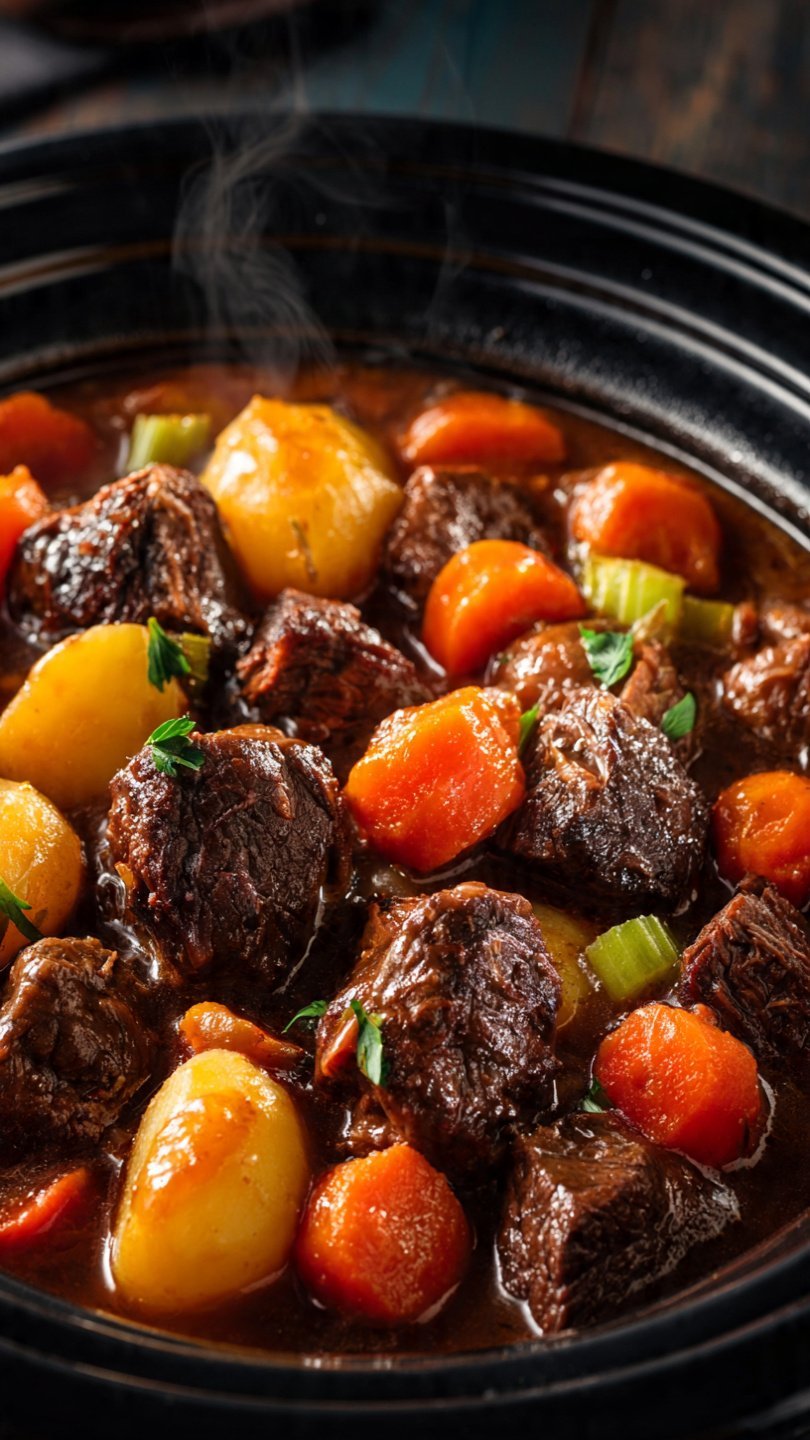
If you’ve ever typed “what is the secret to tender slow-cooked beef” into a search bar at 9 p.m., you’re not alone. It’s one of those questions that sounds simple until you’re actually standing there trying to figure it out. Chuck roast is the cut you want — its collagen melts into silk after hours of low heat.
Here’s the thing, though: most of the advice out there about tender slow-cooked beef is either overcomplicated or just plain wrong. People repeat what they heard somewhere without ever testing it. Keep the pot at 200-210°F; a rolling boil squeezes moisture out and turns meat tough.
So this is the straight-talking guide I wish someone had handed me — what works, what doesn’t, and the small details that separate a good result from a frustrating one. Searing first builds a browned crust through the Maillard reaction that braising liquid alone can’t create. Let’s get into it.
One more thing before we dive in: you don’t need fancy equipment or prior experience for any of this. Everything below assumes you’re a normal person with a normal kitchen — because that’s who this guide is written for.
The secret to tender slow-cooked beef
Here’s the foundation. Nail this part and everything else gets dramatically easier.
Keep the pot at 200-210°F; a rolling boil squeezes moisture out and turns meat tough. That one detail explains why so many people struggle: they skip the foundation and jump straight to the advanced stuff. Get this right and everything downstream — the timing, the technique, the little judgment calls — gets easier, whether it’s your first try or your fiftieth.
Searing first builds a browned crust through the Maillard reaction that braising liquid alone can’t create. Small? Sure. But small is the whole game with tender slow-cooked beef. For the official word behind this kind of guidance, the USDA’s guidance on food safety is worth bookmarking — it’s the boring-but-correct source I check when I want to be sure.
It’s also worth saying what tender slow-cooked beef isn’t: it isn’t a talent you’re born with, and it isn’t something that requires expensive gear. It’s a repeatable process. Follow the process and the results follow you — that’s the whole philosophy behind this guide.
The Step-by-Step Method
Alright, here’s the actionable part. Whether you’re starting from zero or refining what you already do, work through these in order.
- Choose a 3-4 lb chuck roast with good marbling and pat it completely dry. This is the unglamorous work that separates good results from great ones.
- Sear hard on all sides in a heavy pot until deeply browned. Do this the same way every time and your results get remarkably consistent.
- Add aromatics, a cup or two of broth or wine, and bring barely to a simmer. Don’t rush this part — getting it right here saves you from redoing everything later.
- Cover and cook low — 275°F oven or low slow-cooker setting — for 3-4 hours. This is where most people go wrong, usually because they’re in a hurry.
- It’s done when a fork twists the meat apart with zero resistance. It feels like a small thing, but it has an outsized effect on the final result.
- Rest 15 minutes, then shred or slice against the grain and spoon over the juices. Once you’ve done this twice, it becomes second nature.
Work through that list and you’re already ahead of most people. And if tender slow-cooked beef has you thinking about related projects, our guide to The best way to freeze meals for later pairs naturally with this one — same practical approach, different topic.
What most people get wrong about tender slow-cooked beef
Here’s something I’ve noticed: people treat tender slow-cooked beef as a one-and-done task, but it’s really a skill that compounds. Chuck roast is the cut you want — its collagen melts into silk after hours of low heat. The first time feels fiddly; the fifth time feels obvious. That’s normal, and it’s why sticking with a consistent approach beats constantly switching methods.
One more thing worth knowing: Keep the pot at 200-210°F; a rolling boil squeezes moisture out and turns meat tough. Keep that in mind and you’ll avoid the most common frustration point entirely. Speaking of building on basics, The best way to ripen avocados quickly is a great companion read once you’ve got this down.
Mistakes to Avoid (and Easy Fixes)
Most bad outcomes with tender slow-cooked beef come from the same handful of errors. Here are the ones I see constantly — and how to sidestep each.
- Rushing the process. Tender slow-cooked beef done in a hurry usually has to be done twice — slow down where it counts.
- Skipping the basics and jumping to advanced tricks before the foundation is solid.
- Trusting vague memory instead of double-checking. A 30-second check beats a confident guess.
- Never adjusting. Conditions change, and what worked last time might need a tweak this time.
The bottom line: tender slow-cooked beef
So, to bring it home: Chuck roast is the cut you want — its collagen melts into silk after hours of low heat. That’s the headline. Everything else — the techniques, the lists, the little optimizations — is just supporting that core idea.
My honest advice? Start simple, stay consistent, and don’t chase perfection on day one. Searing first builds a browned crust through the Maillard reaction that braising liquid alone can’t create. Whether this is a weeknight project or a weekend deep-dive, you’ve now got a better playbook than most people ever find.
If this was useful, keep exploring: How to make homemade bread without a bread machine is a natural next read, and Nutrition.gov’s healthy eating resources is my go-to authoritative reference on the subject. Now go put it into practice.
Quick questions about tender slow-cooked beef
How long does it take to get comfortable with tender slow-cooked beef?
Honestly? Just a few tries. Searing first builds a browned crust through the Maillard reaction that braising liquid alone can’t create. The first attempt is about learning, the second is about refining, and by the third you’ll feel genuinely capable. Don’t judge the whole process by attempt number one.
Is there a shortcut for tender slow-cooked beef?
Sort of — the real shortcut is skipping the mistakes everyone else makes. Chuck roast is the cut you want — its collagen melts into silk after hours of low heat. Read through the mistakes section above once, and you’ll save yourself the trial-and-error phase that eats up most people’s time and patience.
What’s the single most important thing to know about tender slow-cooked beef?
Chuck roast is the cut you want — its collagen melts into silk after hours of low heat. Everything else is optimization. If you only change one thing about how you approach tender slow-cooked beef, make it this — it has the biggest impact on your results, and it’s the advice I’d give first to anyone starting out.
What’s the biggest mistake beginners make with tender slow-cooked beef?
Rushing in without getting the basics down first. Keep the pot at 200-210°F; a rolling boil squeezes moisture out and turns meat tough. Slow down, get the foundation right, and be patient with the learning curve. Most people who struggle are simply trying to run before they can walk.