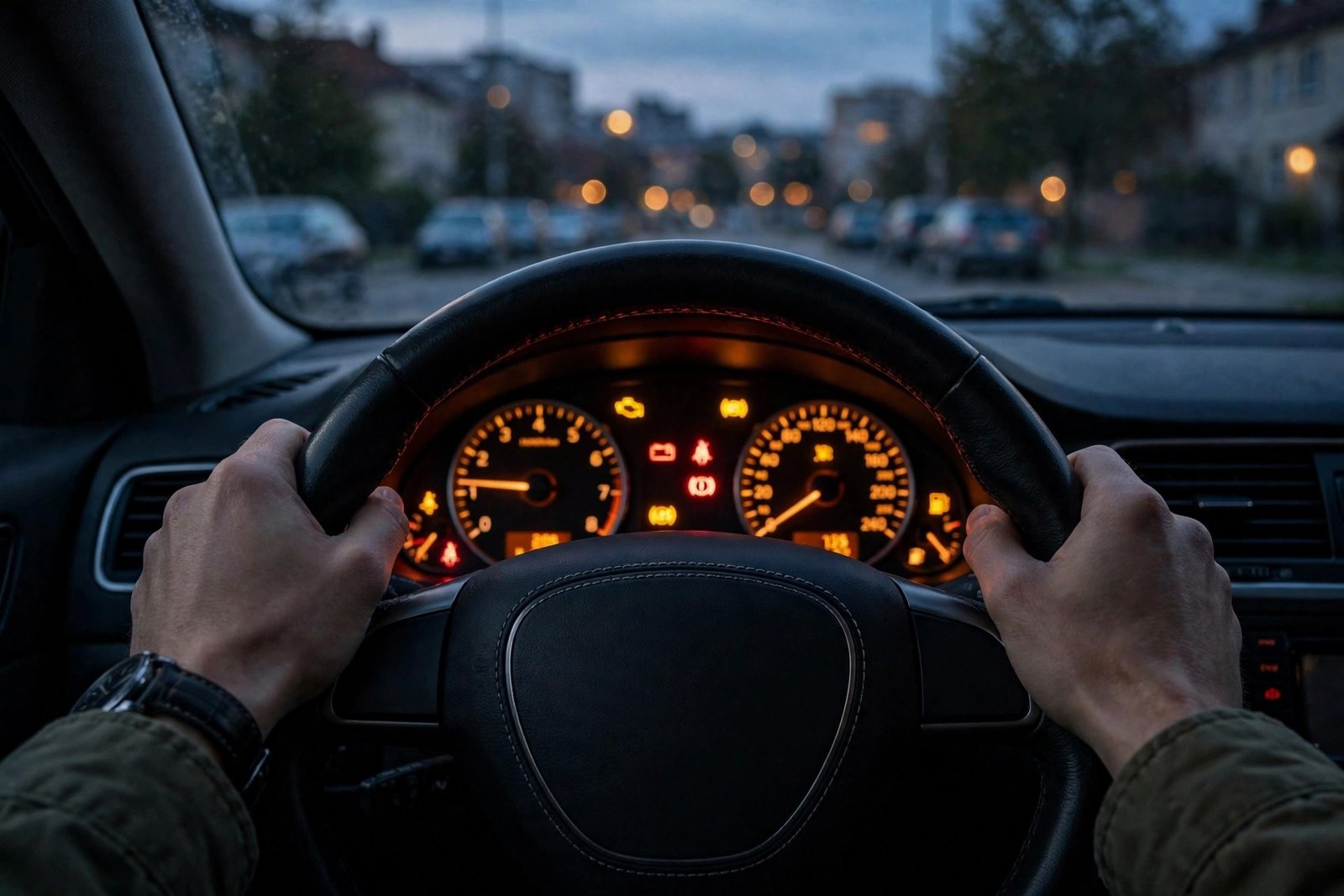
Your dashboard lights up like a Christmas tree and your stomach drops. Which light means “drive to the shop tomorrow” and which means “pull over NOW”? Most drivers know maybe three warning lights and guess at the rest — expensive guessing, since ignoring the wrong one can turn a $200 fix into a $4,000 engine. Here’s dashboard warning lights from scratch: the color code, the critical lights, and exactly what to do for each.
The Color Code: Your First Triage System
Learn this and you’ve learned half the system: RED = stop safely as soon as possible. Red means a serious problem — continuing to drive risks damage or danger. YELLOW/AMBER = caution — check soon. The car needs attention but isn’t in immediate crisis; schedule service promptly. GREEN/BLUE = informational. Headlights on, cruise control active, turn signals — no action needed. FLASHING (any color) = urgent. A flashing check-engine light, especially, means active engine damage is occurring — reduce speed and get to safety.
This color logic is universal across brands — it’s the fastest thing to teach a new driver, and the most valuable. The NHTSA’s vehicle-safety resources explain what each warning system protects. When in doubt: red means stop, flashing means hurry, yellow means schedule.
The Critical Five: Know These Cold
Check engine light. The most misunderstood light — it covers everything from a loose gas cap to catalytic converter failure. Steady = diagnose soon (get the code read free at most auto parts stores). Flashing = pull over; the engine is misfiring badly enough to damage the catalytic converter ($1,000+ part). Never ignore flashing.
Oil pressure (oil can icon, red). This does NOT mean “oil change due” — it means oil PRESSURE is lost. Driving even minutes with no oil pressure can destroy an engine. Pull over immediately, shut off, check oil level, call for help. This light has killed more engines through ignoring than any other.
Coolant temperature (thermometer icon, red). Engine overheating — especially relevant in Florida. Pull over, shut off, DO NOT open the radiator cap while hot (scalding steam). Let it cool 30+ minutes before checking coolant. Driving overheated warps cylinder heads — a $2,000+ repair from a $20 coolant issue.
Battery/charging (battery icon, red). The charging system isn’t working — you’re running on battery alone, with maybe 20–30 minutes of driving before everything dies. Turn off A/C, radio, and non-essentials; drive directly to a shop. (Note: this light often means alternator failure, not battery failure.)
Brake system (exclamation in circle, or “BRAKE,” red). Could be the parking brake engaged (check first — embarrassing but common) or actual brake system failure. If the pedal feels wrong or the light stays on with the parking brake released, do not drive — get towed. Brakes are the one system where guessing is unacceptable.
The Common Yellows: Schedule, Don’t Panic
Tire pressure (TPMS — exclamation in horseshoe). One or more tires is low — extremely common in Florida when cold snaps drop pressure ~1 PSI per 10°F. Check pressures (door jamb sticker has specs, not the tire sidewall) and inflate. If it returns quickly, you have a slow leak. ABS light: anti-lock brakes have a fault — normal braking still works, but ABS won’t engage in hard stops. Schedule service. Traction/stability control: often just indicates the system activated (normal in rain); if it stays on, the system needs diagnosis. Airbag (SRS) light: the airbag system has a fault and may not deploy — schedule promptly; this is safety equipment.
Learning to read these is like learning to read any system’s warnings — the same diagnostic mindset as recognizing warning signs in other complex systems: don’t panic, identify the signal level, act proportionally.
What to Do: The Universal Response Protocol
Red or flashing: pull over safely, shut off the engine, consult the owner’s manual (it has a warning-light section with your exact car’s meanings), and call roadside assistance if the manual says not to drive. Yellow: note which light, check the manual, and schedule diagnosis within days — get codes read free at parts stores as a first step. After any warning: when buying used, warning-light history matters — a car with chronic cleared codes is hiding something, which is why thorough used-purchase verification includes a pre-purchase inspection that reads stored codes.
Keep your owner’s manual accessible (glove box, not attic) — every car’s lights vary slightly, and the manual is the authoritative decoder ring. AAA also publishes warning-light guides, useful for teen drivers learning the system.
Warning Lights When Buying Used: Reading the Dashboard’s History
Warning lights tell stories about used cars — if you know how to read them. During the test drive, watch the startup sequence: all warning lights should illuminate briefly then extinguish. A light that never illuminates at startup may have a removed bulb — someone hiding a permanent fault. That’s an instant walk-away. After the drive, ask the seller directly about any lights that appeared — then verify with an OBD-II scan (a $20 Bluetooth scanner plus a free phone app reads stored and pending codes in minutes).
Stored codes vs. active codes: active codes mean current problems; stored/history codes mean past problems that were “fixed” (or cleared to hide). Multiple cleared emissions codes suggest someone reset the system to pass inspection or hide issues — ask for repair receipts matching the codes. The pre-purchase inspection should always include a code scan; any seller who refuses one is answering your question. Dashboard lights are the car’s testimony — in a used purchase, make the car testify before you pay.
Aftermarket Warning Lights: Alarms, Trackers, and Remote Starters
Not all dashboard lights come from the factory — aftermarket installations add their own. Remote starters and alarms (hugely popular in Florida for pre-cooling cars) wire into factory systems and can trigger phantom warning lights when installed poorly — if new warning lights appeared right after an aftermarket install, the install is suspect number one. GPS trackers (buy-here-pay-here lots install them; some insurance programs too) can cause electrical gremlins including warning lights if wired sloppily.
The diagnostic rule: always disclose aftermarket electronics to your mechanic BEFORE they chase a warning light — hours of diagnostic labor get wasted on factory-system faults that are actually aftermarket-install faults. Buying used? Ask specifically about aftermarket alarms, remote starters, and stereo installations — then verify they’re installed cleanly (no wire nuts, no electrical tape splices, proper fuse taps). The cleanest factory car can be ruined by the messiest $200 alarm install, and the warning lights are how it tells you.
Conclusion
Dashboard warning lights from scratch: red means stop now, yellow means schedule soon, green/blue means informational, flashing means urgent. Memorize the critical five (check engine, oil pressure, coolant temp, charging, brakes), treat yellows as appointments not emergencies, and always consult the owner’s manual for your specific car. The lights aren’t trying to scare you — they’re the car’s only way of asking for help. Learning their language turns panic into protocol.
Frequently Asked Questions
Where can I learn about dashboard warning lights from scratch?
Start with your car’s owner’s manual (authoritative for your exact model), AAA’s warning-light guides, and the color-code system: red = stop, yellow = schedule service, green/blue = informational, flashing = urgent.
What does a flashing check engine light mean?
Active engine misfire severe enough to damage the catalytic converter. Reduce speed, avoid hard acceleration, and get to a shop promptly — don’t continue normal driving.
Can I drive with the oil pressure light on?
No — pull over immediately and shut off the engine. The oil light indicates lost oil PRESSURE (not just low oil level), and driving without pressure destroys engines within minutes.
What should I do when the tire pressure light comes on?
Check all tire pressures against the door-jamb specification and inflate as needed. It’s often triggered by temperature drops; if the light returns quickly, have the tire checked for a slow leak.
Do warning lights mean the same thing on all cars?
The color code is universal, but specific icons and meanings vary by manufacturer. Always confirm with your owner’s manual — it’s the definitive reference for your vehicle.