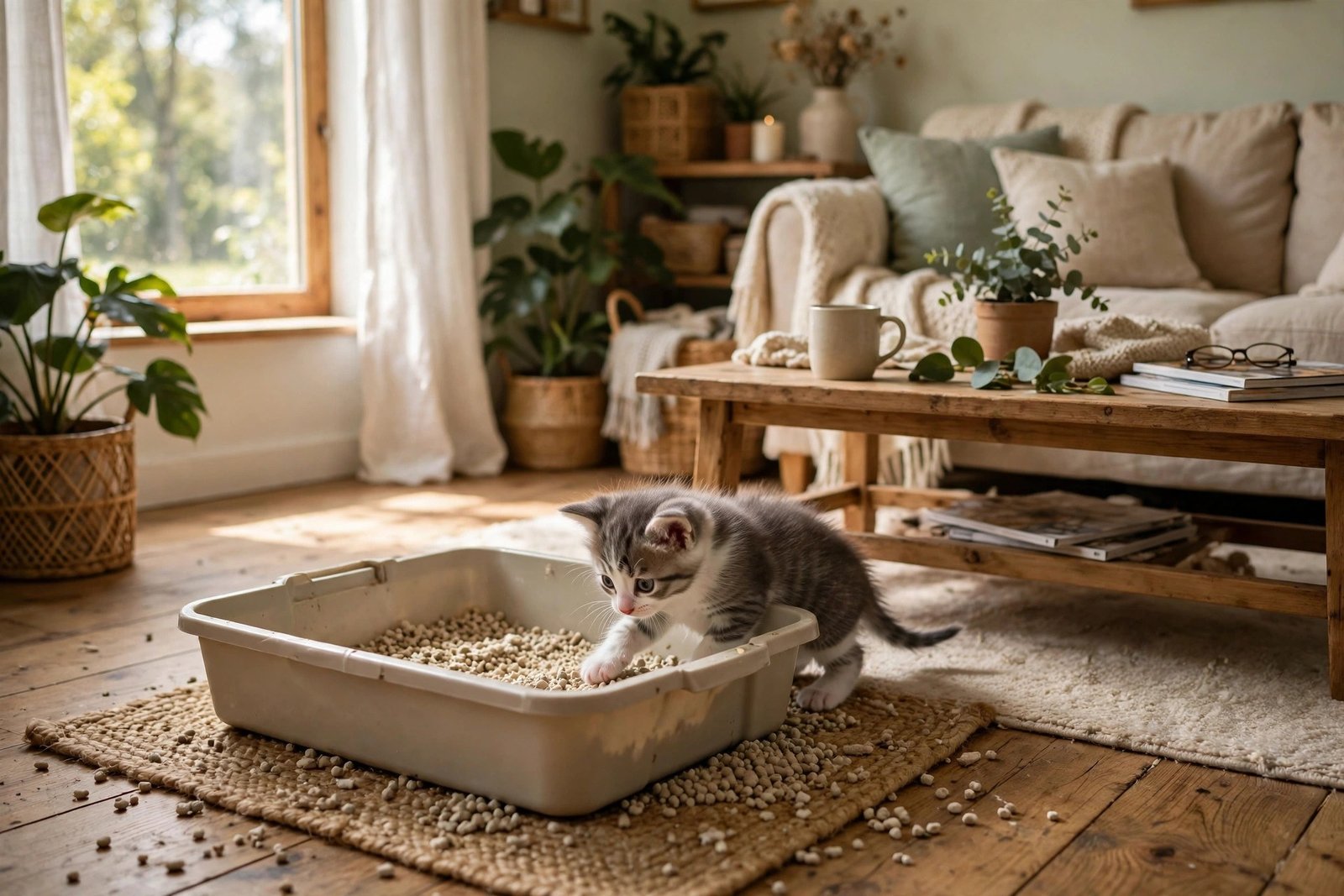
Good news first: kittens are born litter-trainable. Most learn in days, not weeks, because the instinct to bury waste is hardwired — your job is mostly setting up the environment and staying out of nature’s way. The “one week” timeline is realistic for kittens 8+ weeks old with the right setup. Here’s the day-by-day plan that works, the mistakes that stretch it to a month, and the Tampa-specific notes (heat, hurricanes, apartment living) worth knowing.
Before Day 1: The Setup (30 Minutes That Decide Everything)
The box: one per kitten plus one extra (the golden rule), low-sided for tiny kittens (they can’t climb high walls), placed in quiet, accessible spots — NOT next to food and water (cats won’t toilet near their kitchen; would you?). For Tampa apartments, a covered box in a laundry nook works; just ensure the kitten can find it — confine initially to one room with the box visible.
The litter: unscented, fine-grained clumping litter for training — kittens investigate with their mouths, so avoid clumping litter for kittens under 8 weeks (ingestion risk; use non-clumping paper-based until older) and skip heavily perfumed varieties that repel sensitive noses. Depth: 2–3 inches — too shallow feels wrong to dig in, too deep intimidates tiny legs.
The ASPCA’s litter-box guidance emphasizes: location, cleanliness, and number of boxes matter more than litter brand. Get the setup right and training is mostly automatic.
The One-Week Plan, Day by Day
Days 1–2: Introduction and confinement. Set the kitten in the box gently after meals, naps, and play — these are the high-probability moments (kittens toilet within 15–30 minutes of eating). Let them sniff, paw, explore. Praise calmly when they go; never punish accidents (punishment teaches fear of YOU, not box use). Keep the kitten in one room with the box — a whole apartment is too much territory to learn at once.
Days 3–4: Reinforcement and expansion. Continue the after-meal placements. Clean accidents with enzymatic cleaner (regular cleaners leave scent markers that invite repeats — this is the #1 reason “training isn’t working”). Scoop the box at least daily — cats are fastidious, and a dirty box is the top cause of avoidance. If using multiple rooms now, ensure a box is always within easy reach.
Days 5–7: Independence check. By now most kittens self-initiate. Test by giving more space; watch for the pre-toilet signals (sniffing, circling, squatting posture) and gently redirect to the box if they start elsewhere. Maintain the routine one more week before declaring victory — consistency cements the habit.
The Mistakes That Break Training
Too few boxes. One box for three cats in a two-story home guarantees accidents — it’s a queueing problem, not a training problem. Wrong location. Next to the washing machine (scary noises), in a high-traffic hallway (no privacy), or in a basement the kitten can’t reliably reach. Scented everything. Perfumed litter + air fresheners = olfactory assault for a nose 14x more sensitive than yours. Punishment. Rubbing noses in accidents is abuse, not training — it creates cats who hide to toilet. Changing litter type mid-week. Pick one and commit for the training period.
Medical note: a kitten who was trained and suddenly stops may have a urinary issue — straining, crying, or blood warrants a vet visit promptly, not more training. Cornell Veterinary College resources note that litter-box avoidance is among the top reasons cats are surrendered — and most cases are environmental or medical, not behavioral defiance.
Tampa-Specific Considerations
Heat and hydration: Tampa’s climate means indoor cats need constant fresh water — dehydration concentrates urine, increasing both odor and urinary-tract risk. Place water away from food (cats prefer separation) and consider a fountain (many cats drink more from running water). Hurricane season: keep a portable litter setup in your emergency kit — evacuating with a cat means litter needs too; disposable trays + a small bag of litter ride along in the carrier bag. Apartment living: covered boxes and quality litter control odor for close quarters — and if you’re weighing pet logistics in a small space, choosing apartment-suitable pets starts with honest space assessment. Protect floors under boxes with washable mats — pet-friendly flooring choices matter most in the litter zone.
Multi-Cat Households: Scaling the System
Everything in this guide scales — with adjustments. The one-per-cat-plus-one rule becomes critical, not optional: two cats need three boxes, ideally on different floors or areas (cats can guard resources, and a blocked box is a refused box). In multi-cat homes, box LOCATION matters more than box count — spread them so no single cat can control access to all of them.
Litter preferences may differ: if one cat avoids a box others use, try a different litter type in one box — cats have individual texture preferences, and multi-cat homes sometimes need variety. Clean more: two cats fill boxes twice as fast; scoop twice daily minimum, full litter changes more often. Watch the dynamics: a cat who suddenly avoids boxes in a previously fine multi-cat home may be responding to a new bully, not a training regression — observe interactions before changing the setup. Vertical territory helps: cat trees and shelves reduce the social pressure that drives box-guarding. Multi-cat litter success is really multi-cat diplomacy — the boxes are just where the diplomacy becomes visible.
Senior Cats: Litter Box Adjustments With Age
Kittens grow into seniors, and senior cats need litter box modifications — plan for it from the start by choosing adaptable setups. Lower the walls: arthritic cats can’t climb high-sided boxes — switch to low-entry or cut-down boxes (a storage tote with a doorway cut out works perfectly). Add more boxes: senior cats urinate more frequently (kidney changes are common) — increase count and keep one on every floor; stairs become barriers. Try different litter: softer, finer litter is gentler on arthritic paws — some seniors reject the coarse litter they used for years.
Watch for the medical signals: increased frequency, straining, crying in the box, or sudden avoidance in a senior cat warrant prompt vet visits — kidney disease, hyperthyroidism, diabetes, and arthritis all announce themselves through litter box changes, often months before other symptoms. The litter box is a senior cat’s health dashboard; changes are data, not misbehavior. The training you do in week one establishes habits for life — but the setup should evolve as the cat ages, the same way you’d adjust anything else for a senior family member.
Conclusion
Litter training a kitten in one week is realistic because instinct does the heavy lifting — your job is setup (right box, right litter, right locations, enough boxes), timing (place in box after meals/naps/play), cleanliness (scoop daily, enzymatic cleaners for accidents), and patience (never punish). Start confined, expand gradually, and by day seven most kittens are reliable. The ones who aren’t usually need a setup fix, not more time — check the box count, locations, and cleanliness before doubting the kitten.
Frequently Asked Questions
When should I litter train a kitten — and can it be done in one week?
Start at 8+ weeks old (younger kittens need non-clumping litter). One week is realistic with proper setup: confined space initially, box placements after meals/naps/play, daily scooping, and enzymatic cleaner for accidents.
How many litter boxes does a kitten need?
One per cat plus one extra, in different locations. Too few boxes is the top cause of accidents — it’s a capacity problem, not a training failure.
What kind of litter is best for training kittens?
Unscented, fine-grained litter at 2–3 inches depth. For kittens under 8 weeks, use non-clumping paper-based litter (ingestion safety). Avoid heavily scented varieties.
Why is my kitten not using the litter box?
Check in order: box cleanliness (scoop daily), number and location of boxes, litter type changes, stressors (noise, new pets), and medical issues (straining, crying, blood = vet visit, not training issue). Never punish accidents.
Should the litter box be near the kitten’s food?
No — cats instinctively avoid toileting near food. Keep litter boxes, food, and water in separate areas; this separation is one of the simplest training accelerators.