Open your energy bill and you’ll probably feel the same thing I do: a vague sense that you’re paying too much, with no idea where it’s all going. The average American household spends around $2,000 a year on energy, and roughly half of that is heating and cooling. The good news? Some of the most effective energy-saving upgrades are cheap, simple, and pay for themselves within a single year. Here’s where to start.
How to Reduce Energy Bills With Simple Home Upgrades
Seal the leaks (biggest bang for buck)
Air leaks are the silent budget-killer. The average home loses enough air through gaps and cracks to equal leaving a window open year-round. The fixes are embarrassingly cheap:
- Weatherstrip doors ($10-$20 per door): If you can see daylight around a closed door, you’re heating the neighborhood. Adhesive foam or V-strip weatherstripping installs in minutes.
- Caulk window and trim gaps ($5 per tube): Seal where frames meet walls, inside and out. One tube covers a lot of windows.
- Outlet and switch gaskets ($0.50 each): Exterior-wall outlets leak surprising amounts of air. Foam gaskets install behind the cover plate in seconds.
- Seal drafty windows properly: Sealing drafty windows in detail — plastic film kits ($5-$10 per window) are ugly but remarkably effective as a seasonal fix.
A $50 air-sealing kit and a Saturday afternoon typically cuts heating and cooling costs by 10-15%. Nothing else in home improvement delivers that ROI.
Upgrade your thermostat game
A programmable or smart thermostat ($100-$250) saves 8-10% on heating and cooling by automatically setbacking temperatures when you’re asleep or away. The math: on a $2,000 annual energy bill, that’s $160-$200/year — payback in about a year. Even a basic $30 programmable thermostat captures most of the savings if you actually program it (most people don’t, which is why the smart ones win — they learn your schedule).
The no-cost version: manually set back 7-10°F for 8 hours daily (while sleeping or at work). The Department of Energy confirms this saves up to 10% annually. Your house reheats in 30 minutes; the savings are year-round.
Attack the energy vampires
Electronics in standby mode — TVs, game consoles, chargers, cable boxes — consume 5-10% of home electricity doing absolutely nothing. Fixes:
- Smart power strips ($25-$40): Cut power to peripherals when the main device turns off. One strip per entertainment center.
- Unplug the worst offenders: Old cable boxes and game consoles are notorious. If it’s warm when “off,” it’s wasting money.
- Enable sleep settings: Computers, TVs, and consoles all have aggressive power-saving modes that most people never activate.
Lighting and water heating: the quiet giants
LEDs everywhere. If you still have incandescents or CFLs, replacing them with LEDs cuts lighting energy by 75%+. At $2-$5 per bulb, whole-house conversion pays back in months. LEDs also last 15+ years — you’ll forget what buying lightbulbs was like.
Water heater tune-up (free-$20). Turn the thermostat down to 120°F (most are set to 140°F — scalding and wasteful). Insulate the tank with a $25 blanket if it’s warm to the touch, and insulate the first few feet of hot water pipes. Water heating is typically 18-20% of home energy use; these tweaks shave 5-10% off that slice.
Low-flow everything. Modern low-flow showerheads ($15-$30) feel identical to old ones while using half the hot water. Faucet aerators ($3 each) do the same at sinks. Less hot water used = less energy spent heating it.
Bigger Upgrades Worth Considering
- Attic insulation: The single best major upgrade for most homes — choosing insulation for older homes covers the options. Often pays back in 2-3 years.
- Seal and insulate ductwork: Leaky ducts in attics and crawlspaces waste 20-30% of heated/cooled air. Mastic sealant + insulation is a weekend project.
- Energy audit: Many utilities offer free or subsidized audits ($0-$100) that pinpoint exactly where your home wastes energy — including blower-door tests that find leaks you’d never spot.
The DOE’s Energy Saver guide is the definitive free resource for all of this, and the ENERGY STAR program maintains rebates and tax credit information — the federal energy tax credits can cover 30% of many upgrades.
Reading Your Energy Bill Like a Detective
Most people glance at the total and wince. But the bill itself is a diagnostic tool. Compare usage (kWh or therms), not dollars — rates change, and dollar comparisons mislead. Look at the same month last year: a sudden jump means something changed (failing appliance, new energy hog, or a rate hike you didn’t notice). Gradual creep suggests degrading efficiency — aging HVAC, failing weatherstripping, or an old water heater working harder.
Many utilities now provide hourly usage data through online portals or apps. The patterns tell stories: a spike every evening might be the electric water heater reheating; overnight usage when everyone’s asleep reveals the standby loads and the devices you forgot. One homeowner discovered his pool pump running 24/7 on a stuck timer — $60/month for nothing. Another found an old second fridge in the garage costing $25/month to cool condiments.
The audit mindset: list every major appliance with its age and approximate consumption. Anything over 15 years old with heavy use (fridge, water heater, HVAC) is a candidate for replacement math — a new efficient model’s energy savings often justify replacement before the old one dies. The refrigerator test is famous: if it’s pre-2000 and running in your garage as a “beer fridge,” it’s likely costing $150-$200/year in electricity. That’s an expensive six-pack.
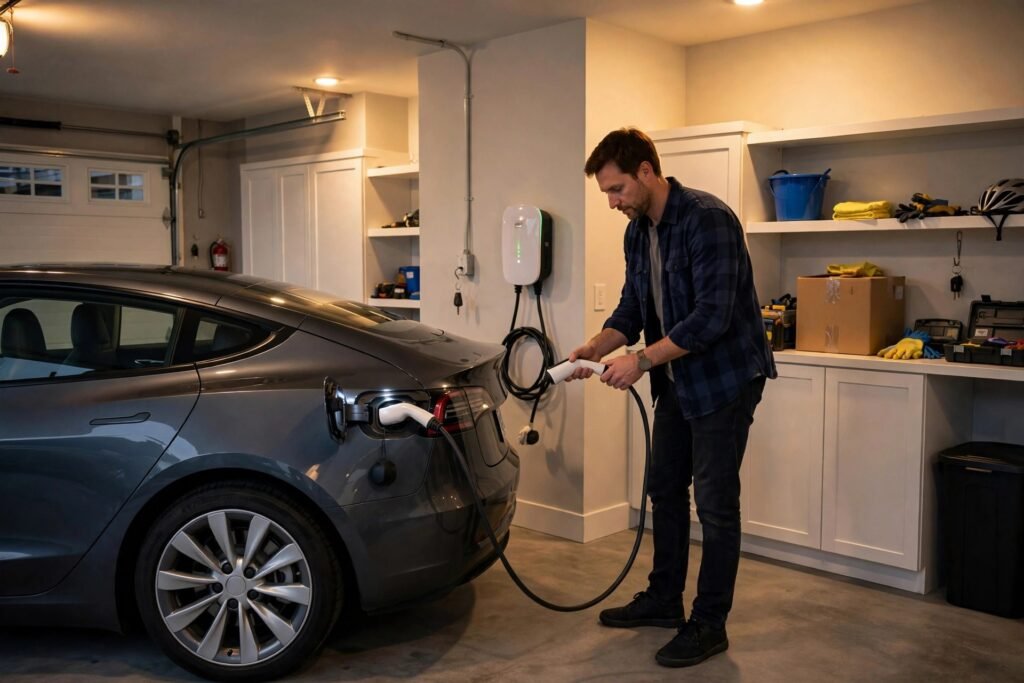
Time-of-use rates add another layer: many utilities charge 2-3x more during peak hours (typically 4-9pm). Shifting laundry, dishwashing, and EV charging to off-peak hours cuts bills 10-20% with zero lifestyle change — just different timing. Check whether your utility offers time-of-use plans; most people are on flat rates by default and never realize the option exists.
The Bottom Line
Reducing energy bills with simple upgrades starts with: air-sealing ($50, 10-15% savings), a smart thermostat ($150, ~10% savings), killing standby power, converting to LEDs, and tuning the water heater. Total investment under $300, typical first-year savings of $300-$500, and every year after is pure profit. Start with the caulk gun this weekend — your wallet will notice by next month’s bill.