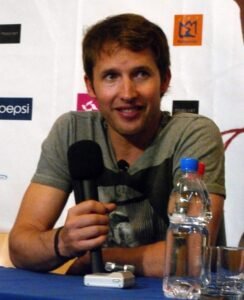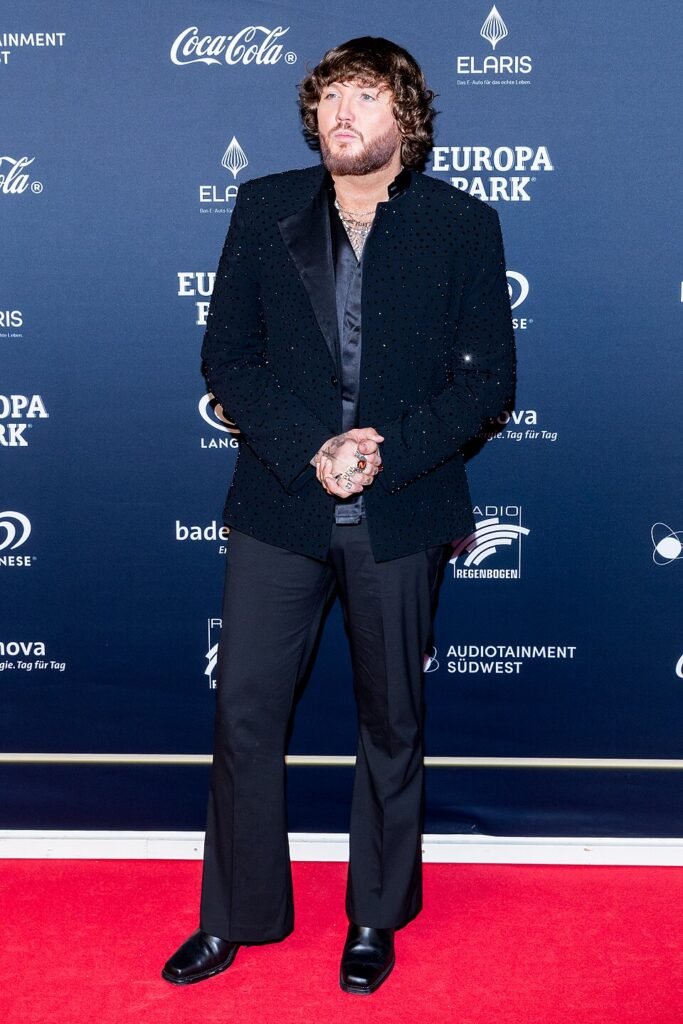
James Arthur Net Worth, Age, Family, Career and Life Story
James Arthur’s voice sounds like it has survived things, because it has: a fractured start in care and sofa-surfing, a talent-show win that nearly destroyed him, a public fall, and then one of the great second acts in modern British pop. Celebrity Net Worth estimates his net worth at $5 million in its current listing. At 38, with six studio albums and a billion-stream ballad behind him, this is the story of the Middlesbrough singer who lost everything except the voice — and found that was enough.
Partners, Kids and the Real James
Arthur’s most significant relationship has been with dancer Jessica Grist, whom he met in 2012 when she was working as a backing dancer on the series of The X Factor that he won. Their relationship has been, by every reliable account, an on-and-off one across more than a decade: they separated in 2015 and reconciled, separated again in 2021 and reconciled again, and in November 2022 they welcomed a daughter together, Emily, whose arrival Arthur announced with a short message — “Dear Emily, welcome to the world” — and later described as the moment an immediate calm replaced the chaos of his earlier life. In June 2024, however, OK! magazine and other outlets reported that the couple had separated for a third time, with sources saying both parents remained fully committed to putting their daughter first. No reliable report since then has confirmed a reconciliation or a new partner, and Arthur is not married; this profile therefore records Grist exactly as the reporting supports — his long-term, on-and-off partner and the mother of his daughter, with their most recent reported status a separation.
Family, in the wider sense, is the engine of Arthur’s public honesty. He has spoken in depth about his parents’ separation, his time in foster care as a teenager, his struggles with anxiety and panic attacks, and the panic disorder that once made touring a ordeal; he has worked with mental-health charities and treats interviews about those years as part of the job of having survived them. His base remains the north east of England in spirit wherever work takes him, and Emily, he says, is now the fixed point: the reason the tours end, the records get finished and the old self-destructive chapters stay closed.
From First Break to Impossible and Beyond
2012–2013: The X Factor and Impossible
Arthur won the ninth series of The X Factor in December 2012, mentored by Nicole Scherzinger, after a series of performances — including a famous sing-off survival against Ella Henderson — that marked him out as the rawest talent the format had produced in years. His winner’s single, a cover of Shontelle’s “Impossible,” became the fastest-selling single by a winner in the programme’s history at that point, topped the UK chart and went on to sell millions of copies worldwide. His self-titled debut album followed in November 2013, debuting at number two in the UK and producing the singles “You’re Nobody ’til Somebody Loves You” and “Get Down.” On paper it was a dream launch. In practice, Arthur was struggling badly with anxiety, fame and the machinery around him, and within a year the dream had curdled into the most public unravelling of any winner the show had produced.
2014–2016: The fall and Say You Won’t Let Go
A series of controversies in 2013 and 2014 — ill-judged lyrics, public feuds and erratic appearances — cost Arthur his record deal, and by 2015 he was, commercially, finished: dropped, in debt to his own advance by his account, and playing small rooms again. What happened next is the reason his story gets told. He got help, got sober-minded about the business, kept writing, and re-signed with Columbia Records in 2016. The comeback single, “Say You Won’t Let Go,” released that September, was a slow-burning phenomenon: a number one in the UK and across Europe and Australia, a top-twenty hit in America, and a song that has since passed two billion streams to become one of the defining wedding ballads of its era. His second album, Back from the Edge (2016), debuted at number one in the UK — a chart position no fallen talent-show winner had ever reclaimed in quite that way. The album’s other singles told the story in miniature: “Safe Inside” addressed the people who had sheltered him during the lost years, while “Train Wreck,” a piano-led confession of self-sabotage, became a slow-burning favourite that has out-streamed most of the hits of its year. Arthur toured the record to audiences who sang the confessional parts back at him like a congregation, and the industry that had written him off began, quietly, to return his calls. The fall had been total. So, improbably, was the return.
2017–2021: You, collaborations and the arena years
Arthur consolidated rather than coasted. He featured on Rudimental’s “Sun Comes Up” (2017), duetted with Anne-Marie on “Rewrite the Stars” (2018) for a bestselling covers project, and released his third album, You, in 2019, built around singles including “Naked,” “Falling Like the Stars” and “Empty Space.” The album’s sound — big, bruised, guitar-led balladry sung like testimony — became his settled identity, and his live draw grew into full arena tours across the UK and Europe. His fourth album, It’ll All Make Sense in the End (2021), written during lockdown, was his most confessional, addressing fame, faith in recovery and the baby daughter he and his partner had lost to an ectopic pregnancy the previous year, a loss he wrote about in the song “Emily” — a name that would return, in happier circumstances, very soon after. Through these years his catalogue quietly compounded, the way durable songs do when they attach themselves to weddings, funerals and first dances: the modern equivalent, for a songwriter, of the long research a first-time buyer puts into choosing a first VR headset — except Arthur’s audience made its choice once, and has never switched it off.
2022–2026: Bitter Sweet Love, Pisces and the elder balladeer
Fatherhood, which arrived in November 2022, reshaped the later records. Bitter Sweet Love (2024), his fifth studio album, debuted at number one in the UK, giving him a second chart-topping album eight years after his first, and produced some of his most upbeat material, including the title track and “Blindside.” His sixth album, Pisces, followed in April 2025, a reflective record named for his star sign that critics heard as the sound of a man making peace with his own history. A decade on from being written off, Arthur tours arenas and outdoor summer stages across Britain and Europe, headlines festivals, and occupies a niche no one else quite fills: the tattooed balladeer whose songs function as public emotional infrastructure. The voice that once sounded like it was surviving things now sounds, on the best nights, like it won.
A $5 million Fortune Built Over Decades
Celebrity Net Worth estimates Arthur’s net worth at $5 million in its current listing. Published estimates cluster around that figure, with some trackers printing $5–6 million; no Forbes or Sunday Times Rich List solo total for him was found in the sources checked. Touring grosses sometimes quoted for his arena runs — industry trackers have put his average city gross in the hundreds of thousands of dollars — are box-office totals before costs, not personal wealth, and are flagged as such here; the same applies to the sales and streaming totals of “Impossible” and “Say You Won’t Let Go,” which are measures of popularity, not of what remains after labels, taxes, management and a decade of living.
The real financial story is one of a fortune rebuilt rather than inherited or instantly won. Arthur has been candid that the first wave of money went as fast as it arrived and that being dropped left him with little to show for a number one album; the second career was built on steadier foundations — ownership of his songwriting, a catalogue anchored by one of the most-streamed British ballads ever written, arena touring and his own company, Raff Music Limited, through which his work has been channelled since 2013. His height is listed at 6 feet 2 inches (1.88 m) in published listings, with no official figure released; at well over six feet, heavily tattooed and usually in black, he is an imposing stage presence that the ballads constantly undercut. His weight appears in published listings at around 187 pounds (85 kg), again a listings figure rather than an official one, and listings vary by several pounds in either direction.
Young James Finds a Voice in Middlesbrough, England
James Andrew Arthur was born on March 2, 1988, in Middlesbrough, in the north east of England. His biography begins in a big, complicated family: his father, Neil Arthur, is Scottish and worked in a succession of jobs including delivery driving and DJ work, and his mother, Shirley Ashworth, is English and worked in sales and marketing. His parents separated when he was very young, and Arthur’s upbringing was split between households in the Middlesbrough area, including the town of Saltburn-by-the-Sea, where he attended secondary school.
It was, by his own account, a turbulent start. As a teenager he spent time in foster care and in supported accommodation, and he has never dressed that period up: the instability, he says, is where both the anger in his early music and the gratitude in his later music come from. What carried him through was performing. He sang and played guitar in a string of local bands as a teenager and in his twenties, fronting outfits that gigged around the north east, recorded demos and went nowhere slowly. He wrote constantly, uploaded songs and performances online, and entered singing competitions with the persistence of a man running out of other options — by 2012 he was sleeping on friends’ floors and seriously considering giving up music altogether. Instead, he auditioned for the biggest singing competition in the country.
The Essential Facts About James
| The Essential Facts About James | Details |
|---|---|
| Net Worth | Estimated $5 million, according to Celebrity Net Worth (current listing); some trackers give $5–6 million |
| Age | 38 years old |
| Height | 6 feet 2 inches (1.88 m) in published listings; no official figure |
| Weight | Around 187 lb (85 kg) in published listings; no official figure |
| Biography | Singer-songwriter from Middlesbrough who won The X Factor in 2012, lost his deal, and rebuilt his career around the global hit Say You Won’t Let Go |
| Born | March 2, 1988, in Middlesbrough, England |
| Partner | Jessica Grist (long-term on-and-off partner since 2012; a further separation was reported in June 2024 and no reconciliation has been reliably reported since) |
| Children | Emily Arthur (born November 2022), with Jessica Grist |
| Parents | Neil Arthur (father, Scottish) and Shirley Ashworth (mother, English) |
| Family | Daughter Emily; parents Neil and Shirley; raised between households in the Middlesbrough and Saltburn area |
| Songs | Impossible, Say You Won’t Let Go, Train Wreck, Naked, Falling Like the Stars, Empty Space, Rewrite the Stars (with Anne-Marie), Sun Comes Up (with Rudimental) and Blindside |
| Albums | James Arthur (2013), Back from the Edge (2016), You (2019), It’ll All Make Sense in the End (2021), Bitter Sweet Love (2024) and Pisces (2025) |
| @jamesarthur23 — his official, verified account |
At 38, James Arthur is the rare talent-show story with a third act: not the win, not the fall, but the long, profitable, hard-won peace afterwards. The voice survived everything. So, in the end, did he.