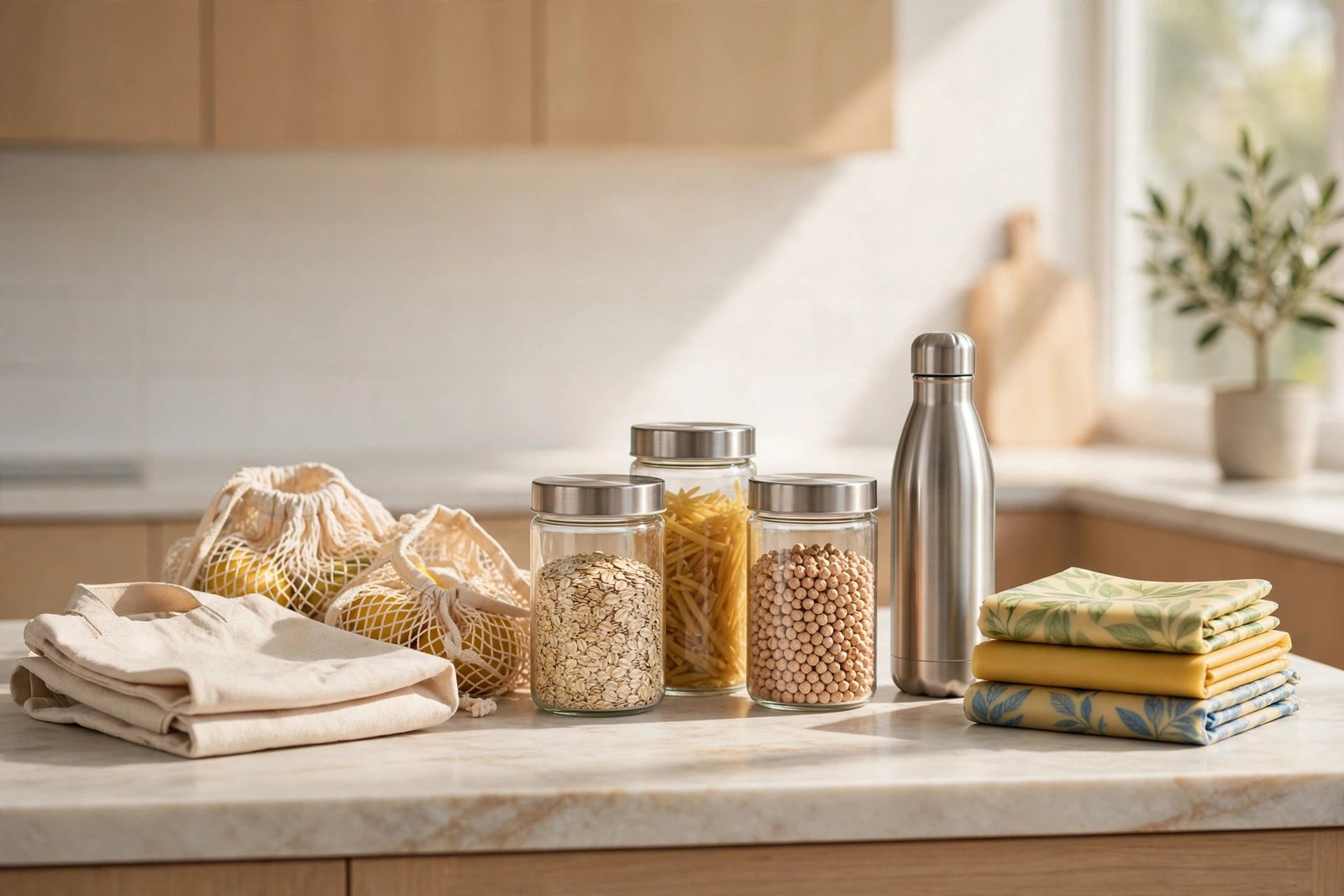
There’s a stubborn myth floating around Miami coffee shops and TikTok feeds alike: that living sustainably is a luxury hobby for people with money to burn. You’ve seen the aesthetic — matching glass containers, a $40 bamboo toothbrush set, artisanal soap bars that cost more than your lunch. It looks expensive because the internet wants it to look expensive. The truth is far less glamorous and far more wallet-friendly: the cheapest version of a reusable lifestyle is simply buying less stuff, less often.
In 2026, with grocery prices still biting and Florida’s heat making single-use plastic water bottles feel like a daily tax, switching to reusables isn’t just an environmental choice — it’s a financial one. The average American household spends hundreds of dollars a year on disposable versions of things that have one-time-cost reusable alternatives. This guide walks you through exactly how to make the switch on a tight budget: which swaps pay for themselves fastest, what to skip, and how to do it without buying into the expensive “zero-waste starter kit” trap.
The Real Math: Disposables Are the Expensive Habit
Before buying a single reusable item, it helps to see the numbers. A family buying paper towels spends roughly $150 to $200 a year on them. A 12-pack of reusable Swedish dishcloths costs about $15 and replaces around 180 paper towel rolls. Bottled water is the most brutal example: at roughly $1.50 a gallon in single-serve bottles versus fractions of a cent from the tap, a two-bottle-a-day habit can cost over $1,000 a year. A $25 filter pitcher pays for itself in weeks.
The pattern repeats everywhere. Disposable razors, sandwich bags, coffee cups, grocery bags — each one is a small recurring tax. Reusables flip that into a single upfront cost. The EPA’s recycling and waste-reduction resources make the same point from the environmental side: the greenest (and cheapest) product is the one you never have to buy again. Your job isn’t to replace everything at once. It’s to find the disposables draining your budget fastest and kill those first.
The “Big Five” Swaps: Highest Impact, Lowest Cost
If you do nothing else, these five swaps deliver most of the savings. Tackle them in order and you’ll feel the difference in your monthly spending within weeks.
1. The kitchen: bags, wrap, and paper towels
Start with silicone zip bags (a set of 6 runs $12–$18 and lasts years), beeswax wraps or silicone lids instead of cling film, and a stack of washable dishcloths instead of paper towels. The kitchen is where most households burn through disposables fastest, so it’s also where the savings stack up quickest. Pair this with reducing food waste in your kitchen — meal planning and proper storage — and your grocery bill drops on two fronts at once.
2. The bathroom: the quiet money pit
Safety razors look intimidating but a $20 handle plus blades at pennies apiece beats $15 cartridge packs forever. Bar soap and shampoo bars eliminate plastic bottles and often cost less per wash. Reusable cotton rounds replace bags of disposable pads. None of this requires a specialty store — drugstore and supermarket versions work fine.
3. On the go: bottles, cups, and bags
A decent insulated bottle ($15–$25) ends the bottled-water habit, which matters doubly in Miami’s heat. A reusable coffee cup saves the 25-cent discount many cafés offer per bring-your-own-cup visit — small, but it adds up to real money over a year. Keep a folded tote bag in your car and the 10-cent bag fees disappear.
The $50 Starter Kit: What to Buy First (and What to Skip)
Here’s a realistic starter budget: silicone food bags ($15), dishcloths ($10), a water bottle if you don’t own one ($15), and bar soap/shampoo bars ($10). That’s $50 to cover the big five. Buy these and stop. The biggest budget mistake beginners make is treating this like a shopping spree — a matching set of glass containers, a new lunchbox, specialty cleaning concentrates — before they’ve built the habit. Fancy gear doesn’t create the lifestyle; repetition does.
Skip anything marketed as a “zero-waste starter kit” over $60. Skip single-purpose gadgets (avocado savers, banana bags) until you’ve lived without them for a month and still want them. And skip the idea that everything must match — a chipped mug from your cabinet works exactly as well as a $30 tumbler. For bigger household savings running in parallel, look at money-saving habits that compound every month; the reusable switch works best as one part of a broader budget reset.
Free Swaps: Use What You Already Own
The cheapest reusable is the one already in your house. Glass pasta-sauce jars become storage containers. Old t-shirts become cleaning rags. A tote bag from any event replaces plastic bags. A regular plate with a damp towel over it replaces cling wrap for most leftovers. Before spending a dollar, do a “use-it-up” audit: finish every disposable product you own first. Throwing away half-used paper towels to buy dishcloths defeats both the budget and the environmental purpose.
This “shop your home first” rule also protects you from the most common failure mode: buying reusables you never use. If you already own a water bottle buried in a cabinet, the answer isn’t a new bottle — it’s putting the old one by your keys.
Miami-Specific Hacks That Make It Cheaper
South Florida actually makes this easier than most places. Year-round farmers markets (from the Upper Eastside market to the Legion Park market) let you buy produce without packaging, often cheaper than supermarkets. Several local refill stations sell detergent, soap, and cleaning products by weight — bring your own bottles and pay only for what you use. Miami-Dade’s heat is also an argument for the switch: a refillable bottle isn’t optional here, it’s survival gear, and every refill station at parks and the beach saves you a $3 convenience-store bottle.
Check the EPA’s greener products guidance before buying cleaning concentrates or “eco” brands — many conventional products with refill options beat boutique green brands on both price and performance. And since cooling dominates Florida utility bills, pair your reusable switch with simple home upgrades that cut energy bills for a double win on monthly costs.
Mistakes That Blow the Budget
Watch for these traps. First, replacing instead of reducing: buying seven reusable straws when you never used straws anyway. Second, chasing aesthetics: the $200 matching container set performs no better than mixed jars. Third, ignoring the break-even point: a $60 “eco” mop has to beat a $12 one by lasting five times longer — do the division before you buy. Fourth, quitting too early: the first month feels like effort; by month three, grabbing the tote and bottle is automatic. Track one number — your monthly spending on the disposable categories you replaced — and the savings become their own motivation. The Department of Energy’s Energy Saver guide applies the same break-even thinking to home upgrades, and the mindset transfers perfectly.
Conclusion
Switching to a reusable lifestyle on a budget in 2026 comes down to three moves: kill your most expensive disposable habits first (water bottles, paper towels, food wrap), spend no more than $50 on starter gear, and use what you already own before buying anything new. Done right, the switch pays for itself within two to three months and then keeps saving you money every month after. You don’t need the aesthetic, the starter kit, or anyone’s permission — just a water bottle, a tote bag, and the decision to stop paying the disposable tax.
Frequently Asked Questions
How much does it really cost to start a reusable lifestyle?
A practical start costs $30–$50: silicone food bags, washable dishcloths, bar soap, and a water bottle if you don’t own one. Everything beyond that is optional. Most households recover the cost within two to three months through reduced spending on disposables.
What is the single highest-impact swap for beginners?
A reusable water bottle, especially in hot climates like Miami. Bottled water is the most expensive disposable per unit, and the average American buys around 170 bottles a year. One $20 bottle eliminates that entire category.
Is a zero-waste lifestyle actually cheaper than a normal one?
Yes, once past the small upfront cost. Studies of household spending consistently show reusables beating disposables on a per-use basis by wide margins. The lifestyle only gets expensive when people treat it as a shopping category instead of a buying-less philosophy.
How do I stay motivated when reusables feel inconvenient?
Track the money, not the morality. Note what you spent monthly on paper towels, bags, bottles, and wrap before the switch, then watch that line item shrink. Visible savings sustain the habit far better than guilt.