Every remote job posting seems to want three years of experience, a portfolio, and skills you don’t have yet. If you’re in Miami with no professional experience — a recent graduate, a stay-at-home parent re-entering work, or someone whose jobs were all in-person — the remote job market can feel like a locked door. It’s not. The door is just labeled differently than you expect. Entry-level remote work exists, but it hides in categories most beginners never search.
Miami adds its own wrinkles: a competitive local market, a high cost of living, and the temptation of hospitality and tourism jobs that keep you in person. Remote work is the escape hatch — but only if you know where beginners actually get hired.
Where Beginners Actually Get Hired Remotely
Forget “remote marketing manager.” The real entry points for people with no experience are:
- Customer support and success: the largest entry-level remote category. Companies hire for communication skills and train the rest. Bilingual English/Spanish is a genuine superpower in Miami — many companies pay premiums for it.
- Data entry and operations support: unglamorous, real, and often remote. Accuracy and reliability matter more than credentials.
- Virtual assistance: inbox management, scheduling, travel booking for executives and small businesses. Organizational skills from any background transfer directly.
- Content moderation and trust & safety: reviewing flagged content for platforms. Emotionally demanding but genuinely entry-level.
- Sales development (SDR): outbound prospecting roles hire beginners constantly and train aggressively. High turnover means constant openings — and top performers earn well.
- AI training and data annotation: a growing category where you label data, evaluate AI responses, or test products. Often contract-based, but real pay for real work.
Notice what’s not on the list: “social media manager” and “freelance writer” — the two most-searched beginner remote jobs and the two most saturated. Beginners do better targeting unsexy categories with real hiring volume.
Build Proof Without Experience
“No experience” doesn’t have to mean “no proof.” Employers hiring remotely can’t watch you work, so they overweight evidence of reliability and skill. Manufacture that evidence:
- A skills portfolio: for support roles, write sample responses to difficult customer scenarios. For VA work, document a system you’d use to manage an executive’s inbox. For SDR roles, record a practice cold-call script. Tangible beats theoretical.
- Certifications that signal seriousness: Google’s IT Support or Project Management certificates, HubSpot’s free sales and service certifications, or Zendesk’s support certifications. None require experience; all signal initiative.
- Volunteer or gig work framed professionally: managed a church’s social media? That’s content operations. Organized family logistics? That’s operations coordination. Translate ruthlessly.
Then use AI resume tools to frame your background for remote roles — translating in-person experience into remote-ready language is a skill in itself.
Where to Actually Look in Miami
General job boards bury entry-level remote roles under senior postings. Better hunting grounds:
- Company career pages directly: large remote-friendly employers (health insurers, fintech companies, e-commerce brands) post support and operations roles on their own sites first.
- Remote-specific boards: filter strictly for entry-level; ignore anything asking for years of experience.
- Staffing agencies with remote divisions: Miami has several agencies placing remote customer service and operations contractors. Contract-to-hire is a legitimate foot in the door.
- Local angle: Miami companies going remote-first still love local hires for timezone and culture fit. Search “[company] Miami remote” — hybrid-remote roles at local firms are often the easiest win for beginners.
Set up alerts, apply within 48 hours of posting, and tailor each application. Volume matters, but spray-and-pray applications with generic resumes lose to twenty targeted ones.
Passing the Remote Interview
Remote interviews test different things than in-person ones. Hiring managers are really asking: can this person work without supervision, communicate in writing, and handle the tech? Prepare accordingly:
- Written communication samples: many support roles include a written assessment. Practice clear, warm, concise responses to angry-customer scenarios.
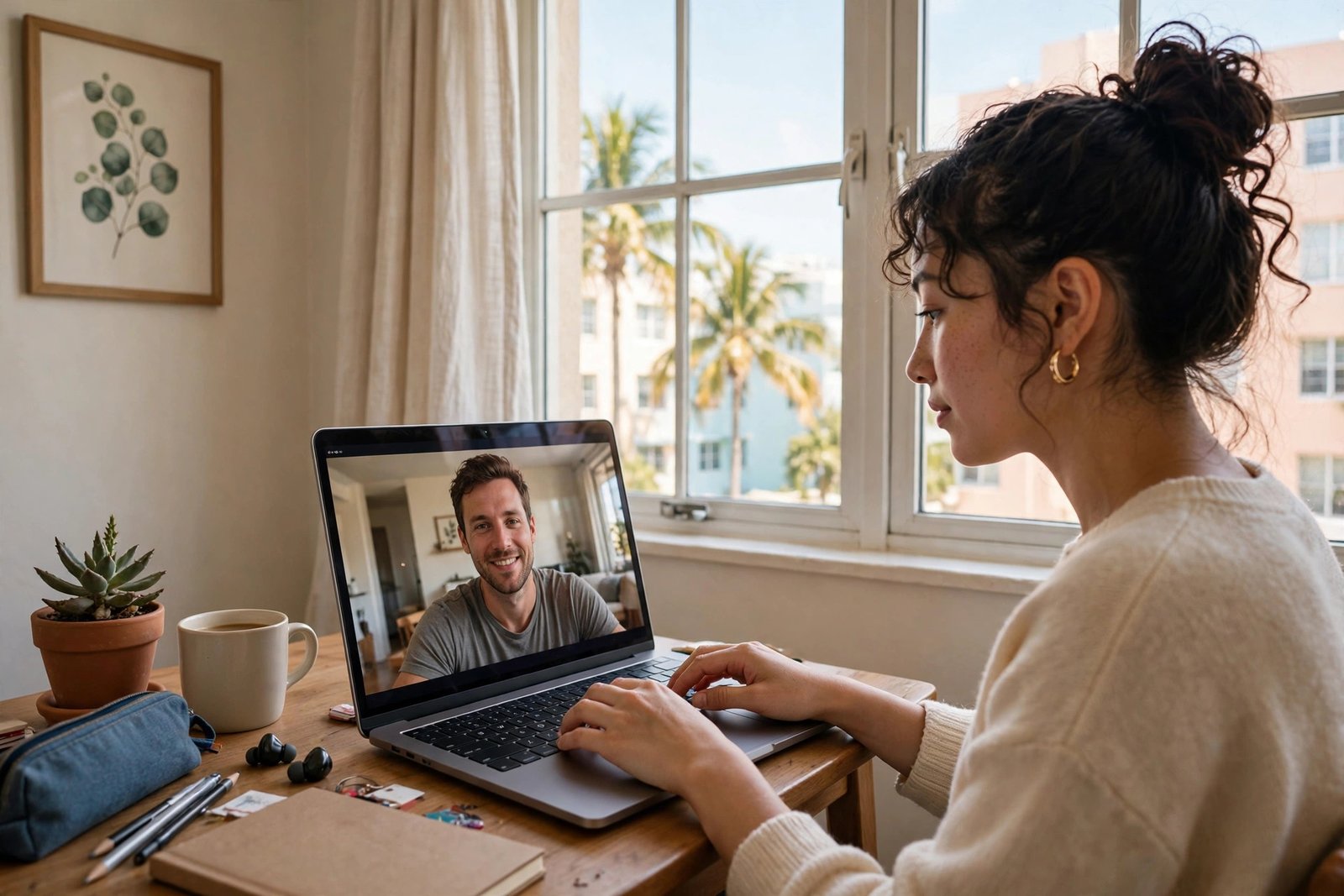
- Your setup: a quiet space, stable internet, and a working webcam. In Miami, mention backup plans for power/internet during storm season — it signals reliability, not paranoia.
- Self-management stories: prepare examples of working independently, meeting deadlines without oversight, and learning new tools fast. School projects, volunteer coordination, even running a household under pressure all count.
AI interview preparation tools let you rehearse remote-specific questions until your answers sound natural, not scripted.
Avoiding Remote Job Scams
Beginners are prime targets for remote job scams, and Miami’s job seekers see plenty. Red flags: anyone asking you to pay for training or equipment upfront, “jobs” that involve cashing checks or receiving packages, interviews conducted only over text chat, and offers that arrive suspiciously fast with no real interview. Legitimate employers never ask for money or your bank login. The Department of Labor and the FTC both publish guidance on spotting job scams — read it before you apply anywhere.
Setting Up Your Miami Remote Workspace
Once hired, your environment determines your success. You don’t need a fancy office — a home office in a tiny corner works fine — but you need boundaries. A door that closes (or a room divider), consistent hours, and an agreement with housemates or family about work time. Miami-specific: plan for hurricane season disruptions with a mobile hotspot and a charged laptop, and remember that “remote” still means Florida taxes and labor law apply.
Your First 30 Days: A Beginner’s Action Plan
Overwhelm kills more job searches than rejection does, so here’s a concrete first month. Week one: pick your target category (support, VA, SDR, or data work), get one certification, and rewrite your resume in remote-ready language. Week two: build one proof-of-skill sample and set up job alerts on three boards plus five target company career pages. Week three: apply to five tailored postings daily and start practicing interview answers out loud. Week four: follow up on every application, keep applying, and treat rejections as data — if you’re getting no responses, your resume needs retargeting; if you’re failing interviews, your stories need work. Most beginners who follow this cadence land interviews within 30–45 days.
Conclusion
Finding remote work in Miami with no experience is a targeting problem, not a qualifications problem. Aim at customer support, operations, virtual assistance, SDR, and AI training roles — the categories that actually hire beginners. Build small, tangible proof of your skills, get one or two respected certifications, apply with tailored materials within 48 hours, and interview like someone who already works independently. The first remote job is the hardest to land; after twelve months of remote work history, the second one comes far easier. Start this week.
Frequently Asked Questions
Can I really get a remote job with zero experience?
Yes, in specific categories: customer support, data entry, virtual assistance, content moderation, sales development, and AI data work all regularly hire beginners. Target these rather than saturated fields like social media management.
Do remote jobs pay less for beginners?
Entry-level remote roles typically pay $15–$25/hour or $35,000–$55,000 salaried, varying by category. SDR and support roles at tech companies often pay above that range, especially for bilingual candidates in Miami.
How do I avoid remote job scams?
Never pay for training or equipment, never cash checks or receive packages for an “employer,” be wary of text-only interviews and instant offers, and research every company before sharing personal information.
Does being bilingual help get remote jobs in Miami?
Significantly. English/Spanish bilingual candidates are in high demand for customer support, sales, and operations roles serving Latin American and US Hispanic markets — often with pay premiums.
What equipment do I need for a remote job?
At minimum: a reliable computer, stable high-speed internet, a webcam, and a quiet workspace. Many employers provide equipment; never pay for it yourself — that’s a scam indicator.