Store-bought potatoes travel thousands of miles, sit in warehouses for months, and taste like it. Homegrown potatoes — dug minutes before cooking, still warm from the soil — are a different vegetable entirely: creamy, sweet, almost nutty. And here’s the beginner-friendly secret: potatoes are one of the easiest crops to grow, especially in bags or containers. No garden beds, no tilling, no back-breaking digging at harvest. In Palm Beach, where sandy soil and HOA rules complicate in-ground gardening, container potatoes are the smart way to start.
Why Bags Beat Ground in Palm Beach
Traditional potato growing means hilling soil up around stems and digging tubers out at harvest — laborious and messy. Grow bags simplify everything: plant in a little soil, add soil as the plant grows (“hilling” by just pouring more in), and at harvest, tip the bag over and collect potatoes. No digging, no lost tubers, no sore back.
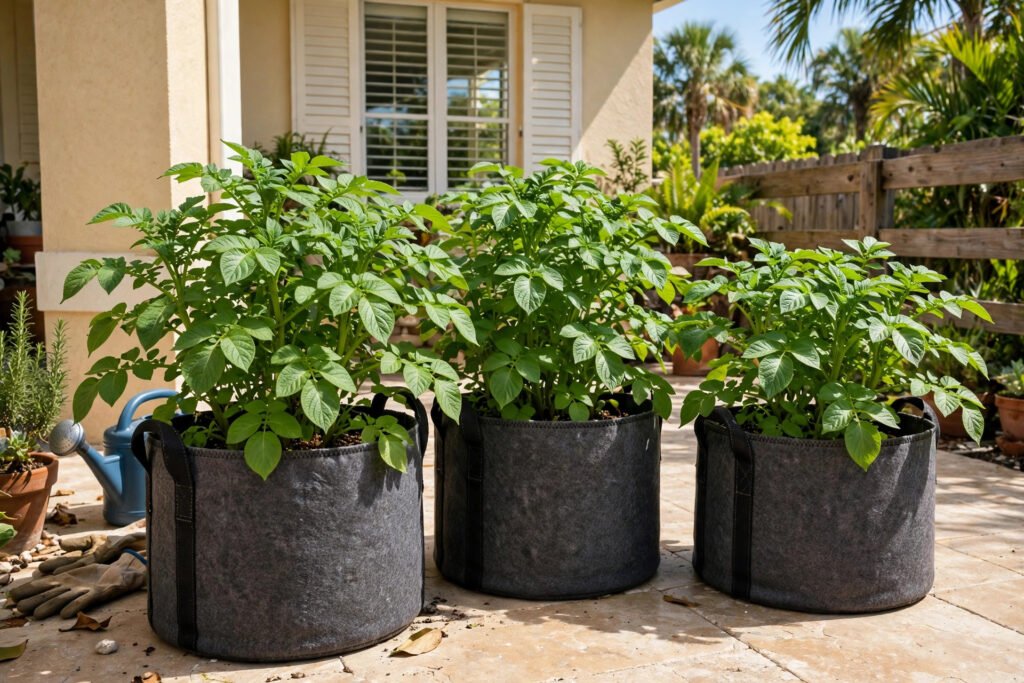
Palm Beach advantages are real: sandy native soil drains too fast and holds few nutrients, but bags let you control the perfect mix. HOAs that frown on vegetable gardens rarely object to a few fabric pots on a patio. And containers warm up faster than ground soil, giving you a head start on the season.
Timing: Potatoes Are a Cool-Season Crop (Yes, in Florida)
This surprises beginners: potatoes prefer cool weather. In Palm Beach, plant in late January through February for a spring harvest (April–May). A second planting in September can work for a fall crop, but summer heat is the enemy — soil above 80°F stops tuber formation, and Palm Beach summers cook containers.
Buy seed potatoes — certified disease-free potatoes meant for planting — not grocery store potatoes, which carry diseases and are often treated with sprout inhibitors. Check the USDA plant hardiness map to confirm your zone timing, and consult UF IFAS Extension’s vegetable gardening guides for Florida-specific potato advice. Local garden centers stock them in season; online suppliers ship to Florida. Choose varieties suited to warm climates: Red Pontiac, Yukon Gold, and Kennebec all perform well in South Florida.
The Setup: Bags, Soil, and Seed Prep
Bags: 10–15 gallon fabric grow bags are ideal — fabric breathes, preventing the waterlogging that rots tubers. Each bag holds 3–4 seed potatoes. Dark bags absorb heat, so in Palm Beach, lighter-colored bags or placing bags where they get afternoon shade helps.
Soil: potatoes need loose, well-draining, slightly acidic soil. A mix of quality potting soil with extra perlite or coarse sand works. Avoid heavy garden soil in bags — it compacts and suffocates tubers. Fill the bag only one-third full at planting; you’ll add more as plants grow.
Seed prep: cut large seed potatoes into pieces with 2–3 “eyes” (sprout buds) each, about golf-ball size. Let cut pieces cure for 1–2 days in a cool, dark spot so cut surfaces form a protective skin — this prevents rot. Small whole seed potatoes can go in uncut.
Planting and Hilling: The Core Technique
Place seed pieces eyes-up on the soil surface, spaced about 8 inches apart, and cover with 3–4 inches of soil. Water gently but thoroughly. Within 2–3 weeks, green sprouts emerge.
Here’s the key technique: when stems reach 6–8 inches tall, add 3–4 inches of soil around them, burying the lower stems but leaving the top leaves exposed. Repeat every couple of weeks until the bag is nearly full. Potatoes form on the buried stem portions — more buried stem means more potatoes. This “hilling” is the entire secret of big harvests, and in bags it’s just pouring soil in. Beginners who skip hilling harvest a handful; beginners who hill harvest pounds.
Watering and Feeding in Palm Beach Conditions
Potatoes need consistent moisture — not soggy, not dry. In Palm Beach’s spring, that usually means watering when the top inch of soil dries, often every 2–3 days as temperatures climb. Fabric bags dry faster than plastic pots, so check often. Mulching the soil surface with straw reduces evaporation and keeps developing tubers shaded (light turns potato skins green and produces solanine, which is toxic — always keep tubers covered).
Feed lightly: a balanced organic fertilizer at planting and once more mid-season is plenty. Excess nitrogen grows lush leaves at the expense of tubers — the classic beginner disappointment of gorgeous plants and tiny potatoes.
If you’re building broader container skills, building cheap raised garden beds is the natural next step after mastering bags — and starting a small balcony garden uses the same container principles on a smaller scale.
Pests and Problems to Watch
Container growing avoids most soil diseases, but watch for: Colorado potato beetles (hand-pick; they’re distinctive and slow), aphids (blast with water or neem oil), and early/late blight (fungal — ensure airflow, water at soil level, remove affected leaves promptly). Palm Beach’s humidity favors fungal issues, so morning watering (leaves dry by night) is genuinely important.
The most common beginner problem isn’t pests — it’s harvesting too early from impatience. Wait for the signal (below).
Harvest: The Best Part
For “new potatoes” (small, thin-skinned, delicious), you can gently reach into the bag and steal a few 2–3 weeks after flowering. For the main harvest, wait until the foliage yellows and dies back naturally — usually 70–100 days after planting. Then stop watering, wait a week (this toughens skins for storage), and tip the bag over. It’s genuinely thrilling — like a treasure hunt you planted yourself.
Cure harvested potatoes in a cool, dark, ventilated spot for a week before storing. Properly cured potatoes keep for weeks. Expect 5–10 pounds per 15-gallon bag for beginners — experienced growers get more, but even five pounds of homegrown potatoes converts most skeptics.
Storing Your Harvest
Don’t wash potatoes before storing — brush off loose soil and let them cure in a cool, dark, well-ventilated spot for about a week. This toughens the skins and heals minor nicks, dramatically extending storage life. After curing, store in a dark place around 40–50°F; light causes greening and warmth causes sprouting. A garage corner or shaded patio storage bin works in Palm Beach winters. Properly cured and stored, your harvest keeps for six to eight weeks — plenty of time to enjoy potatoes that taste like they were dug minutes ago, because they were.
Conclusion
Growing potatoes in bags in Palm Beach is the ideal beginner crop: plant certified seed potatoes in late winter, hill soil up as stems grow, water consistently, and tip the bag over at harvest for pounds of potatoes that taste nothing like store-bought. No tilling, no digging, no garden required — just a few fabric bags on a patio and the patience to let the plants do their work. Start with two bags this January; you’ll be planning ten next year.
Frequently Asked Questions
When should I plant potatoes in Palm Beach?
Late January through February for a spring harvest. Potatoes are a cool-season crop — Palm Beach summers are too hot for tuber formation. A fall planting in September can also work.
Can I plant grocery store potatoes?
Not recommended. They’re often treated with sprout inhibitors and can carry diseases. Certified seed potatoes are inexpensive and dramatically more reliable.
How many potatoes grow in one bag?
A 15-gallon bag with 3–4 seed potatoes typically yields 5–10 pounds for beginners. Hilling properly (adding soil as stems grow) is the biggest factor in yield.
Why are my homegrown potatoes green?
Exposure to light produces solanine, which is toxic in large amounts. Keep tubers covered with soil or mulch, and cut away green portions generously. Proper hilling prevents this.
Do potatoes need full sun in Florida?
Yes — 6+ hours of sun — but afternoon shade helps in Palm Beach’s heat. Morning sun with afternoon protection is the ideal balance for containers.