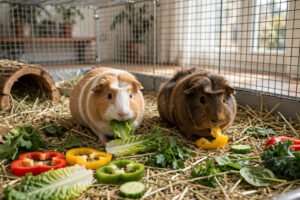
Most rabbits surrendered to shelters each year are given up for the same heartbreaking reason: the owner didn’t realize the cute bunny from the pet store had specific dietary needs, and the animal developed painful, expensive digestive problems within months. Here’s the good news — rabbit nutrition is one of the simplest feeding systems in the pet world once you learn it from scratch. No calorie counting, no rotating protein sources, no complicated meal prep. Just four components in the right proportions, served consistently.
This beginner’s guide covers exactly what a domestic rabbit should eat every day, how much of each food, the common mistakes that send rabbits to emergency vets, and a simple weekly routine that keeps your bunny healthy for its full 10-to-12-year lifespan.
The 80 Percent Rule: Unlimited Grass Hay
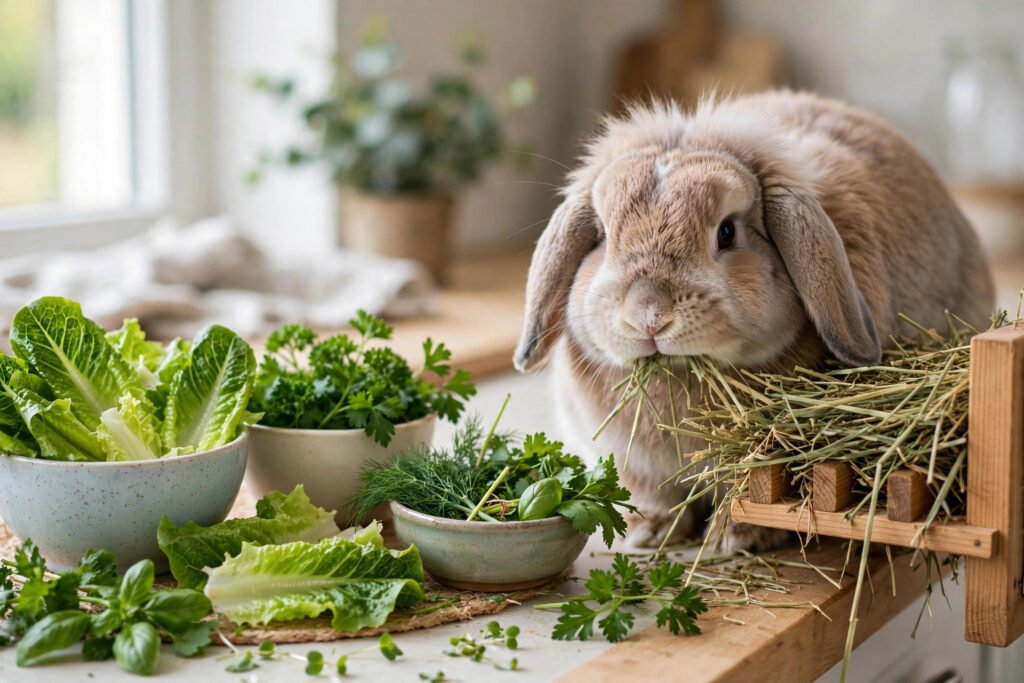
If you remember one thing from this article, make it this: unlimited grass hay should make up at least 80 percent of an adult rabbit’s diet. Hay does two jobs nothing else can do. First, its long fiber strands keep the rabbit’s famously sensitive digestive tract moving — rabbits are hindgut fermenters, and without constant fiber, the gut slows down into a painful and potentially fatal condition called gastrointestinal stasis. Second, the hours of chewing wear down teeth that grow continuously throughout a rabbit’s life; without enough hay, molars develop sharp spurs that cut the tongue and cheeks.
For adult rabbits, timothy hay is the gold standard, with orchard grass, oat hay, and meadow hay as excellent alternatives. Alfalfa hay is richer in calcium and protein — appropriate for rabbits under seven months old and nursing mothers, but too rich for adults and a contributor to bladder sludge. Buy hay by the bale or bulk bag from farm suppliers rather than tiny pet-store bags; it’s dramatically cheaper and fresher. Store it somewhere dry and airy, offer it in a rack or stuffed into a cardboard tube, and refresh it daily — rabbits are picky and will ignore stale, flattened hay.
The House Rabbit Society’s feeding guidelines have said the same thing for decades: hay first, hay always, hay unlimited. Every other food is a supplement to hay, not a replacement.
Pellets: A Measured Supplement, Not the Main Event
Walk down any pet store aisle and you’d think pellets are rabbit food. They’re not — they’re a supplement. Feed plain, timothy-based pellets (not the colorful mixes with dried fruit, seeds, and yogurt drops, which are essentially rabbit junk food). The standard measure: about 1/4 cup of pellets per 5 pounds of body weight per day for an average adult rabbit. A five-pound Holland Lop gets a quarter cup; a ten-pound Flemish Giant mix gets a half cup.
Young rabbits under seven months can have unlimited alfalfa-based pellets to support growth, then transition gradually to measured timothy pellets. Overfeeding pellets is one of the top beginner mistakes — it makes rabbits ignore their hay, leads to obesity, and causes soft, messy droppings. If your rabbit’s litter box shows uneaten cecotropes (the soft nutrient-rich droppings rabbits normally re-eat directly), excess pellets or treats are usually the culprit. And since pellets are a recurring purchase, planning a weekly grocery list that saves money for your own kitchen works just as well for batching your rabbit’s supply runs.
Fresh Greens: The Daily Salad Bar
Offer roughly 1 cup of packed leafy greens per 2 pounds of body weight daily, split into two servings. Rotate through at least three varieties per week for nutritional diversity. The reliable staples: romaine lettuce, green and red leaf lettuce, cilantro, parsley (flat or curly), basil, bok choy, dandelion greens, carrot tops, and mint. Herbs count as greens and rabbits love them — a pot of basil on a Florida patio doubles as rabbit enrichment.
Introduce new greens one at a time over several days and watch the droppings; any soft stool means slow down. Wash everything thoroughly — pesticide residue is a real concern — and serve greens wet or dry, whichever your rabbit prefers. Some owners grow a small “bunny garden” of herbs and lettuces, which is cheaper than store-bought and guarantees freshness. Rabbits also rank among the best low-maintenance pets for apartment living partly because their fresh food overlaps with what you already buy for yourself.
Treats and Fruit: Tiny Portions Only
Rabbits adore sweet things, and pet stores exploit this with yogurt drops and honey sticks that no rabbit should ever eat. Safe treats are simple: small pieces of fruit — a thin apple slice, a couple of blueberries, a small chunk of banana, a strawberry top — limited to 1 to 2 tablespoons per day for an average rabbit. Think of fruit as candy: fine occasionally, harmful as a habit. Starchy vegetables like carrots (yes, despite the cartoons) are also treats, not staples — a baby carrot or two is plenty.
The best “treats” are actually functional: willow balls, apple wood sticks, and fresh herbs. They satisfy chewing instincts while protecting teeth. Never feed chocolate, cookies, bread, crackers, or breakfast cereal — rabbits cannot digest processed sugar and starch properly, and these foods are a fast track to GI stasis.
Foods That Can Seriously Harm Rabbits
Memorize this list before you bring a rabbit home. Never feed: iceberg lettuce (contains lactucarium, which can cause diarrhea), onions, garlic, leeks, chives, potatoes, rhubarb, chocolate, avocado, seeds, nuts, corn, beans, and any processed human food. Also avoid lawn clippings from treated grass and common garden plants like foxglove, lilies, and tomato leaves.
Cabbage, broccoli, and cauliflower are controversial — small amounts are fine for most rabbits, but they cause gas in sensitive individuals, so introduce cautiously. When in doubt, VCA Hospitals’ rabbit feeding guide and your rabbit-savvy vet are better authorities than a pet-store employee. Rabbits hide illness extremely well — by the time a rabbit looks sick from a dietary mistake, it’s often an emergency.
Water and Daily Feeding Rhythm
Provide fresh water daily in a heavy ceramic bowl — most rabbits drink more readily from bowls than bottles, and bottles can harbor bacteria in the spout. Change the water every day and scrub the bowl weekly. A simple daily rhythm works best: refill hay in the morning, serve half the greens, offer the measured pellets in the evening with the second half of greens, and do a quick litter-box check while you’re at it. Consistency matters more than timing precision; rabbits are creatures of habit and will learn your schedule within days.
Conclusion
Learning rabbit diet from scratch comes down to four numbers: unlimited grass hay, a quarter cup of plain pellets per five pounds of body weight, a cup of leafy greens per two pounds, and no more than two tablespoons of fruit treats daily. Add fresh water, avoid the toxic-foods list, and introduce changes gradually. It’s a system you can master in a single afternoon of reading — and it will add years to your rabbit’s life. The rabbits filling shelters with preventable digestive disease are proof that this knowledge isn’t optional; it’s the actual job description of owning a bunny.
Frequently Asked Questions
Can rabbits eat carrots every day?
No — despite the stereotype, carrots are high in sugar for rabbits and should be an occasional treat (a baby carrot or two). The daily vegetable portion should be leafy greens, not root vegetables.
Is alfalfa hay okay for adult rabbits?
No, alfalfa is too rich in calcium and protein for adults and can contribute to bladder sludge and obesity. It’s appropriate only for rabbits under seven months, pregnant, or nursing. Adults need timothy, orchard, or oat hay.
How do I know if my rabbit’s diet is wrong?
Warning signs include small or misshapen droppings, uneaten soft cecotropes, a dirty bottom, reduced hay eating, lethargy, or teeth grinding. Any rabbit that stops eating entirely needs an emergency vet visit — GI stasis can be fatal within 24 hours.
Do rabbits need vitamin supplements?
A rabbit eating unlimited grass hay, measured pellets, and varied greens does not need supplements. Vitamin drops in water are ineffective and can discourage drinking. Pellets already contain balanced vitamins and minerals.
Can I feed my rabbit only pellets?
Absolutely not. A pellets-only diet causes dental disease, obesity, and deadly digestive slowdown. Pellets are a small supplement — hay must always be the foundation, making up at least 80 percent of intake.