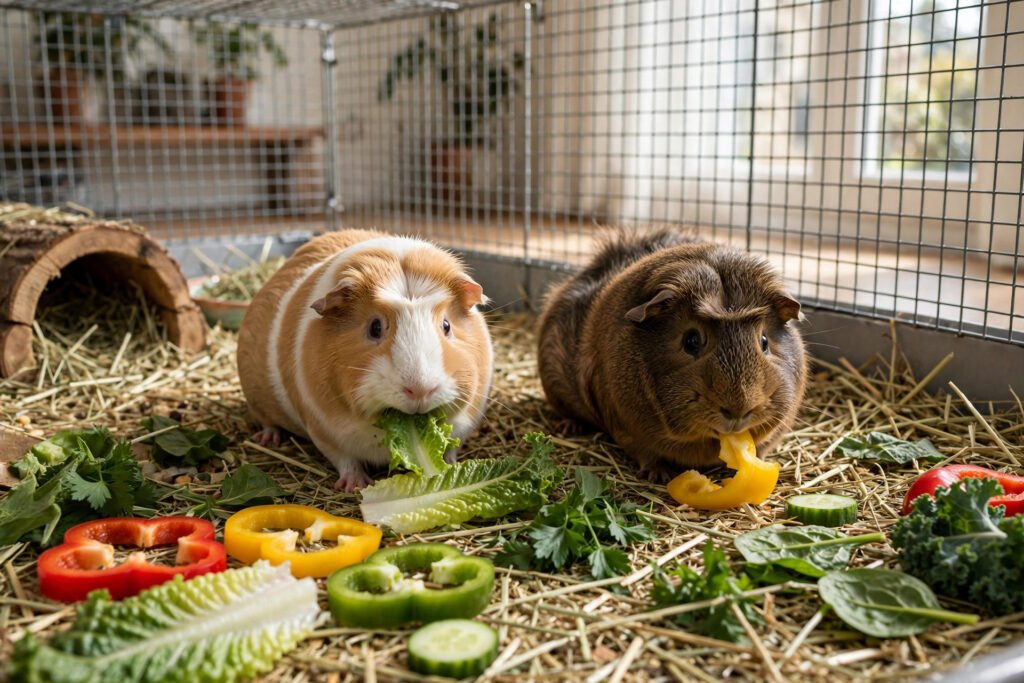
Guinea pigs are the most misunderstood “starter pet” in America. They’re sold as simple, cheap, and classroom-appropriate — and then the new owner discovers their two “easy” pets need the space of a dining table, eat like tiny horses, live 5–7 years, and scream with joy every time the refrigerator opens. None of that is a reason not to get guinea pigs. It’s a reason to learn guinea pig care before the impulse purchase, not after.
This is the from-scratch guide: housing, diet, companionship, health, and handling — everything a first-time owner needs, with the mistakes that fill rescues every year clearly marked.
First Truth: You Need Two (and More Space Than You Think)
Guinea pigs are herd animals. In Switzerland, it’s actually illegal to keep just one — and while the US has no such law, the welfare science is identical: a lone guinea pig is a lonely, stressed guinea pig. Single piggies hide more, eat less, and develop behavioral issues. Adopt a bonded pair, ideally same-sex (two females are the easiest pairing; two males work if introduced young with enough space).
Space is where almost every first-timer fails. The pet-store cage the employee recommends is invariably too small. Minimum humane standards: 7.5 square feet for one pig, 10.5+ for a pair — and bigger is always better. The gold standard is a C&C cage (cubes and coroplast), cheap to build and endlessly expandable. A 2×4-grid C&C (about 28″ x 56″) is the widely recommended minimum for two. They also need daily floor time outside the cage in a pig-proofed area — think of the cage as the bedroom, not the whole house. Guinea pigs are often listed among the best low-maintenance pets for apartment living, and they are — but “low-maintenance” never meant “small cage.”
Diet: Hay, Pellets, Veggies — In That Order
The diet hierarchy mirrors rabbits’: unlimited timothy hay (80%+ of intake, essential for digestion and tooth wear — guinea pig teeth grow continuously), measured plain timothy-based pellets (1/8 cup per pig per day; no colorful “gourmet” mixes with seeds and dyed bits), and about 1 cup of fresh vegetables per pig daily. The critical difference from rabbits: guinea pigs, like humans, cannot manufacture vitamin C and develop scurvy without it. Bell peppers (especially red), cilantro, parsley, romaine, and small amounts of kale are vitamin-C powerhouses — serve them daily.
Don’t rely on vitamin C drops in water — they degrade within hours and make the water taste strange, reducing drinking. Don’t rely on “vitamin-fortified” pellets either; the vitamin C degrades in storage. Fresh veggies are the delivery system. And skip the pet-store yogurt drops and honey sticks entirely — guinea pigs are herbivores and shouldn’t eat dairy or sugar. Fresh water daily in a bottle and a bowl (some pigs prefer one; offer both) rounds out the setup. The Humane Society’s guinea pig care resources lay out the same diet pyramid.
Bedding, Cleaning, and the Smell Question
Bedding options: paper-based bedding (like Carefresh) is the most popular — absorbent, low-dust, safe. Aspen shavings are acceptable; never use cedar or pine shavings — the aromatic oils damage guinea pig respiratory systems. Fleece liners over absorbent pads are the increasingly popular reusable option: cheaper long-term, less waste, but they require sweeping poops daily and full washes every 3–4 days.
The cleaning rhythm: spot-clean daily (remove wet spots and droppings — 10 minutes), full bedding change weekly. Guinea pigs poop constantly — up to 100 pellets a day per pig — so anyone promising a “no-cleaning” small pet is lying. The upside: their waste is dry, nearly odorless, and excellent garden compost. A well-maintained cage genuinely doesn’t smell; a neglected one does, fast. This is also why flooring matters — the best flooring for homes with pets thinking applies here: easy-clean surfaces under and around the cage save your floors.
Handling: Prey Animals Need Patience
Guinea pigs are prey animals, and everything about being picked up triggers their instincts — the shadow from above reads as “hawk.” First-time owners often conclude their pigs “hate” them after a week of chase-and-grab. The reality: trust takes 2–4 weeks of consistent, gentle handling. The protocol: talk before you reach, scoop with both hands (one under the chest, one supporting the rear — never grab by the legs or scruff), hold securely against your chest or in your lap with a cuddle sack, and keep early sessions to 10–15 minutes.
Learn their language: “wheeking” (the loud whistle when they hear a fridge or bag rustle) is excitement/anticipation; “purring” while being petted usually means contentment, but a higher-pitched purr with tense body language means annoyance; “popcorning” (joyful little jumps) is pure happiness. Teeth chattering is a warning — back off. Kids must be supervised: guinea pigs have delicate spines and can be seriously injured by drops, so lap-time with a towel on small laps is the safe rule.
Health: What to Watch and What It Costs
Find a guinea-pig-savvy vet before you need one — many cat/dog vets have minimal exotic training, and an emergency is the wrong time to discover that. Annual checkups run $50–$80; budget for it. Watch daily for the big three warning signs: not eating (a guinea pig that stops eating is an emergency — their gut must keep moving; syringe-feed critical care formula and get to a vet within hours), labored or noisy breathing (upper respiratory infections kill guinea pigs fast), and limping or reluctance to move (often foot sores from wire flooring — another reason solid-bottom cages are mandatory).
Other essentials: weigh weekly (a kitchen scale; weight loss is the earliest illness indicator), trim nails monthly, check teeth alignment at vet visits (malocclusion causes drooling and weight loss), and quarantine any new pig for 2–3 weeks before introductions. The VCA Hospitals guinea pig care guide is a solid reference for the medical basics.
The Real Cost and Commitment
Honest first-year math for a pair: adoption ($30–$80 for the pair from a rescue — always adopt; pet-store pigs are often missexed, pregnant, or sick), C&C cage setup ($60–$100 DIY), bedding ($20/month), hay ($15–$25/month — buy in bulk), pellets and veggies ($25–$40/month), and a vet fund ($200 starter). Call it $800–$1,200 for year one, $600–$900/year after. And the timeline: 5–7 years, sometimes 8. That’s longer than most dogs’ puppy phase and longer than many owners expect from a “small pet.” Plan for vacations too — guinea pigs need daily feeding and spot-cleaning, so you’ll need a knowledgeable sitter, not just a big food pile.
Conclusion
Understanding guinea pig care as a first-time owner comes down to five commitments: adopt a bonded pair, give them far more space than the pet store suggests, feed unlimited hay plus daily vitamin-C-rich veggies, clean on a real schedule, and earn their trust patiently. Do that and you’ll discover what experienced owners know — guinea pigs are among the most interactive, vocal, personality-packed small pets that exist. Skip it and you’ll discover what rescues know — that “starter pets” are a myth, and every animal deserves an owner who did the reading first.
Frequently Asked Questions
Can I keep just one guinea pig?
You shouldn’t. Guinea pigs are herd animals and suffer alone — single pigs show more stress behaviors and health issues. Always adopt a bonded same-sex pair (or a neutered male with females).
What do guinea pigs eat every day?
Unlimited timothy hay, 1/8 cup of plain timothy pellets per pig, about 1 cup of fresh vegetables per pig (emphasizing vitamin-C-rich foods like bell peppers), and fresh water. No seeds, nuts, dairy, or sugary treats.
How big a cage do two guinea pigs need?
Minimum 10.5 square feet, with 13+ strongly recommended — a 2×4 C&C cage (28″ x 56″) is the standard recommendation. Pet-store cages marketed for guinea pigs are almost always too small.
How long do guinea pigs live?
5–7 years on average with good care, occasionally 8. They’re a multi-year commitment, not a short-term pet — plan accordingly before adopting.
Why is my guinea pig not eating?
A guinea pig that stops eating is a medical emergency — their digestive system must keep moving. Offer favorite foods, begin syringe-feeding critical care formula if you have it, and get to a guinea-pig-savvy vet within hours, not days.