Price and quality have a complicated relationship in fashion. I’ve owned $200 shirts that fell apart in a season and $25 thrift finds that lasted a decade. The difference wasn’t luck — it was construction, fabric, and finishing details that you can learn to spot in about 60 seconds. Once you know what to check, you’ll never again mistake a high price tag for quality (or a low one for a bargain).
So how can I tell if a piece of clothing is good quality? Run through this checklist — fabric, stitching, hardware, finishing, and fit — and you’ll judge garments like a professional buyer.
Fabric: the foundation
- Feel and weight. Quality fabric has substance — hold it up to light; if you can see through a supposedly opaque garment, the fabric is too thin. Heavier isn’t always better, but flimsy rarely lasts.
- Fiber content. Check the label. Natural fibers (cotton, wool, linen, silk) and good blends generally outperform 100% cheap synthetics for longevity and feel. But fiber isn’t destiny — a well-made polyester can outlast a badly-made cotton. Look for higher natural-fiber percentages and avoid “mystery blends” with no specifics.
- Weave tightness. Hold the fabric taut and look at the weave — tight, even weaving resists pilling and tearing. Loose, uneven weaves pill fast and lose shape.
- The scrunch test. Crumple a corner in your fist for 10 seconds, then release. Quality fabric springs back with minimal wrinkling; cheap fabric stays a wrinkled mess. (Linen excepted — it wrinkles by nature.)
- Stretch and recovery. Stretch the fabric gently and release. Good fabric snaps back; cheap fabric stays stretched or goes wavy. This predicts how the garment will look after 20 wears.
How can I tell if a piece of clothing is good quality? Check the stitching
Stitching is where cheap manufacturing shows first:
- Stitches per inch. More, smaller stitches = stronger seams. Count roughly: 8–12 per inch is decent; fewer than 6 is a red flag.
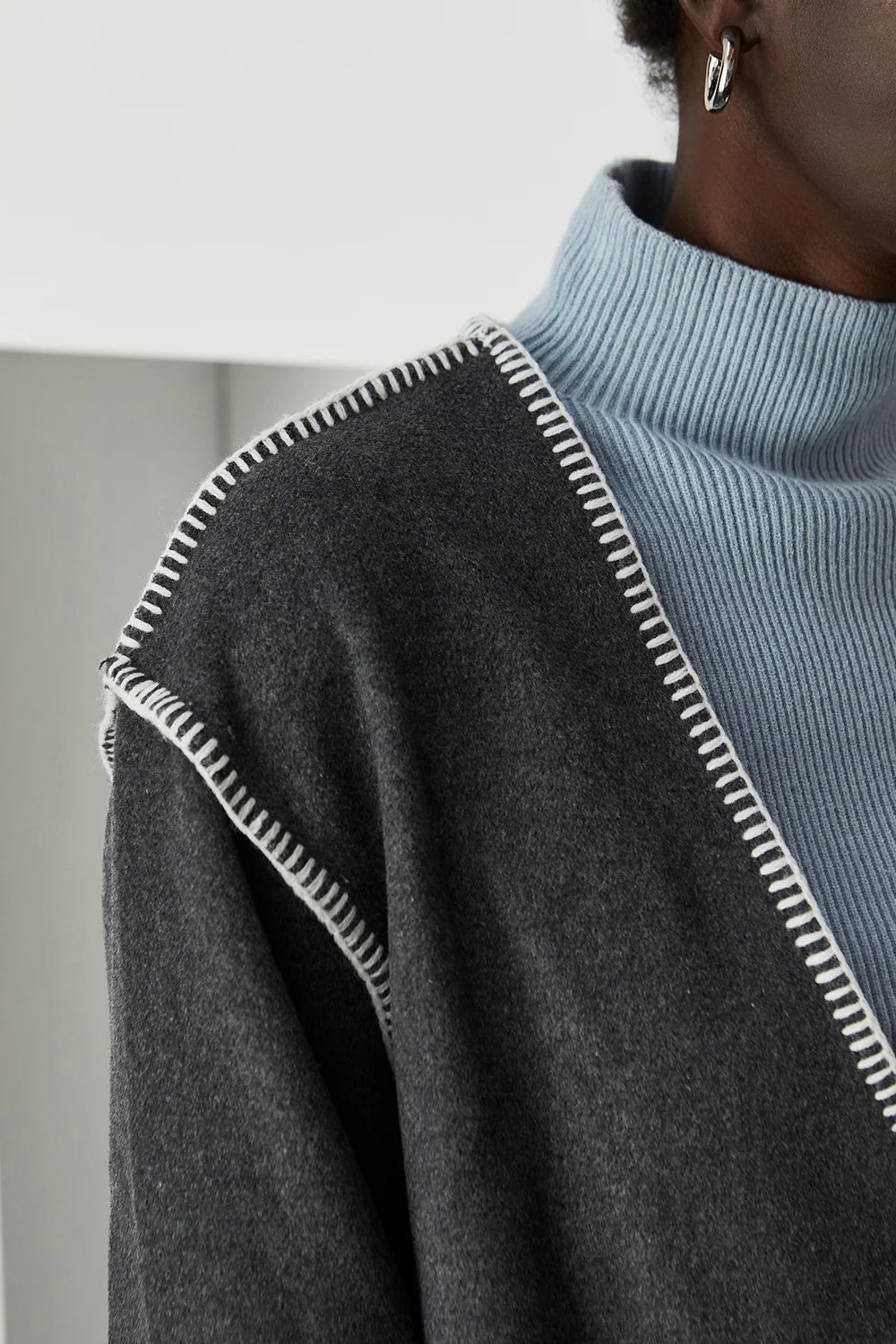
- Straight, even lines. Wavy, puckered, or wandering seams signal rushed manufacturing. Seams should lie flat.
- Finished seam allowances. Turn the garment inside out. Quality pieces have finished seams (serged, bound, or French seams) — not raw, fraying edges. This is the single fastest quality tell.
- Reinforcement at stress points. Look for bar tacks or extra stitching at pocket corners, buttonholes, and zipper ends — where garments actually fail.
- Buttons and buttonholes. Spare buttons included? Buttonholes cleanly finished (not fraying)? Buttons sewn with a shank (thread stem) so they sit properly? Cheap garments skip all of this.
Hardware, zippers, and details
- Zippers: should glide smoothly without catching. Metal zippers (YKK is the gold standard) outlast cheap plastic ones. The zipper should be appropriately weighted for the garment — a flimsy zipper on a heavy coat is a failure waiting to happen.
- Hardware weight. Clasps, buckles, rivets, and grommets should feel substantial. Lightweight, plasticky hardware is the fastest visual quality tell on bags and jackets.
- Lining. Quality jackets and skirts are lined (or have finished interiors). Unlined isn’t automatically bad, but the interior should still be cleanly finished.
- Pattern matching. On striped, plaid, or printed garments, quality makers match patterns at the seams — pockets align, stripes continue across. Mismatched patterns scream cost-cutting.
- Hems and edges. Even, consistent hemming; no raw edges on visible areas; facings lie flat.
The smell and sound tests
Seriously: smell the garment. Strong chemical odors mean heavy chemical treatments or cheap synthetic off-gassing — quality garments smell like fabric, not a factory. And listen: swish the fabric — excessive rustling suggests stiff, cheap synthetics. These sound silly; they’re remarkably reliable.
Brand and price: what they actually signal
Brand reputation correlates with quality but guarantees nothing — luxury brands have quality-control failures, and budget brands have gems. Price is even less reliable: you’re often paying for marketing, retail markup, and brand positioning, not construction. The checklist above beats both signals. That said, certain categories have quality floors: a $15 “leather” bag isn’t leather, a $10 dress shirt won’t have single-needle stitching. Use price as a sanity check, not a verdict — and Thrifting lets you buy proven quality at budget prices.
Applying it: the 60-second in-store check
Feel the fabric (weight, scrunch test) → check the label (fiber content) → flip inside out (seam finishing) → inspect stitching (straight, dense) → test zippers and hardware → smell it. Sixty seconds, and you’ll know more about the garment than the price tag tells you. Do this consistently and your wardrobe’s average quality — and lifespan — will transform within a year. Pair it with proper care and quality pieces last a decade; that’s the slow-fashion equation that beats fast fashion on every metric including cost.
Textiles 101
The 60-second check in this article gets faster and more accurate as you learn textile basics — fiber properties, weave types, and finishing techniques. Each garment you inspect trains your eye further; within a year you’ll assess quality almost unconsciously.
The takeaway
Telling if clothing is good quality means checking fabric (weight, fiber, weave, scrunch and stretch tests), stitching (density, straightness, finished seams, reinforced stress points), hardware (smooth zippers, weighty clasps), and details (pattern matching, lining, smell). Price and brand are weak signals — the garment itself tells the truth. Learn the 60-second check, apply it everywhere including thrift stores, and you’ll build a wardrobe where every piece earns its place.
Vintage quality: why old clothes were often built better (and how to find them)
Ask any vintage seller and they’ll tell you: mid-century garments were constructed differently — and usually better. Why: labor was cheaper relative to materials (so manufacturers invested in construction), garments were expected to last years (disposability wasn’t the business model), and details like French seams, bound buttonholes, and hand-finishing were standard at price points that now buy fast fashion. A 1960s wool coat often has better construction than a modern $300 one. This isn’t nostalgia — it’s manufacturing economics.
What to look for in vintage: natural fibers (wool, silk, cotton — they age gracefully; old polyester doesn’t), quality labels (union labels, “made in” tags from manufacturing eras), hand-finishing details, and sturdy hardware. Where: estate sales (the best — one owner’s lifetime wardrobe, often barely worn), vintage stores (curated, priced accordingly), and thrift stores in older neighborhoods. What to check: the standard quality checklist from this article, plus vintage-specific issues — underarm discoloration, moth damage (hold up to light to spot tiny holes), weakened elastic, and musty smells that won’t wash out. Sizing: vintage sizes run 2–4 smaller than modern — a vintage 12 is roughly a modern 8. Always try on or check measurements. The reward: construction quality that’s genuinely hard to buy new at any price, with character no new garment has. Old clothes weren’t just built better — they were built for a different relationship with the wearer. Thrift one great vintage piece and you’ll understand.