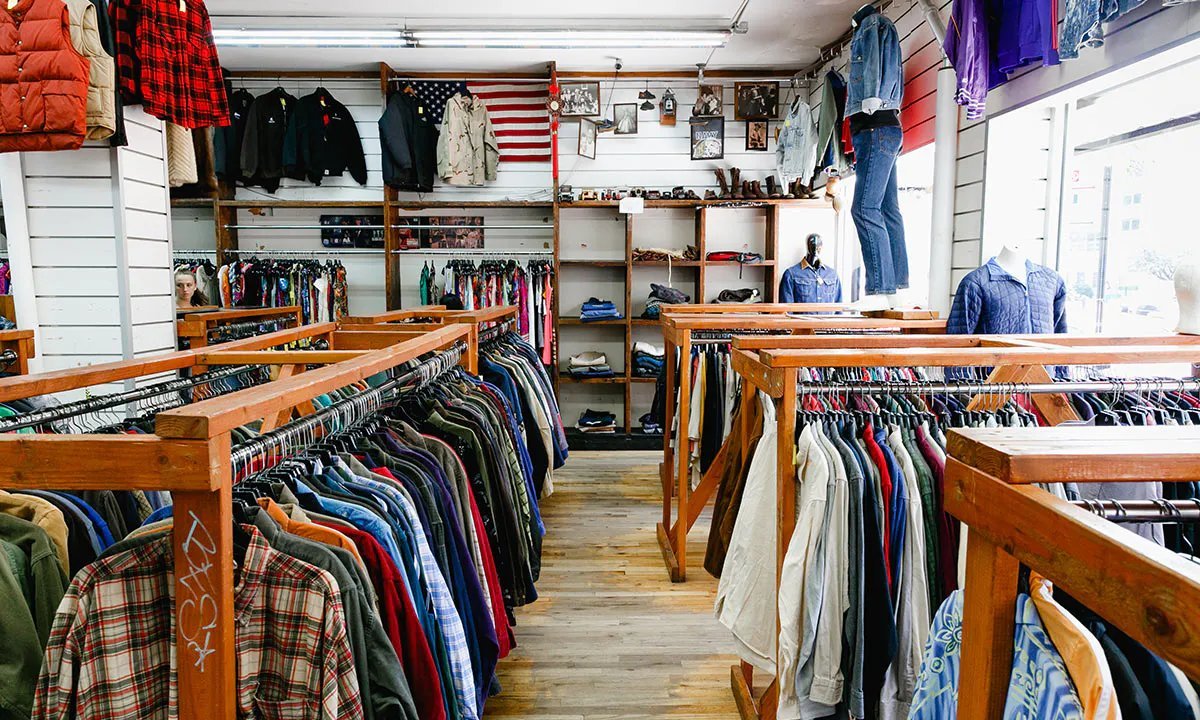
Thrifting has a learning curve. Beginners wander the racks overwhelmed, buy weird stuff because it’s cheap, and conclude secondhand isn’t for them. Experienced thrifters walk out with $300 blazers for $12 and look like they have a stylist. I’ve been thrifting for over a decade — through the era when it was embarrassing and into the era when it’s cool — and the difference between the two experiences is entirely strategy. Here’s how to shop secondhand and consistently find great pieces.
So how can I shop secondhand and still find great pieces? Go often, know what to look for (and what to skip), check quality ruthlessly, and shop with a list. Let’s break it down.
Where to shop (each source has a personality)
- Goodwill/Salvation Army: the volume game — huge inventory, rock-bottom prices, requires patience. Best for: everyday basics, jeans, the thrill of the hunt. Go weekly; stock turns fast.
- Consignment stores (Plato’s Closet, local boutiques): curated, trendier, pricier than thrift but still 50–70% off retail. Best for: current styles in good condition, less digging required.
- Higher-end consignment (The RealReal, Fashionphile locally): authenticated designer at fractions of retail. Best for: designer bags, investment pieces.
- Poshmark/eBay/ThredUp: search-based — ideal when you want something specific (a brand, a size, a style). Best for: targeted hunting. Use saved searches with alerts.
- Estate sales and garage sales: the wildcards — occasionally extraordinary (vintage designer, quality everything) for almost nothing. Best for: weekends when you feel lucky.
- Vintage stores: curated and priced accordingly — you’re paying for someone else’s expertise. Best for: statement pieces, true vintage, special occasions.
Pro tip: shop in affluent neighborhoods. Donations reflect the donor base — wealthy-area thrift stores receive better brands in better condition. It’s the open secret of serious thrifters.
How can I shop secondhand and still find great pieces? The hunting strategy
Go often, go fast
Thrifting rewards frequency over duration. Fifteen minutes twice a week beats a three-hour monthly marathon — new stock hits the floor daily, and the best pieces go within hours. Learn your stores’ restocking rhythms (many put out new items weekday mornings).
Shop with a list (but stay open)
Have 3–5 specific wants (black blazer, Levi’s 501s, silk scarf) — the list focuses your scanning. But stay open to the unexpected find; some of the best thrift scores are things you didn’t know you wanted. The rule: list items get priority, surprises must pass a higher bar (“would I buy this full-price?”).
Scan by fabric and quality, not size
Sizes lie in thrift stores (vintage sizing, stretched garments, mislabeled items). Instead, scan racks by touch — run your hand along the rack feeling for quality fabrics (wool, silk, leather, heavy cotton). Your fingers find the good stuff faster than your eyes. Then check the size. This technique alone separates beginners from pros.
Check the high-value sections
Blazers, coats, leather goods, and silk/blouses are the thrift gold mines — expensive new, abundant used, easy to assess. Also: the “wrong” sections (men’s blazers for women, women’s silk shirts for men — oversized is trendy anyway).
The quality inspection (non-negotiable)
Every piece gets the quality checklist plus thrift-specific checks: armpits (staining, odor — the dealbreaker zone), crotch and seat (thinning, wear), under collars and cuffs (grime), zippers and buttons (present and working — missing buttons are fine if spares exist; broken zippers are usually not worth fixing), lining (intact?), smell (musty can wash out; smoke and mildew often can’t), and authenticity for designer (learn the brand’s tags, hardware, and stitching — or stick to reputable consignment for expensive pieces). When in doubt, pass — there’s always more.
What to buy vs. what to skip
Best secondhand buys: blazers and coats (massive savings, easy to judge), jeans (already broken in), silk blouses, leather bags and belts, cashmere sweaters (de-pill and they’re new), cocktail dresses (worn once, donated), and quality basics.
Skip: underwear and swimwear (hygiene), worn-out shoes (molded to someone else’s feet — though barely-worn is fine), fast-fashion basics (not worth it even at $3 — they were $8 new), anything needing expensive repairs (a $20 blazer needing $60 in tailoring isn’t a deal), and stained/damaged “project” pieces you’ll never actually fix.
After the purchase: the refresh routine
Everything gets washed or dry-cleaned before wearing (non-negotiable). De-pill knits, steam everything (kills odors and refreshes), polish shoes, condition leather, and tailor the almost-perfect pieces — a $15 alteration on a $10 blazer creates a $200 look. This refresh step is what makes thrifted pieces look intentional rather than secondhand.
Why secondhand wins
The modern thrift store movement has grown from charity shops into a multi-billion-dollar resale economy — and the quality-per-dollar math is why. When you buy secondhand well, you’re getting construction quality that would cost triple new, which is the entire economic argument in one sentence.
The takeaway
Shopping secondhand successfully means: choose the right sources (and the right neighborhoods), go often and scan by touch, shop with a list but stay open, inspect quality ruthlessly (armpits, zippers, smell), buy the high-value categories (blazers, coats, leather, silk), skip hygiene items and repair-projects, and refresh everything after purchase. Do this and secondhand stops being a compromise — it becomes the smartest way to dress well on any budget. The best-dressed people I know thrift. Now you know why.
Online secondhand: Poshmark, eBay, and ThredUp pro tips
Online secondhand removes the treasure-hunt randomness — you search exactly what you want. But it adds new risks. Poshmark: make offers (sellers expect 10–20% below asking), bundle multiple items from one seller (combined shipping saves enormously), check seller ratings and “love” notes, and ask for measurements — Poshmark photos vary wildly in accuracy. eBay: use saved searches with alerts for specific items (the grail coat will appear eventually), filter by “used” condition carefully (check seller photos, not just descriptions), and know that eBay’s authenticity guarantee covers sneakers and luxury over certain prices. Bid strategically — set your max and walk away.
ThredUp: the most convenient (search by brand, size, condition) but inspect the condition notes carefully — “good” can mean visibly worn. Their rescue boxes are fun gambles, not reliable sourcing. The measurement rule: online, always get pit-to-pit, length, and waist measurements — compare to a garment you own that fits. Authentication: for designer over $200, use platform authentication (Vestiaire, Fashionphile, eBay Authenticate) or learn the brand’s tells — fakes are sophisticated now. Returns: Poshmark is final sale (all sales final once accepted) — so ask questions before buying; eBay and ThredUp have return windows. Online secondhand rewards the specific hunter: know what you want, set alerts, verify measurements, and pounce when it appears. The perfect item is out there — the algorithm just needs to find it for you.