New Orleans doesn’t do food like other cities. Here, eating isn’t refueling — it’s the main event, the social fabric, the reason half the visitors come. The cuisine is a 300-year collision of French, Spanish, African, and Caribbean influences that produced something entirely its own. If you’re visiting for the first time, here’s what to eat in New Orleans — the essential dishes, where the locals actually get them, and how to avoid the tourist-trap versions.
The Holy Trinity of First-Timers
Beignets at Café du Monde (but do it right)
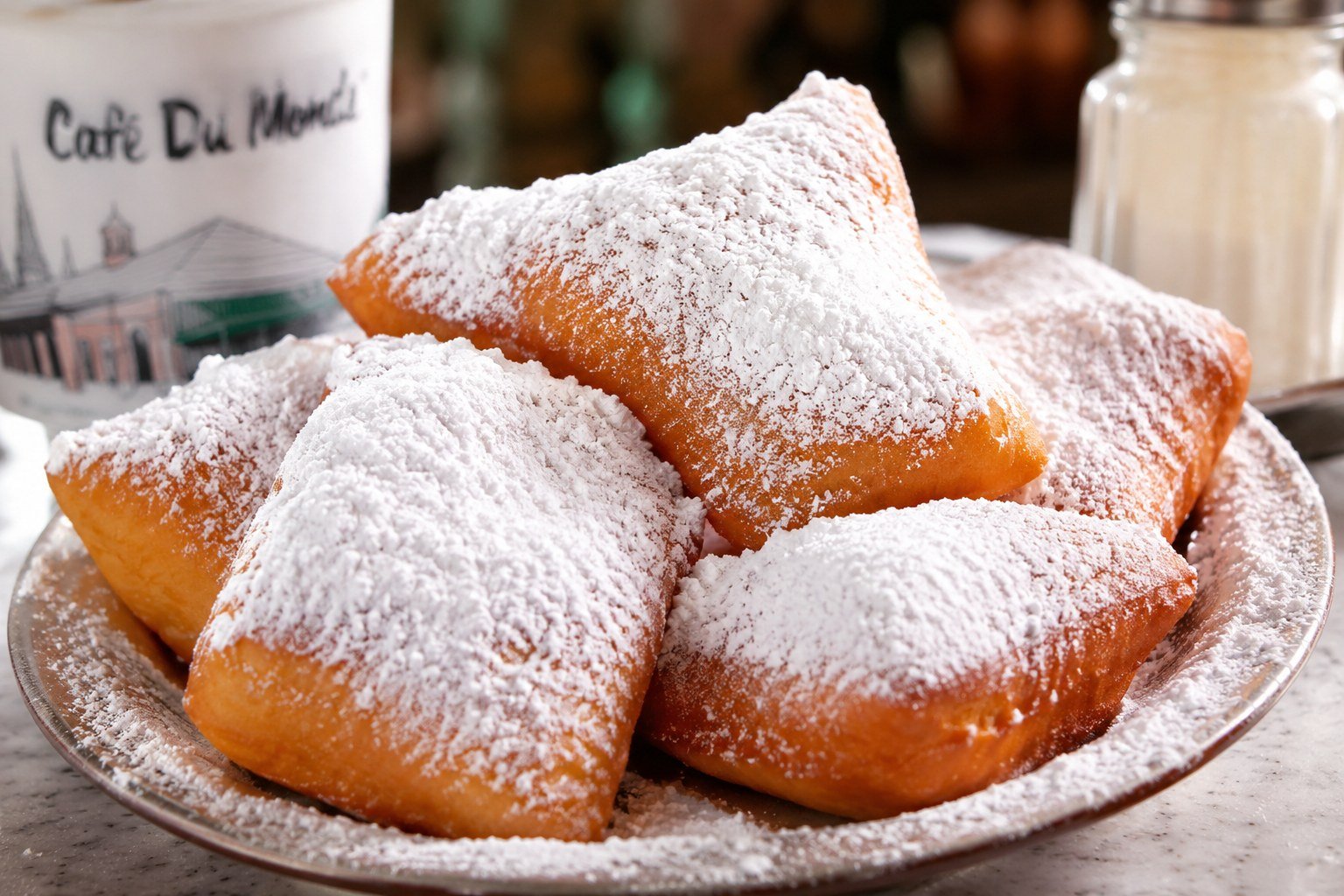
Yes, it’s touristy. Yes, you should still go — once. The move: go at off-hours (early morning or late night) to skip the line, order beignets and café au lait, and embrace the powdered sugar blizzard. Wear dark clothes at your peril. For the local upgrade, try Café Beignet or Loretta’s pralines-and-beignets in the French Market — same joy, fewer crowds. Our tourist trap avoidance guide was practically written for this decision.
Gumbo
The soul of Louisiana cooking — a rich, dark stew built on roux, the “holy trinity” of onion/celery/bell pepper, and whatever proteins the cook favors. Every family’s gumbo differs, which means every restaurant’s does too. Try it at least twice: once at an institution (Dooky Chase’s, Commander’s Palace’s turtle soup adjacent), once at a neighborhood joint. The roux should be the color of an old penny; the flavor should be deep enough to contemplate.
Jambalaya
Rice, sausage, chicken, seafood, and spice in one glorious pot. It’s the dish that separates the tourist restaurants (bland, dry) from the real ones (smoky, complex, with a proper crust on the bottom). Coop’s Place in the Quarter does a beloved rabbit-and-sausage version; Mother’s is the classic downtown stop.
What Should I Eat When Visiting New Orleans for the First Time? The Second Tier
- Po’boys: The city’s sandwich — crusty French bread, fried seafood or roast beef “dressed” (lettuce, tomato, pickles, mayo). Parkway Bakery and Domilise’s are the pilgrimage sites; the roast beef po’boy with debris gravy is life-changing. Eat it over the wrapper — it will drip.
- Étouffée: Crawfish (or shrimp) smothered in a rich roux-based sauce over rice. Richer and more refined than gumbo’s rustic depth — order it when you want to taste technique.
- Bananas Foster: Invented at Brennan’s in 1951 — bananas flambéed in butter, brown sugar, cinnamon, and rum, served over ice cream. Get it where it was born, tableside, with the full theatrical preparation.
- Muffuletta: Central Grocery’s invention — Italian cold cuts, cheese, and olive salad on round sesame bread. One feeds two easily. Note: Central Grocery has had closures; check status, or try Napoleon House’s version.
- Chargrilled oysters: Drago’s (in the Hilton) invented these — oysters grilled with garlic butter and Parmesan until bubbling. Even oyster skeptics convert. Go hungry.
- Pralines: The Creole candy — creamy, sugary, pecan-studded. Get them fresh from a candy shop (Southern Candymakers, Leah’s Pralines), not pre-packaged. They’re a different food fresh.
Where to Eat (The Local Logic)
Frenchmen Street over Bourbon Street for evening food and music — the locals’ strip, with better everything. Lunch is the value play: many fine-dining institutions (Commander’s Palace, Galatoire’s) offer lunch menus at fractions of dinner prices — same kitchen, same white tablecloths. Neighborhood joints over Quarter traps: walk 10 minutes in any direction from the tourist core and prices halve while quality doubles. Ask your hotel’s staff where they eat — not the concierge’s official list, the actual answer.
Festival timing: If your visit aligns with French Quarter Fest (April) or similar food festivals, go — dozens of the city’s best restaurants serve signature dishes in tasting portions. It’s the most efficient deliciousness-per-hour in American travel.
Drinks (Because New Orleans)
The Sazerac (rye whiskey, absinthe rinse, bitters — America’s first cocktail, born here), the Hurricane (touristy but fun once, at Pat O’Brien’s where it was invented), and the Pimm’s Cup at Napoleon House (the courtyard, the classical music, the perfection). Pace yourself — the city’s drinking culture is joyful but the heat and humidity amplify everything. Water between drinks isn’t tourist behavior; it’s survival.
The official New Orleans tourism site maintains current restaurant lists and festival calendars worth checking before you go — openings and hours shift, especially post-2020.
Eat the gumbo twice, the po’boy over the wrapper, the beignets at midnight, and the chargrilled oysters without hesitation. New Orleans rewards the hungry and the curious in equal measure — come with an appetite and an open schedule, and the city will take care of the rest.
The Late-Night Food Scene
New Orleans eats late, and some of its best food happens after 10 p.m. The French Quarter’s late-night institutions are part of the experience: Café du Monde at midnight — the beignets taste better when the day-trippers are gone and the café glows under the lights. Verti Marte — the Quarter’s beloved deli, open nearly around the clock, serving the “All That Jazz” po’boy to musicians coming off Frenchmen Street sets. This is where the city’s night-shift workers eat, which tells you everything.
Clover Grill on Bourbon — the 24-hour diner under the hubcap ceiling, famous for burgers smashed under the cook’s spatula and a no-nonsense vibe that’s pure old New Orleans. Dat Dog for creative hot dogs when the evening needs one more stop. The move: eat dinner early-ish, catch music on Frenchmen Street, then follow the musicians to the late-night spots — you’ll eat what the people who make the city’s culture eat.
Practical notes: the Quarter is walkable late at night in the busy corridors, but stay aware — stick to well-lit populated streets, travel in groups when possible, and arrange transport rather than wandering far. The late-night food is worth it; just pair the adventure with the same street smarts you’d use in any city after midnight.
One More Thing: The Neighborhood Po’boy Test
Here’s a fun challenge for your trip: try a po’boy in three different neighborhoods and rank them. The Quarter’s versions cater to tourists; the neighborhood shops — in the Garden District, Mid-City, the Bywater — serve the ones locals argue about. Ask each counter “what’s your most popular?” and order that. You’ll taste the difference neighborhood pride makes, you’ll have a delicious ranking to debate, and you’ll have done what the best travelers do: let the locals’ favorites guide you instead of the guidebooks.
Food is the fastest path into a place — our guide to experiencing local culture without a tour guide builds on that, and avoiding tourist traps keeps you eating where locals eat.