You’re staring at a calculus problem at 11 PM, the exam is Thursday, and a private tutor costs $50 an hour you don’t have. Here’s the good news Tampa students often miss: some of the best tutoring available is free, online, and better than what money bought a decade ago. The trick isn’t finding resources — it’s knowing WHEN to reach for them and which ones match your actual need. This guide maps Tampa’s free tutoring landscape and the timing strategy that makes it work.
When to Start Looking: Earlier Than You Think
The number-one mistake students make with free tutoring is treating it as emergency medicine — reaching out the night before the exam. Free resources work best as prevention, not triage. The right time to find them is in the first two weeks of the semester, before you’re struggling. Bookmark them, test-drive one session, and know exactly where to go when week five gets hard.
A practical rule: if you’ve been confused by the same topic for more than two study sessions, get help that week. Confusion compounds — what takes twenty minutes to fix in week three takes three hours in week ten. Free help you use early beats expensive help you need late.
The Big Three Free Online Platforms
Khan Academy
Khan Academy remains the gold standard for free structured learning — full courses in math, science, computing, and test prep with practice exercises that adapt to your level. Its SAT prep, built with the College Board, is genuinely excellent and completely free. For Tampa students in prerequisite-heavy courses (algebra, chemistry, biology), it’s the first stop. For a broader directory of vetted learning materials, the U.S. Department of Education’s student pages link to federally reviewed resources.
Your library’s digital doors
This is the most underused free resource in Tampa. The Tampa-Hillsborough County Public Library system provides cardholders free access to online tutoring platforms (historically including services like Tutor.com for live homework help), LinkedIn Learning courses, and test-prep databases. A library card is free for residents — if you’re a student living in Tampa, you qualify. Many students pay for services their library card already includes.
University-affiliated help
USF, HCC, and UTampa all run free tutoring centers for enrolled students — in-person and increasingly online. These are staffed by people who know your exact course, your exact professor’s exams, and the specific pitfalls of your syllabus. Generic online help is good; course-specific help from someone who’s taken your professor’s class is better. Check your school’s learning center in week one, not week nine.
Matching the Resource to the Problem
Different struggles need different tools. Concept confusion (“I don’t understand what a derivative IS”) → Khan Academy’s video lessons. Practice deficit (“I understand it but can’t do the problems fast enough”) → problem banks with instant feedback, like your textbook’s online companion or free problem sets. Writing struggles → your school’s writing center, which reviews drafts rather than just proofreading. Test anxiety → your counseling center, not a tutor — it’s a different problem requiring a different fix.
And when the issue is homework itself — understanding versus copying — the distinction matters enormously. Learning how to get homework help without crossing into cheating keeps you on the right side of academic integrity while still getting unstuck, whether the help comes from a tutor, a classmate, or an AI tool.
The Study-Group Multiplier
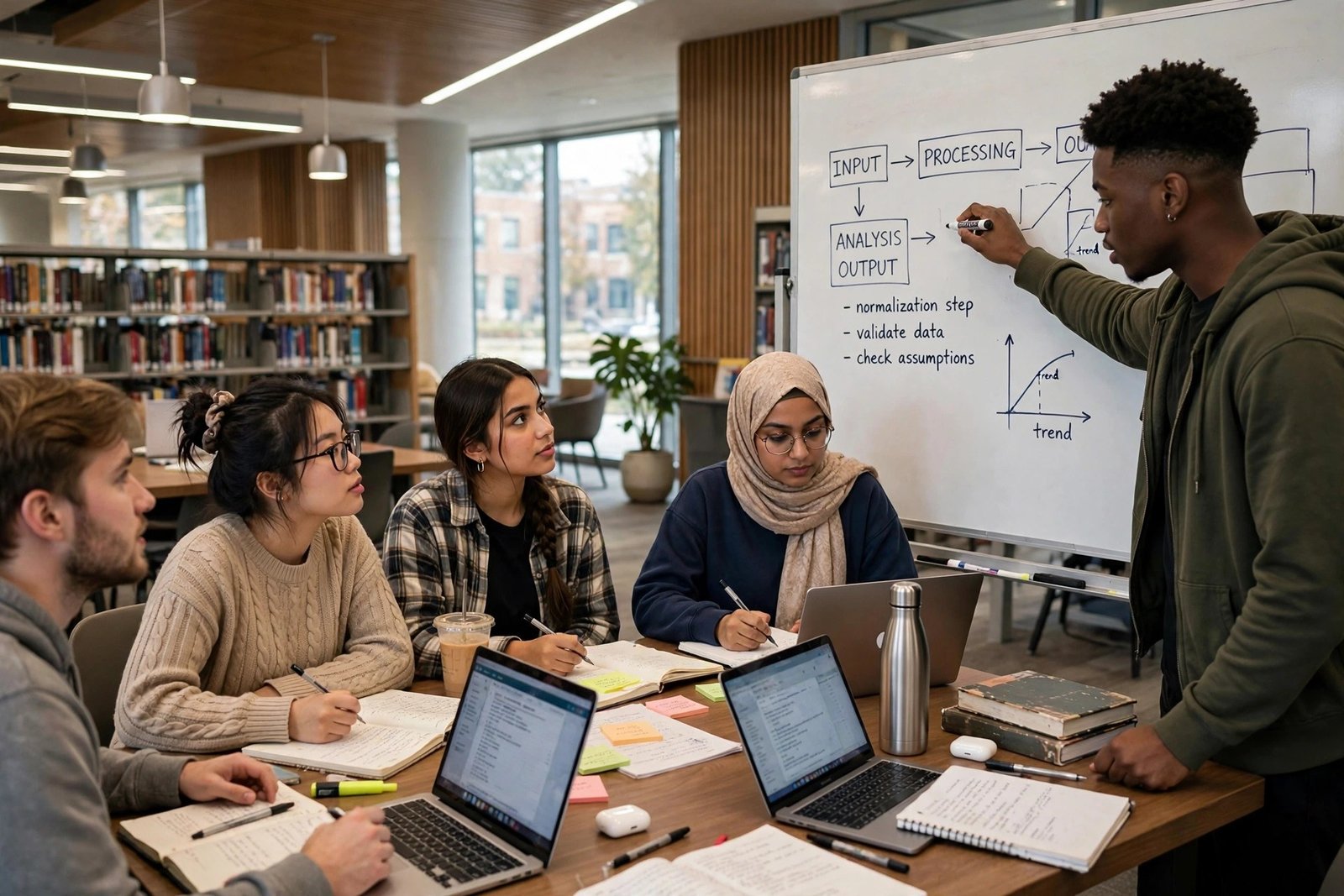
Free tutoring has a secret companion: the study group. Research on collaborative learning shows students in structured study groups outperform solo studiers, partly because explaining concepts to others cements understanding. Form yours in the first month — three to five committed people, weekly meetings, phones away. Combine it with free online resources (watch the Khan Academy lesson before the group meets, then work problems together) and you’ve built a tutoring system that rivals paid services.
Ask your professor or TA to help match you with group members; they do this routinely and know who’s serious. Many Tampa professors will also tell you which free resources align best with their exams — a two-minute office-hour question that saves ten hours of misdirected studying.
When Free Isn’t Enough
Be honest about the limits. If you’re failing despite using free resources consistently for a month, the issue might need professional diagnosis — a learning difference, an overloaded schedule, or a course that’s simply the wrong level. That’s when you talk to your academic advisor about tutoring upgrades, course withdrawal deadlines, or evaluation for learning support. Teachers increasingly use AI tools to personalize support, so asking your instructor directly about extra help options often surfaces resources that aren’t publicly advertised.
Free Test-Prep Resources Worth Knowing
Beyond course tutoring, Tampa students should know about free standardized-test prep — because commercial prep courses charge $500–$2,000 for what free resources increasingly cover. Khan Academy’s official SAT prep (built with the College Board) adapts to your diagnostic results and is genuinely excellent. For the GRE, GMAT, and LSAT, your library’s test-prep databases (LearningExpress, Peterson’s) include full practice tests and study plans free with your card.
Professional licensing exams have free ecosystems too: nursing students get NCSBN resources and free question banks; CPA candidates find free study communities and sample exams. The pattern: before paying for ANY test prep, exhaust the free tier completely — diagnostic test, full free course, library databases. Most students discover the free resources suffice; those who still want paid prep then buy it surgically (a few hours of targeted tutoring on weak areas) instead of a $1,500 blanket course. Diagnose free, supplement paid only where the diagnosis points.
Conclusion
Tampa students don’t have a tutoring access problem — they have a tutoring timing problem. The free resources are already there: Khan Academy for structured lessons, your public library card for premium platforms, your school’s tutoring center for course-specific help, and study groups as the multiplier. Find them in the first two weeks, match the tool to the specific struggle, and use help early when it’s cheap to fix. The students who ace the hard classes aren’t the ones who never struggle — they’re the ones who knew where to go before the struggling started.
Frequently Asked Questions
When should I find free tutoring resources online in Tampa?
In the first two weeks of the semester, before you’re struggling. Bookmark resources early and test one session so you know exactly where to turn when coursework gets difficult around week five.
What is the best free online tutoring platform?
Khan Academy is the best free structured option for math, science, and test prep. Your Tampa-Hillsborough library card also unlocks premium tutoring platforms and courses free for residents.
Does USF offer free tutoring?
Yes — USF, Hillsborough Community College, and UTampa all operate free tutoring and learning centers for enrolled students, increasingly with online options. They’re course-specific, which makes them more effective than generic help.
How do I know if I need a tutor or just more studying?
If the same topic confuses you after two focused study sessions, get help that week. If you’ve used free resources consistently for a month with no improvement, talk to your academic advisor — the issue may need a different kind of support.
Are study groups as effective as tutoring?
Structured study groups (3–5 committed members, weekly meetings, phones away) rival paid tutoring for many students, especially combined with online lessons watched beforehand. Explaining concepts to peers is one of the strongest learning techniques known.