Dark hallways are the forgotten spaces of the home — too dim to feel welcoming, too narrow for lamps, and somehow always the corridor you walk through at night squinting. Running new wiring means opening walls, hiring an electrician, and spending hundreds. But you can brighten a dark hallway dramatically without touching a single wire. These are the tricks designers use, ranked from free to fancy.
How to Brighten a Dark Hallway Without New Wiring
1. Battery and rechargeable lighting (the real breakthrough)
LED technology has made wiring-optional lighting genuinely good. Your options:
- Motion-sensor puck lights ($15-$25 for 6): Stick under cabinets, on walls, or inside closets along the hall. They turn on when you walk by and off after 30 seconds. For nighttime hallway navigation, these are transformative — no more fumbling for switches.
- Battery wall sconces ($25-$50 each): Modern battery sconces look identical to wired ones, run for months on a charge (or use removable rechargeable bulbs), and mount with two screws or adhesive. Flank a mirror or artwork with a pair and the hallway instantly feels designed.
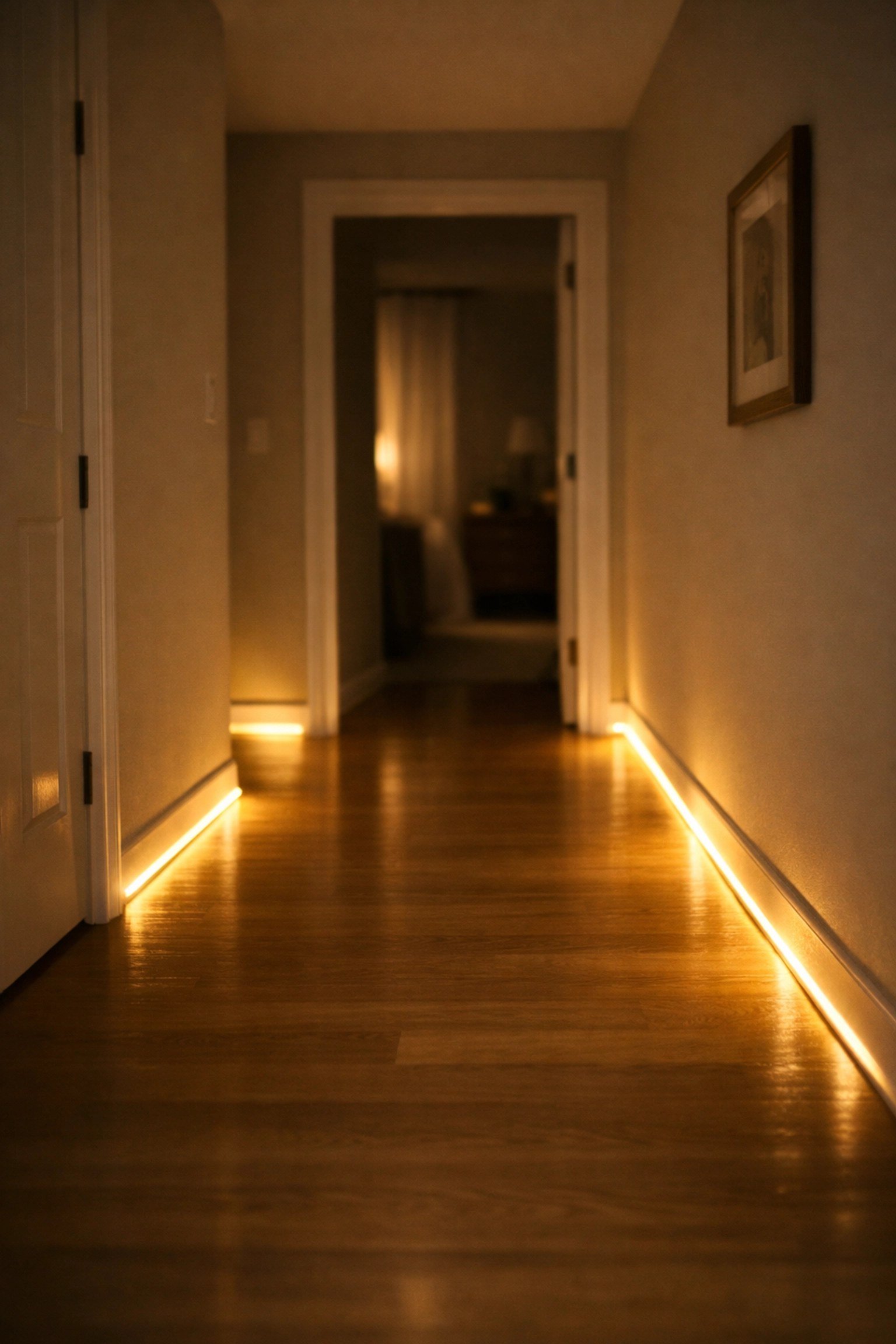
- LED strip lights ($15-$30): Run adhesive strips along baseboards, crown molding, or under a hallway runner’s edge. The indirect glow eliminates the “tunnel” feeling without any visible fixture. Warm white (2700-3000K) keeps it cozy, not clinical.
- Rechargeable picture lights ($30-$60): Mount above artwork or a mirror with no wiring. They wash the wall with light, which visually widens the space.
2. Mirrors: double your existing light
A large mirror opposite the hallway’s light source (a doorway, a window at the end) effectively doubles the light in the space. It doesn’t create light — it redistributes it. One well-placed mirror can brighten a hallway more than an additional fixture. Lean toward oversized: a mirror that’s too small looks like an afterthought; one that fills the wall looks intentional and doubles the perceived width.
3. Paint it light and bright
Dark hallways are often dark because they’re painted dark — a self-fulfilling prophecy. Light, high-reflectance paint (warm whites, pale neutrals) bounces every available photon around the space. Paint the ceiling bright white regardless of wall color — hallway ceilings are light-suckers. For color principles, small-room paint science applies directly to hallways.
One more paint trick: a semi-gloss or satin finish reflects more light than flat paint. In hallways (high-touch areas anyway), the durability is a bonus.
4. Maximize borrowed light
- Replace solid doors with glass-paneled ones (or add a transom window above). Light from adjacent rooms flows into the hall. Frosted glass maintains privacy while transmitting light.
- Keep doors open during the day when possible — free light, zero cost.
- Trim what’s blocking windows at the hallway’s ends. Overgrown bushes outside a hallway window can cut light by half.
- Use a solar tube ($200-$500 installed) if the hallway sits under the roof — it pipes daylight in with no wiring and minimal construction. The closest thing to a real window you can add in a day.
5. Light-colored floors and runners
Dark floors absorb light; light floors reflect it. If replacing flooring isn’t in the cards, a light-colored runner ($40-$100) down the hallway’s length brightens the floor plane and adds style. Choose one with a subtle pattern — it hides the dirt that hallways inevitably collect.
Putting It Together: The $150 Hallway Rescue
Here’s the budget transformation: a gallon of light paint ($40), two battery sconces flanking a mirror you already own ($60), a 6-pack of motion pucks for nighttime ($20), and a light runner ($50). Total: ~$170 and a weekend. The hallway goes from “avoid after dark” to “favorite part of the house” — I’ve seen it happen, and the before-and-after is always dramatic.
These same layered-lighting principles transform small kitchens too — and the DOE’s lighting guide confirms that LED retrofits like these cut lighting energy use by 75% versus old bulbs.
Hallway Decor That Works in Narrow Spaces
Once the hallway is bright, a few decor choices make it feel like a designed space rather than a passage. Gallery walls: hallways are ideal for photo galleries — the narrow space means viewers stand close, which suits intimate photo groupings. Keep frames consistent (same color, varied sizes) for a curated look, and hang the centerline at 57″ (gallery standard eye height).
Runners with purpose: beyond brightening, a runner quiets footsteps, adds warmth, and guides the eye down the hall — making it feel longer (which reads as grander, not narrower). Choose low-pile for doors that swing over it, and use a rug pad to prevent slipping on hard floors. Patterned runners hide the wear that hallways inflict.
One statement piece: a narrow console table ($80-$150) with a lamp and a mirror above it creates a “moment” in an otherwise transitional space. Keep the table under 12″ deep so it doesn’t obstruct traffic. Alternatively, a single large-scale art piece on the longest wall gives the hallway an identity.
Don’t forget the ceiling: in dark hallways, the ceiling is a reflector — bright white, possibly with a subtle sheen, bounces light down. If the hallway has a dated flush-mount fixture, replacing it with a modern semi-flush light ($40-$80) updates the space instantly. And for long hallways, two smaller fixtures beat one large one — even light distribution eliminates the “bright spot, dark ends” effect.
Dark Hallways: Quick Answers
Can I add lighting without an electrician? Yes — battery sconces, motion-sensor pucks, and adhesive LED strips need no wiring and install in minutes. Modern battery lights run for months per charge.
Will a mirror really brighten a hallway? Dramatically — a large mirror opposite the light source effectively doubles available light by redistributing it. It’s the cheapest “lighting” upgrade there is.
What paint finish is best for hallways? Satin or semi-gloss — they reflect more light than flat paint and withstand the scuffs that hallways collect. Light colors with high reflectance maximize the effect.
The Bottom Line
Brighten a dark hallway without new wiring using: battery/rechargeable lighting (sconces, pucks, LED strips), strategic mirrors, light reflective paint, borrowed light from adjacent rooms, and light-colored runners. No electrician, no opened walls, under $200 total. Dark hallways aren’t a structural problem — they’re a lighting design problem, and lighting design has gone wireless.