Style and money have a complicated relationship. We’ve all seen the person in head-to-toe designer looking forgettable, and the person in thrifted basics looking magnetic. After years of watching both — and making plenty of expensive mistakes myself — I’m convinced: looking stylish is a skill, not a budget. The skill is learnable, and most of its lessons are free.
So how can I look stylish without spending a lot of money? It’s about fit, grooming, cohesion, and knowing where to spend versus where to save. Here’s the honest playbook.
The foundations cost nothing
Before spending a dollar, nail the free stuff — it accounts for most of what people perceive as “style”:
- Fit. The number one style factor, full stop. Clothes that fit your actual body look expensive; ill-fitting clothes look cheap at any price. Learn your measurements, and tailor the almost-right pieces ($15 hems change everything).
- Grooming. Clean, neat hair; trimmed nails; clothes without wrinkles, stains, or pet-hair tumbleweeds. This costs nearly nothing and outranks a $200 shirt.
- Posture and confidence. Stand tall, move like you mean it. Style is substantially attitude — the same outfit reads differently on someone who owns it.
- Cohesion. An outfit where pieces relate to each other (shared palette, consistent vibe) looks intentional. Random expensive pieces thrown together look accidental.
How can I look stylish without spending a lot of money? The strategic pillars
Build around a palette
Pick 2–3 neutrals plus an accent, and buy mostly within it. Suddenly everything matches, getting dressed takes two minutes, and you look pulled-together effortlessly. This is the capsule wardrobe principle, and it’s the highest-leverage free style upgrade that exists.
Master the high-low mix
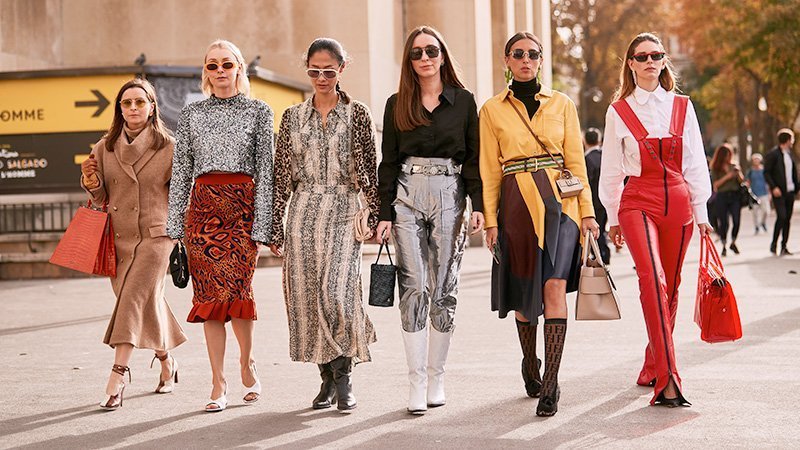
Stylish people on budgets don’t wear all-cheap outfits — they anchor with a few quality pieces and fill in with affordable ones. The formula: invest in shoes, bags, and outerwear (the things people actually notice and that wear visibly), save on trendy tops, basics, and anything you’ll replace seasonally. One great blazer transforms ten cheap tops.
Shop secondhand like it’s your job
Thrifting is the budget-stylish person’s superpower: quality brands at 80–90% off, unique pieces nobody else has, and better construction than new fast fashion at the same price. The trick is patience and a good eye — check quality markers (stitching, fabric, hardware) and ignore sizes (try everything; vintage sizing is chaos).
Take care of what you own
Maintain your clothes: wash cold, hang dry when possible, de-pill sweaters, polish shoes, steam instead of ironing. Clothes that look new look expensive. A $30 sweater maintained beautifully beats a $100 sweater treated badly.
Use accessories as force multipliers
Accessories — a good belt, interesting jewelry, a silk scarf, sunglasses — transform basic outfits for a fraction of clothing costs. This is the cheapest way to look like you tried.
Where to shop (and where not to)
Worth it: thrift and consignment stores, Poshmark/ThredUp/eBay, end-of-season sales (buy winter coats in March), outlet stores for investment pieces, Uniqlo/Target/H&M for basics, and clothing swaps with friends (free new wardrobe, zero dollars).
Skip: full-price trendy items (they’ll be 70% off in eight weeks), “bargain” pieces you don’t love (a $10 top you never wear is infinitely more expensive than a $50 one you wear weekly — cost-per-wear is the only math that matters), and anything that needs other purchases to work (“I’ll buy shoes to match later” — no, you won’t).
The mindset shifts
Stop chasing trends; build a uniform. The most stylish people you know probably wear variations of the same thing. Find your version (dark jeans + blazer + white sneakers? midi skirts + knits?) and refine it instead of reinventing yourself seasonally.
Buy less, choose better. Ten thoughtful pieces beat thirty impulse buys. Institute a 48-hour rule for non-essential purchases — most “must-haves” evaporate.
Learn basic repairs. Sewing a button, fixing a hem, de-pilling — fifteen minutes of maintenance extends a garment’s stylish life by years. YouTube teaches all of it free.
Copy, don’t innovate (at first). Find 2–3 people whose style you admire (Pinterest boards work great) and reverse-engineer their formulas. Originality comes later; competence comes first.
The thrift advantage
The rise of thrift stores from charity shops to curated vintage boutiques mirrors the broader shift toward sustainable, budget-conscious style. Secondhand shopping isn’t a compromise anymore — for quality-per-dollar, it’s often the smartest option in the entire fashion ecosystem.
The takeaway
Looking stylish without spending a lot means: nail the free foundations (fit, grooming, posture, cohesion), build a tight color palette, mix a few quality anchors with affordable fillers, thrift strategically, maintain everything beautifully, and let accessories do the heavy lifting. Style was never about the price tag — it’s about intention. And intention is free.
The $100 style upgrade challenge
Theory is nice; here’s a concrete challenge. With exactly $100, here’s the highest-impact style upgrade sequence: $25: tailoring. Hem one pair of trousers and take in one waist — the two alterations that transform the most outfits. This alone makes everything you own look more expensive. $20: grooming supplies. A good lint roller, a sweater comb, shoe polish in your colors, a nail clipper — the maintenance kit that keeps clothes looking new. $15: a belt. One quality-feeling belt (thrifted leather is perfect) that defines waists and finishes outfits. $15: accessories. A silk scarf from a thrift store, interesting earrings, or a great pair of sunglasses — the personality injection. $15: undergarments. Properly fitting underwear and a smoothing layer — the invisible foundation that changes how everything drapes. $10: a steamer or wrinkle spray. Wrinkle-free clothes read as intentional; wrinkled reads as careless regardless of price.
Total: $100, and you’ve upgraded every outfit you own rather than adding one new one. That’s the budget-style secret the fashion industry won’t tell you: the highest ROI isn’t new clothes — it’s making your existing clothes fit better, look newer, and combine more intentionally. Do the challenge this weekend. Photograph yourself in your favorite outfit before and after. The difference will convert you permanently — and you’ll never look at a $100 “bargain” haul the same way again.
The style journal (your secret weapon)
Here’s the free tool that accelerates everything in this article: a style journal. Photograph your outfit daily (mirror selfie, 10 seconds). Monthly, review: which outfits got compliments? Which did you feel great in? What patterns emerge? You’ll discover your actual style — the colors, silhouettes, and combinations that work — from data instead of guesswork. The journal also kills bad purchases: before buying, check whether it matches your proven winners. Most people shop from fantasy (“I’ll become someone who wears this”); the journal keeps you shopping from reality (“I wear this“). Free, fast, and the fastest style education there is.