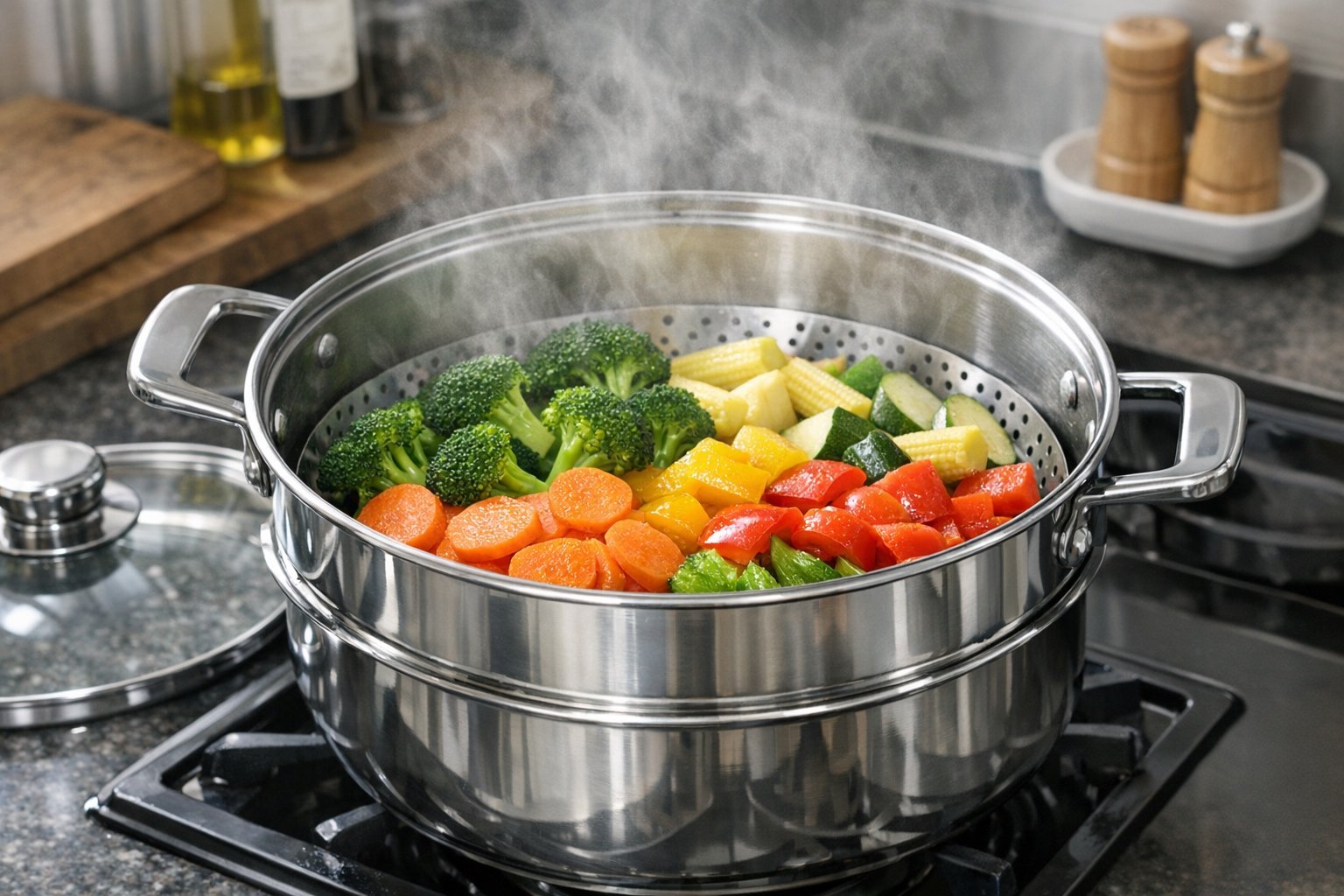
Here’s a paradox: the vegetables themselves matter far more than how you cook them — but cooking method genuinely changes how many nutrients survive to your plate. Boil broccoli to gray mush and you’ve poured half the vitamin C down the drain (literally). Sear it quickly with garlic and olive oil and it’s a nutritional powerhouse. I used to boil everything out of habit until I learned the science, and the difference in both nutrition and taste was embarrassing.
So what is the healthiest way to cook vegetables? The short answer: methods that use little water, short cooking times, and moderate heat — with a few surprising exceptions. Here’s the full ranking.
Why cooking method matters
Vegetables lose nutrients three ways: leaching (water-soluble vitamins like C and B dissolving into cooking water), heat degradation (prolonged high heat breaking down delicate compounds), and oxidation (cut surfaces exposed to air). Vitamin C is the most vulnerable; minerals like potassium leach into water; fat-soluble vitamins (A, E, K) are relatively sturdy. But here’s the twist — cooking also increases some nutrients’ availability: heat breaks down cell walls, making beta-carotene (carrots, sweet potatoes) and lycopene (tomatoes) far more absorbable. Lightly cooked carrots deliver more usable vitamin A than raw ones. So “healthiest” isn’t simply “least cooked” — it’s about maximizing the net nutritional win.
What is the healthiest way to cook vegetables? Ranked
1. Steaming — the overall winner
Minimal water contact, short times, gentle heat. Steaming preserves water-soluble vitamins better than any wet method — studies show steamed broccoli retains the vast majority of its vitamin C versus roughly half for boiling. A $10 steamer basket over a pot of simmering water is all you need. Steam until bright-colored and tender-crisp, not soft.
2. Microwaving — the underrated champion
Yes, really. Microwaving uses minimal water and very short cooking times, which is exactly the formula for nutrient retention. Research consistently shows microwaved vegetables retain nutrients as well as or better than steaming. The “microwaves destroy nutrients” myth has no scientific basis — it’s the time and water that matter, not the heat source. A covered bowl with a tablespoon of water, 2–4 minutes: done.
3. Sautéing and stir-frying — fast, hot, and healthy
High heat, small amount of healthy cooking oil, short time. The speed minimizes nutrient loss, and the oil boosts absorption of fat-soluble vitamins (A, E, K) and carotenoids — a genuine nutritional advantage over water-only methods. Stir-fried peppers with olive oil deliver more usable vitamin A than steamed ones. Keep the oil modest and the heat lively.
4. Roasting — delicious with minor trade-offs
Dry heat at 400–425°F caramelizes natural sugars, producing unbeatable flavor that makes people actually eat vegetables — a nutritional win in itself. Longer cooking times cause more vitamin C loss than steaming, but mineral and fiber content stays intact, and roasted vegetables’ carotenoids become more absorbable. Toss with a little oil, don’t char to blackness (acrylamide forms in heavily browned starches).
5. Grilling — great with precautions
Similar to roasting nutritionally, with wonderful flavor. Avoid charring heavily — those blackened bits contain potentially harmful compounds. Use a grill basket for smaller vegetables so they don’t fall through or burn.
6. Boiling — the nutrient waster (with a fix)
The worst common method for vitamin retention: water-soluble vitamins pour into the cooking water. But the fix is simple — use the water. Turn it into soup, cook grains in it, or reduce it into a sauce. Boiled-then-souped vegetables lose almost nothing net. Also: start with boiling water (not cold) to minimize cooking time, and keep pieces large to reduce surface area.
7. Deep-frying — just don’t
Vegetables absorb significant oil, adding hundreds of calories while the extreme heat degrades delicate nutrients. An occasional tempura isn’t a crime, but it’s not a cooking method — it’s a treat preparation.
The raw vs. cooked question
Neither wins outright — they complement each other. Raw preserves vitamin C and enzymes; cooked releases carotenoids and lycopene. The smartest approach: eat both. Raw salads and crudités for the C, cooked tomatoes/carrots/sweet potatoes for the A. Variety of preparation is itself a nutritional strategy. And frozen vegetables deserve respect — they’re typically frozen within hours of harvest, often more nutritious than “fresh” produce that’s traveled for a week, and they fit a tight grocery budget beautifully.
Practical rules for everyday cooking
- Shorter is better. Tender-crisp beats mushy for both nutrition and eating pleasure.
- Less water is better. Steam, microwave, or sauté instead of boiling — or save the cooking liquid.
- Cut after cooking when possible. Whole vegetables leach less; chop after steaming.
- Don’t peel unnecessarily. Skins concentrate fiber and nutrients — scrub instead of peeling carrots, potatoes, and cucumbers.
- Add a little fat. A drizzle of olive oil isn’t just flavor — it helps your body absorb fat-soluble vitamins. Fat-free vegetable prep is a nutritional own-goal.
- Eat them promptly. Cooked vegetables lose nutrients sitting around; eat within a day or two.
The USDA guidelines emphasize vegetable variety and quantity far above preparation perfection — five servings prepared “imperfectly” beats two servings prepared optimally.
The takeaway
The healthiest ways to cook vegetables: steam, microwave, or quick sauté/stir-fry for maximum nutrient retention; roast and grill for flavor with minor trade-offs; boil only if you use the cooking liquid. Mix raw and cooked across the week, don’t peel unnecessarily, add a little healthy fat, and keep cooking times short. But remember the golden rule: the healthiest vegetable is the one you actually eat — so cook them the way that makes you reach for seconds.
Vegetables kids will actually eat (the real challenge)
All the nutrient-retention science in the world doesn’t matter if the vegetables stay on the plate. Getting kids to eat vegetables is less about nutrition lectures and more about psychology, presentation, and repeated exposure — the research on this is clear and encouraging. Repeated exposure works: it can take 10–15 exposures before a child accepts a new food. Keep offering without pressure; the “one bite” rule (try one bite, no more required) builds familiarity without battles. Preparation matters more than the vegetable: roasted broccoli with a little parmesan, sweet potato fries, veggie-packed pasta sauce, smoothies with hidden spinach — the same vegetable rejected steamed gets devoured roasted. Crunchy, slightly sweet, and dippable wins: raw veggies with hummus or ranch outperform cooked ones for most kids.
Involvement is magic: kids who help grow, shop for, or cook vegetables eat significantly more of them — the pride of “I made this” overrides pickiness. Don’t short-order cook: serve the family meal; offer one safe side you know they’ll eat alongside the new vegetable. No separate kids’ menu — it teaches them the family food isn’t for them. Model enjoyment: eat vegetables visibly and enthusiastically yourself; parental modeling outweighs any strategy. And stay calm about phases: most picky eating is developmental and passes. The goal isn’t a perfect vegetable intake today — it’s a healthy relationship with vegetables for life. Keep offering, keep it pressure-free, and trust the process. The broccoli will win eventually.