Basics are the foundation of every wardrobe — the tees, tanks, underwear, socks, jeans, and simple knits you reach for daily. And they’re where most people waste the most money, paradoxically: either overpaying for “premium” basics that aren’t better, or buying ultra-cheap ones that disintegrate in three washes and cost more per wear. After years of testing basics from every price tier, here’s where the actual value lives.
So what are the best budget-friendly places to buy quality basics? The answer isn’t one store — it’s a tiered strategy matching each basic to its best source. Here’s the honest breakdown.
The basics champions (best overall value)
Uniqlo — the gold standard
The most consistent quality-per-dollar in basics retail. Their Supima cotton tees, Heattech layers, AIRism underwear, and EZY jeans outperform basics costing twice as much. Fabric quality is genuinely good, sizing is consistent, and the minimalist aesthetic works in any capsule wardrobe. If you buy basics at exactly one store, make it Uniqlo.
Target (A New Day, Goodfellow & Co, All in Motion)
Target’s private labels have quietly become basics powerhouses — Goodfellow tees and henleys, A New Day tanks and tees, All in Motion for activewear basics. Quality rivals stores charging double, with the convenience of trying on in person. Their underwear and socks are also excellent value.
Old Navy / Gap (on sale)
Never pay full price — these brands live on 40–50% off sales, at which point their tees, jeans, and activewear are outstanding value. Gap’s organic cotton tees and Old Navy’s Rockstar jeans have loyal followings for good reason. Sign up for sale alerts; patience pays.
H&M (basics lines only)
H&M’s quality is inconsistent overall, but their basics — plain tees, tanks, underwear multipacks — are fine at the price. Stick to simple items; avoid their trendy pieces if longevity matters. Check quality markers (seams, fabric weight) item by item.
What are the best budget-friendly places to buy quality basics? By category
- Tees and tanks: Uniqlo Supima, Target Goodfellow/A New Day, Everlane (slight step up, worth it for heavy rotation)
- Underwear: Uniqlo AIRism, Target Auden, Hanes/Fruit of the Loom multipacks (the unglamorous workhorses)
- Socks: Darn Tough seconds/sales (lifetime guarantee — the last socks you’ll buy), Target, Costco multipacks
- Jeans: Old Navy/Gap on sale, Uniqlo EZY, Levi’s outlet — fit guide for fit
- Activewear basics: Target All in Motion, Old Navy Active, CRZ Yoga on Amazon (the Lululemon-dupe legend)
- Work basics (button-downs, trousers): Uniqlo, H&M conscious line, thrift stores (endless quality button-downs for $5)
- Sweaters and knits: Uniqlo merino, Quince (direct-to-consumer cashmere at shocking prices), end-of-season sales everywhere
- Outerwear basics: Uniqlo Ultra Light Down (packs small, layerable, unbeatable value), Columbia/32 Degrees on sale
The secondhand secret for basics
Thrift stores are overflowing with quality basics — barely-worn tees, jeans, button-downs, and sweaters donated after closet cleanouts. Thrifting skills turn $20 into a basics haul that would cost $150 new. Best thrift basics: jeans (already broken in), button-downs, sweaters, blazers. Skip thrifted underwear and socks (obviously) and inspect tees for pit stains and thinning. Poshmark and ThredUp work for specific brands in your size when local thrifting disappoints.
What “quality” means in basics (so you don’t overpay)
For basics, quality = fabric weight and composition (heavier cotton, real cotton vs. thin blends), construction (even stitching, reinforced seams, no loose threads), colorfastness (wash once — if it fades dramatically, it’s not quality), and shape retention (does the neckline survive five washes?). You don’t need luxury — you need these four. A $12 Uniqlo tee that passes all four beats a $40 “premium” tee that doesn’t. And proper care — cold wash, hang dry — doubles any basic’s lifespan regardless of price.
The buying strategy
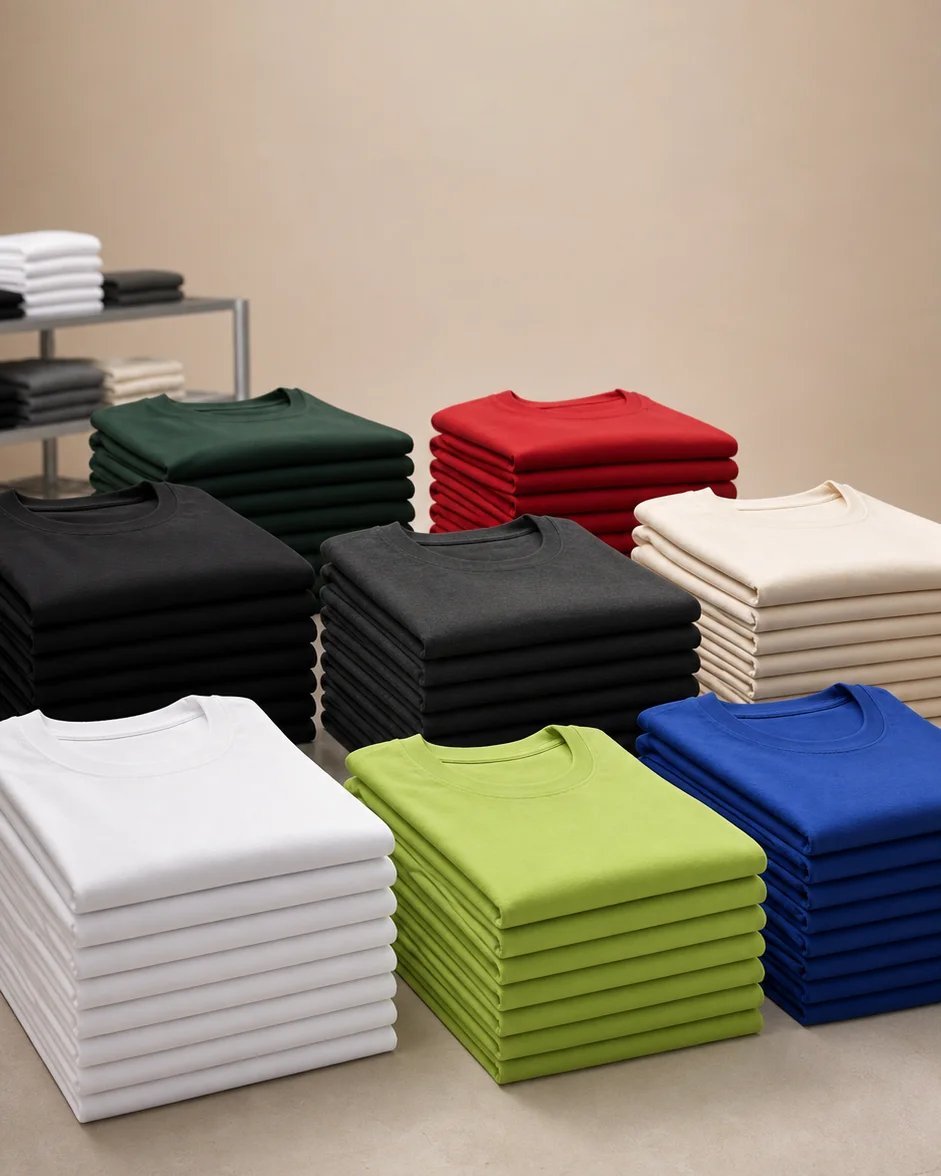
Buy in multiples of what works. Found the perfect tee? Buy 3–5 in your core colors. Decision fatigue eliminated, laundry simplified, cost-per-wear minimized.
Time your purchases. End-of-season sales (August for summer, February for winter), Black Friday, and brand-specific sale cycles cut basics prices 40–70%.
Set a basics budget. Allocate a fixed amount quarterly for replacing worn basics — it prevents both neglect (wearing threadbare tees) and impulse overspending.
Replace on condition, not schedule. Pilled, stretched, stained, or thin basics undermine every outfit. The restoration guide can save some; the rest should be retired without guilt.
The humble T-shirt
The T-shirt — from 19th-century underwear to the most-produced garment on earth — is the ultimate basic, and its history explains the quality markers in this article: fabric weight, stitching density, and collar construction are where cheap tees cut corners.
The takeaway
The best budget-friendly places for quality basics: Uniqlo for the overall crown, Target’s private labels for convenience and value, Old Navy/Gap on sale, H&M for simple items, and thrift stores for the ultimate value. Judge basics by fabric weight, construction, colorfastness, and shape retention — not brand prestige. Buy multiples of what works, time the sales, and maintain what you own. Great style is built on great basics, and great basics don’t require great spending.
The basics replacement schedule (what to replace, and when)
Basics wear out — that’s their job. But replacing them strategically (instead of when they fall apart embarrassingly) keeps your wardrobe perpetually fresh for minimal money. Every 6 months: underwear and socks (elastic dies, and these are hygiene items — don’t stretch it), white tees in heavy rotation (they gray and thin). Yearly: bras and undershirts (support degrades), workout basics (compression and support fade), black tees (fading shows). Every 1–2 years: jeans in heavy rotation (crotch and knees give out), sweaters (pilling accumulates), casual shoes.
Every 2–3+ years: quality outerwear, boots, bags (with proper care, these last much longer — replace on condition, not schedule). The audit habit: twice a year (pair it with the seasonal closet swap), pull every basic and check: elastic? thinning? stains? pilling? fading? Anything failing gets replaced — ideally before it’s embarrassing. Budget it: set aside $20–30 a month for basics replacement — it prevents the annual $300 “everything is worn out at once” shock. Buy replacements before you need them: when you find the perfect tee, buy two — the spare waits in the drawer for the day the first one dies. Basics are infrastructure; maintain the infrastructure and the whole wardrobe runs smoothly. The best-dressed people aren’t buying more — they’re replacing smarter.