It’s 4 p.m., you’ve been staring at spreadsheets all day, and the text on your screen has gone slightly fuzzy around the edges. Your eyes ache, your head is starting to throb, and you catch yourself wondering: do I actually need glasses, or is this just what a long day does to everyone? I asked myself the same thing for months before finally booking an eye exam — and it turned out the answer mattered more than I expected.
So how can I tell if I need glasses or just have eye strain? The two overlap a lot, which is exactly why it’s confusing. Here’s how to read the signals your eyes are sending, what you can try at home, and when to stop guessing and see a professional.
What eye strain feels like (and why it’s so common now)
Eye strain — optometrists call it asthenopia — is fatigue of the eye muscles, not a vision defect. It shows up after long stretches of close-up work: burning or itchy eyes, a dull ache behind them, temporary blurriness that clears when you blink or look away, light sensitivity, and that classic end-of-day headache across the forehead. The defining feature? It gets better with rest. Sleep, a weekend off screens, or even a 20-minute break can reset it.
We’re straining our eyes more than any generation before us. The average American adult now spends the majority of waking hours looking at screens, often at distances and brightness levels our eyes weren’t designed for. Add in dry office air (and Miami’s aggressive air conditioning), and it’s no wonder eyes feel wrecked by evening. Simple fixes help a lot here: the 20-20-20 rule (every 20 minutes, look at something 20 feet away for 20 seconds), proper screen distance (about an arm’s length), and cutting screen time before bed in the evening gives your eyes genuine recovery time.
Signs you might actually need glasses
Needing glasses means there’s a refractive error — your eye’s shape isn’t focusing light quite right. Unlike strain, these symptoms don’t fully resolve with rest:
- Distance blur that never sharpens. Road signs, classroom boards, or the TV stay fuzzy no matter how much you blink or rest.
- Squinting as a habit. If you catch yourself squinting to read menus, recognize faces across the street, or see presentations, your eyes are trying to create a pinhole effect to compensate.
- Holding things closer (or farther). The classic over-40 move: extending your arm to read your phone. That’s presbyopia, and reading glasses fix it in about five minutes at any pharmacy.
- Frequent headaches tied to visual tasks. Occasional strain headaches fade; headaches that reliably follow reading or driving suggest uncorrected vision.
- Trouble with night driving. Halos around headlights, trouble reading signs after dark — worth getting checked promptly.
- One eye worse than the other. Cover each eye and compare. Big differences between eyes often mean you need correction.
How can I tell if I need glasses or just have eye strain? The at-home tests
Try this practical experiment: for two or three days, be genuinely kind to your eyes — follow the 20-20-20 rule, keep screens at arm’s length, use artificial tears if your eyes feel dry, get decent sleep, and take real breaks. If symptoms mostly vanish, it was strain. If the blur, squinting, or headaches persist unchanged, that’s your answer pointing toward glasses.
Another telling test: distance vision. Eye strain rarely makes distant objects blurry once you’ve rested. If the scoreboard at the stadium or street signs are fuzzy on a fresh Saturday morning after a full night’s sleep, that’s not fatigue — that’s refractive error.
A quick note on those online vision tests: they’re fine as a rough screening tool, but they can’t check eye health, measure precisely, or catch conditions like glaucoma. Think of them as a nudge to book a real exam, not a replacement for one.
What an eye exam actually involves (it’s easier than you think)
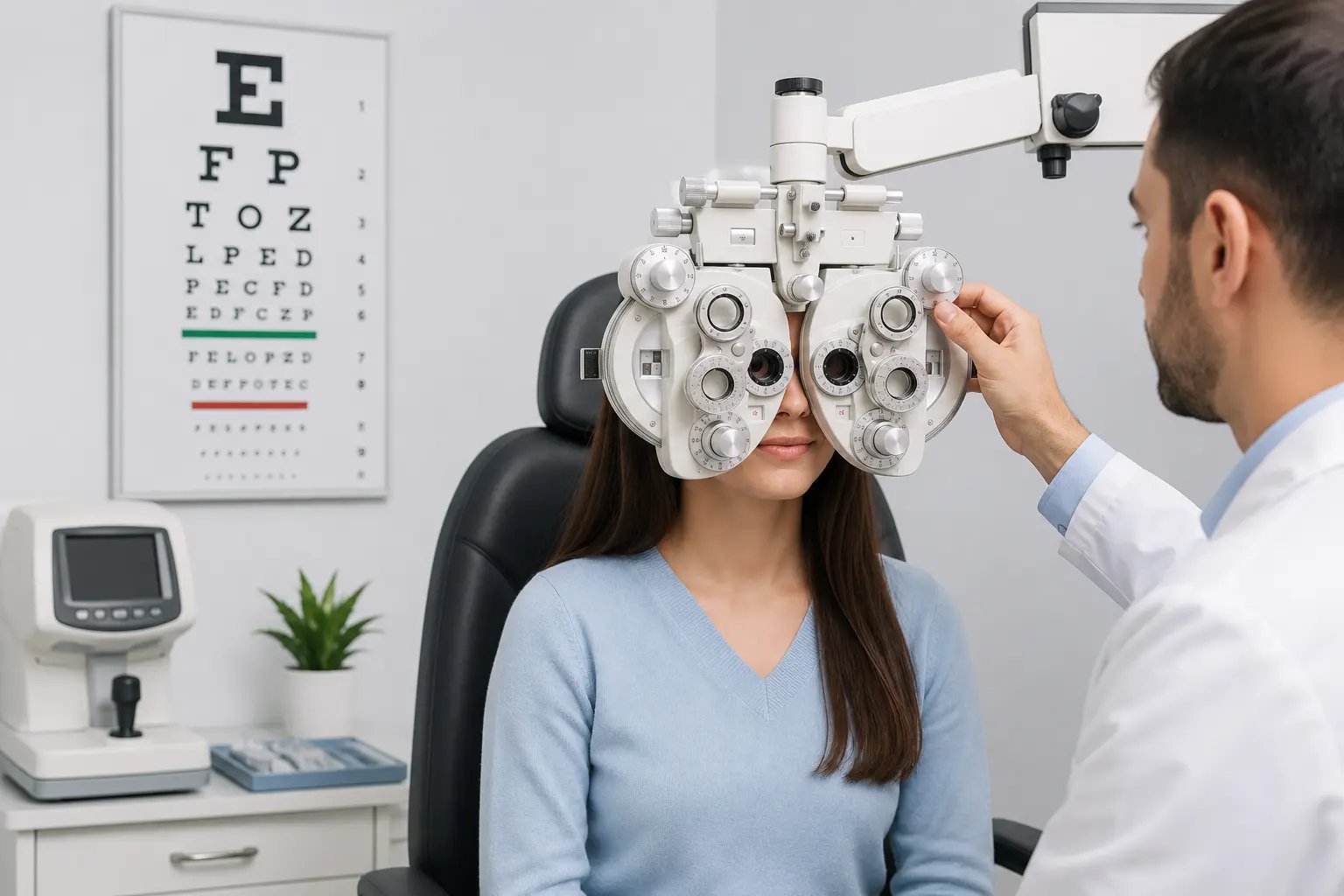
Many people avoid eye exams because they imagine something clinical and intimidating. In reality, a comprehensive exam takes about 30 minutes: reading letters off a chart, the “which is better, one or two” lens comparison, a puff-of-air or gentle pressure check for glaucoma, and a look at your retina. Most vision insurance plans cover an annual exam, and many retail optical shops offer them affordably without insurance. The American Optometric Association recommends exams at least every two years for adults — yearly if you wear correction or have risk factors like diabetes.
Red flags: see someone promptly
Most blurry vision is boring and fixable. But get urgent care for: sudden vision loss in one or both eyes, new flashes of light with a shower of floaters (possible retinal detachment), severe eye pain, double vision that appears suddenly, or vision changes after a head injury. These are rare, but they’re the ones where hours matter.
The takeaway
Here’s the simplest version: if rest fixes it, it’s probably eye strain — adjust your screen habits and give your eyes breaks. If blur, squinting, or headaches persist no matter how rested you are, you probably need glasses, and an exam will sort it out in half an hour. Either way, stop squinting through life wondering. Your eyes do everything for you; a checkup is the least you can do back. And while you’re at it, those small daily habits like managing too much caffeine and getting real sleep do your eyes favors too — strain loves a tired, dehydrated body.
Children’s vision: what parents should watch for
Kids rarely complain about blurry vision — they assume everyone sees the way they do. So parents need to watch for the signs: squinting at the TV or holding books very close, sitting extremely close to screens, frequent eye rubbing, complaints of headaches (especially after school), avoiding reading or close-up activities they used to enjoy, tilting the head to see, or one eye drifting. Teachers sometimes spot it first — a child who can’t see the board may act out or fall behind, and it’s a vision problem, not a behavior problem.
Pediatric guidelines recommend vision screening at well-child visits and a comprehensive eye exam if issues are suspected — and children’s eyes change fast, so an annual check during school years is wise. The stakes are real: uncorrected vision in childhood can cause amblyopia (“lazy eye”), which becomes much harder to treat after age 7–9. Glasses for kids are a non-event socially now (plenty of cool frames, and half their classmates wear them). If you notice the signs, book the exam — it’s one of the highest-leverage interventions in a child’s development, and it takes thirty minutes.